
Thermal Monoculars



Thermal Monoculars
Showing all 44 results
-
Add to cart
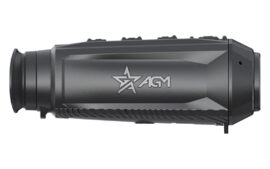
AGM Global Vision Taipan V2 10-256, Thermal Monocular, 10mm Objective, Black
$545.00 -
Sale!Add to cart
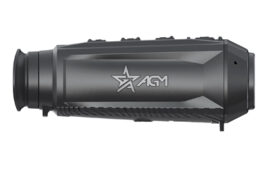
AGM Global Vision Taipan V2 15-256, Thermal Monocular, Black
Original price was: $645.00.$595.00Current price is: $595.00. -
Sale!Add to cart
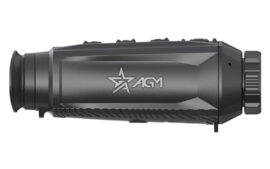
AGM Global Vision Taipan V2 19-320, Thermal Monocular, Black
Original price was: $755.00.$695.00Current price is: $695.00. -
Sale!Add to cart
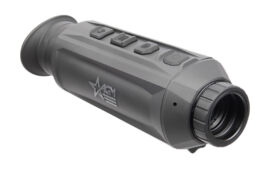
AGM Global Vision Taipan V2 19-384, Thermal Monocular, Black
Original price was: $1,395.00.$1,095.00Current price is: $1,095.00. -
Sale!Add to cart

AGM Global Vision Taipan V2 25-384, Thermal Monocular, Black
Original price was: $1,695.00.$1,295.00Current price is: $1,295.00. -
Sale!Add to cart
Armasight Sidekick 640 Pro, Thermal Monocular, Black
Original price was: $3,299.00.$2,999.00Current price is: $2,999.00. -
Add to cart
ATN Corp Blaze Trek, Thermal Monocular, Black, 384X288 Thrml Mono
$1,295.00 -
Add to cart
ATN Corp Blaze Trek, Thermal Monocular, Black, 640X512 Mono
$2,295.00 -
Sale!Add to cart

ATN Corp BlazeHunter 335LRF 4-32 4-32×35 Riflescope
Original price was: $2,085.00.$1,895.00Current price is: $1,895.00. -
Sale!Add to cart
ATN Corp BlazeHunter HD Laser Range Finder, Thermal Monocular, Black
Original price was: $5,495.00.$4,995.00Current price is: $4,995.00. -
Sale!Add to cart
ATN Corp BlazeTrek 6, Thermal Monocular, Black, 384X288 19MM
Original price was: $1,095.00.$995.00Current price is: $995.00. -
Sale!Add to cart
ATN Corp BlazeTrek 6, Thermal Monocular, Black, 384X288 25MM
Original price was: $1,315.00.$1,195.00Current price is: $1,195.00. -
Sale!Add to cart
ATN Corp BlazeTrek 6, Thermal Monocular, Black, 640X512 19MM
Original price was: $1,865.00.$1,695.00Current price is: $1,695.00. -
Sale!Add to cart
ATN Corp BlazeTrek 6, Thermal Monocular, Black, 640X512 25MM
Original price was: $2,085.00.$1,895.00Current price is: $1,895.00. -
Sale!Add to cart
ATN Corp Odin 6 Multi Functional Thermal Optic, Laser Rangefinder, Black
Original price was: $6,045.00.$5,495.00Current price is: $5,495.00. -
Sale!Add to cart
ATN Corp Odin 6 Multi Functional Thermal Optic, Monocular, Black
Original price was: $5,495.00.$4,995.00Current price is: $4,995.00. -
Sale!Add to cart
NOCPIX Bolt L35R, Thermal Imaging Sight, Black
Original price was: $2,200.00.$1,999.00Current price is: $1,999.00. -
Sale!Add to cart
NOCPIX Bolt P25R, Thermal Imaging Sight, Black
Original price was: $1,350.00.$1,199.00Current price is: $1,199.00. -
Add to cart
Pulsar Axion XG30 Compact, Black
$2,199.97 -
Add to cart
Pulsar Axion XQ19 Compact, Black
$999.99 -
Add to cart
Pulsar Axion XQ30 Pro, Black
$1,699.97 -
Add to cart
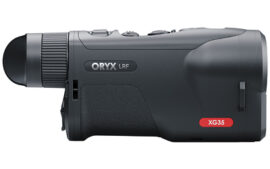
Pulsar Oryx LRF XG35, Thermal Monocular, Black
$2,800.00 -
Add to cart
Pulsar Telos LRF XL50, Black
$4,499.97 -
Add to cart
Pulsar Telos XP50, Black
$2,999.97 -
Add to cart
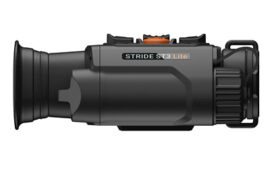
RIX Tactical STRIDE ST3 Lite, Thermal Monocular, Black
$999.00 -
Sale!Add to cart
RIX Tactical STRIDE ST6 Lite, Thermal Monocular, Black
Original price was: $2,199.00.$1,999.00Current price is: $1,999.00. -
Sale!Add to cart
RIX Tactical Titan T3, Thermal Monocular, Black
Original price was: $1,799.00.$1,599.00Current price is: $1,599.00. -
Sale!Add to cart
RIX Tactical Titan T6, Thermal Monocular, Black
Original price was: $2,599.00.$2,399.00Current price is: $2,399.00. -
Add to cart
Sig Sauer ECHO MV35, Thermal Monocular
$2,499.99 -
Add to cart
Sig Sauer ECHO MV50-DV, Thermal Monocular
$3,999.99 -
Add to cart
Sig Sauer ECHO MV50-LRF, Thermal Monocular
$3,299.99 -
Add to cart
Sig Sauer Echo MV50-LRF, Thermal Monocular, Orange
$3,299.99 -
Add to cart
Trijicon Electro Optics IR-Hunter, Type 3, Black, 24MM
$7,209.00 -
Add to cart
Trijicon Electro Optics IR-Hunter, Type 3, Black, 35MM
$8,239.00 -
Add to cart
Trijicon Electro Optics IR-Hunter, Type 3, Black, 60MM
$9,784.00 -
Add to cart
Trijicon Electro Optics Reap-IR, Type 4, Black, 24MM
$7,209.00 -
Add to cart
Trijicon Electro Optics Reap-IR, Type 4, Black, 35MM
$8,239.00 -
Sale!Read more

AGM Global Vision Taipan V2 15-384, Thermal Monocular, Black
Original price was: $1,095.00.$795.00Current price is: $795.00. -
Sale!Read more
Armasight Warden 640 Pro, Thermal Monocular, Gray
Original price was: $4,099.00.$3,799.00Current price is: $3,799.00. -
Sale!Read more
ATN Corp Blaze Seeker 6, Thermal Monocular, 10MM Objective, Black
Original price was: $626.00.$569.00Current price is: $569.00. -
Sale!Read more
ATN Corp Blaze Seeker 6, Thermal Monocular, Black
Original price was: $549.00.$499.00Current price is: $499.00. -
Read more
ATN Corp BlazeHunter Pro 635, Thermal Monocular, Black
$2,415.00 -
Read more
NOCPIX Mini2 H25, Thermal Monocular, Black
$2,999.00 -
Read more
Trijicon Electro Optics Reap-IR, Type 4, Black, 60MM
$9,784.00


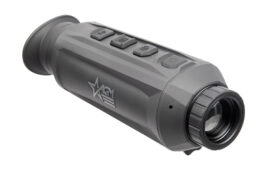
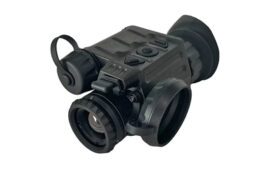
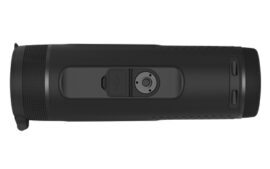
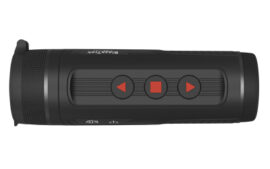

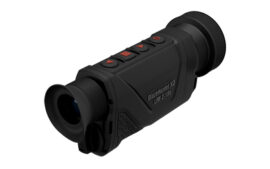
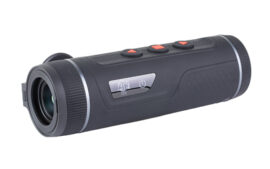
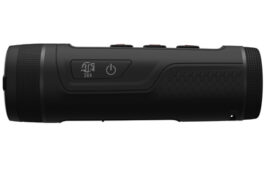
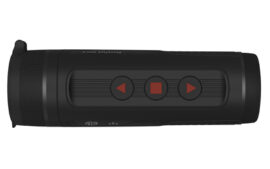
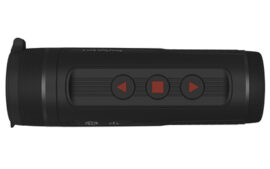
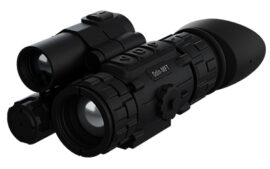
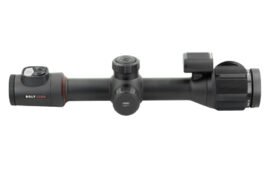
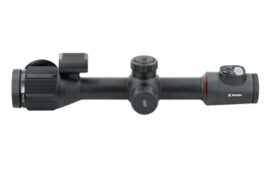
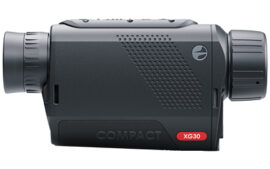
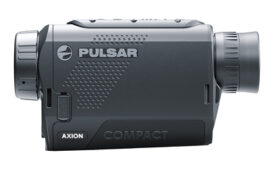
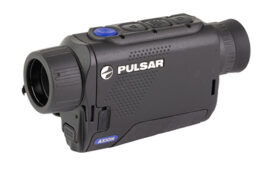
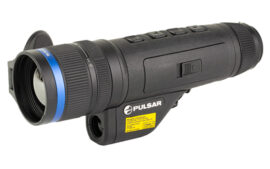
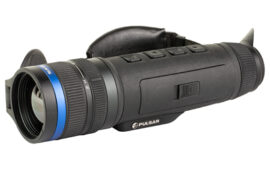
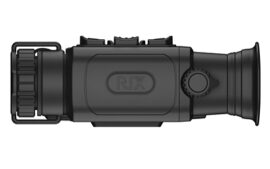
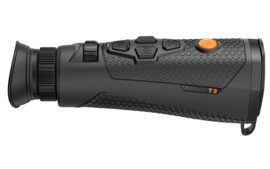
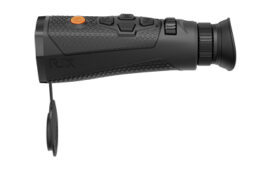
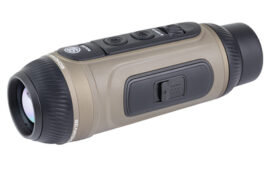
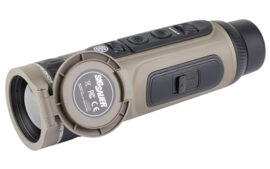
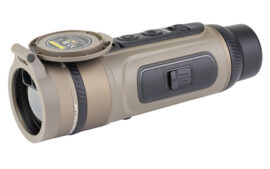

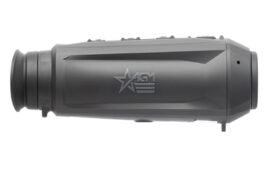

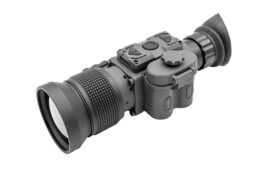
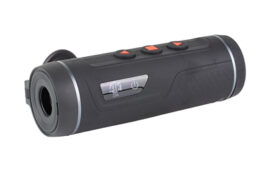
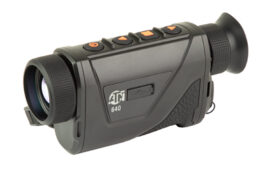
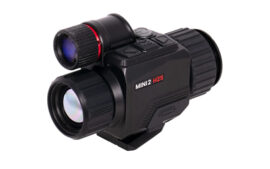
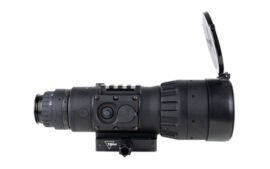
- What it is: A handheld thermal imager you scan with. It reads heat rather than light, so it works in total darkness, through fog and smoke, and through light brush.
- Spec that matters most: Sensor resolution — 256, 384 or 640 — sets how much detail you get, and NETD in millikelvin sets how well the unit separates similar temperatures. Lower NETD is better, and under 25 mK is genuinely good in humid Texas air.
- Magnification: Base magnification matters more than maximum. Digital zoom past the native power only enlarges pixels.
- What it is for: Scanning. You find the animal with a monocular and take the shot with a rifle-mounted thermal scope.
- FFL status: A thermal monocular is not a firearm and not an NFA item — no FFL transfer, no Form 4. Order online and it ships to your door.
What we carry
Pocketable scanning monoculars, higher-resolution observation units with onboard recording, models with multiple colour palettes and built-in rangefinding, and helmet-mountable options — from AGM Global Vision, ATN, Nocpix, Armasight and RIX Tactical. For a rifle-mounted unit see thermal scopes; for long-range glassing with a rangefinder built in, thermal binoculars; and if you want to keep your existing day scope, clip-on thermal.
Scan with this, shoot with that
The way most hog hunters actually work is a monocular in one hand to find animals and a thermal scope on the rifle to take the shot — scanning a field through a rifle optic means pointing a loaded gun at everything you look at, which is a habit worth not building. A handheld also has no recoil rating to worry about, so you can put your money straight into sensor quality. If you only buy one thermal device, a monocular is the more useful and more responsible first purchase.
How far will it see?
Detection distance is a function of sensor resolution and lens, not of magnification. A larger objective lens gathers more thermal energy and pushes detection further out, at the cost of a narrower field of view — which is why a wide, short-lens unit suits scanning brush and fields at close range, and a longer lens suits open country. Detection, recognition and identification are three different distances; a unit that detects a hog at several hundred yards will not let you tell a hog from a dog at the same range.
Ordering
Everything here ships to your door, not to an FFL. Send us a message if you want help comparing two units before you buy, and Credova financing is available at checkout.