


What Voodoo Innovations brings to the AR-15 market
Our Voodoo Innovations AR-15 review starts with a simple distinction: this name has roots in parts as well as complete firearms. That matters because a buyer can approach the platform either as a ready-to-shoot rifle owner or as someone choosing an upper, barrel, bolt carrier group, and furniture one piece at a time. We will keep the discussion practical and separate documented features from assumptions about range performance.
The company’s place in the AR-15 parts market
Voodoo Innovations grew from a parts-manufacturing background and later introduced complete direct-impingement firearms. That gives the brand a place between a basic parts source and a traditional rifle maker. For us, the useful question is not whether the name sounds premium; it is whether the exact configuration matches the work the buyer expects it to do.
Barrels, bolt carrier groups, uppers, and other key components
The product mix associated with the name includes barrels, bolt carrier groups, uppers, slides, coatings, and complete AR-15 firearms. The AR-15 uppers and parts collection is a useful reference point when we are comparing those categories, because barrel length, gas-system length, handguard design, and carrier choice all affect the finished build. A component review has to begin with the actual part, not a general reputation.
How a Voodoo-based build differs from a complete factory rifle
A complete rifle arrives with the major parts selected and assembled, while a component-based build lets us choose the receiver set, trigger, optic, stock, and other details around a specific use. The trade is time and responsibility: we must verify fit, torque, headspace, gas alignment, and function. A factory rifle is simpler to buy, but it may not give us the same control over the final setup.
Who is most likely to benefit from the brand’s product lineup
The best fit is a buyer who understands the difference between a complete firearm and a component, or who is working with a qualified armorer. A first-time owner can still buy a complete rifle, but should judge it by chambering, controls, furniture, and intended use rather than by a parts list alone. Our AR-15 parts guide covers the same buying logic from the receiver and barrel outward.
Build quality and component design
Build quality is easiest to judge when we look at the material, finish, interface, and documented configuration together. A coating can protect a surface, but it does not correct poor alignment or an unsuitable gas system. We therefore pay attention to the small mechanical details before we get distracted by color or marketing language.
Materials, machining, and visible finish quality
The Witch Doctor uses forged 7075-T6 aluminum receivers with Type III Class II hard-coat anodizing, according to the supplied product description. It also uses a 16-inch Parkerized M4 barrel and a free-float M-LOK rail. Those details describe a conventional, serviceable configuration; they do not by themselves promise a particular group size or service life.
Barrel profiles, chamber options, and expected service life
The Witch Doctor is chambered in 5.56×45 NATO, with a 16-inch M4 barrel and 1:7 twist. A separate Evo Ultra Lite barrel configuration described in the available material uses a 16-inch barrel with a midlength gas system. We should match the chamber, twist, profile, and gas length to the ammunition and role instead of treating light weight or a fast twist as universal advantages.
Bolt carrier group construction and coating choices
Carrier materials and coatings influence corrosion resistance, cleaning, and surface wear, but they still work inside a larger system of gas, lubrication, ammunition, and buffer mass. We inspect the carrier for finish consistency, staking, and correct interaction with the upper. If the buyer is comparing coated carriers, our current upper-parts selection gives a better starting point than relying on a coating name alone.
Handguard fit, controls, and overall assembly details
The Witch Doctor uses an ergonomic free-float M-LOK rail, while the Dark Moon is described with a 1913 Picatinny rail running along the forend. Those are meaningful differences for mounting accessories and setting up hand placement. We still check rail alignment, fastener security, charging-handle movement, magazine fit, and the feel of the safety before calling an assembly finished.
Accuracy and range performance
Accuracy claims need restraint because ammunition, optic quality, shooter technique, barrel temperature, and support all change the result. A barrel and upper can provide a sound mechanical foundation, but no honest review should turn a configuration sheet into an invented group-size guarantee. We would evaluate the rifle with the ammunition and sighting system the buyer actually intends to use.
What to expect from the barrel and upper receiver
A properly fitted barrel, extension, receiver, and gas system give us the foundation for repeatable performance. The available material identifies the Witch Doctor’s 16-inch, 1:7-twist M4 barrel, while the Evo Ultra Lite description identifies a 16-inch midlength setup. Those facts help us predict handling and ammunition compatibility, but they do not replace a measured range test.
Accuracy with common factory ammunition
Factory ammunition can produce different results even when it shares the same bullet weight, and a 1:7 twist is not a guarantee that every load will shoot equally well. NSSF’s explanation of barrel twist rates is a useful primer on why bullet length, not bullet weight alone, is what a twist rate has to stabilize. We would test several appropriate loads, confirm zero after the barrel warms, and record group size rather than relying on a single impressive target. The goal is a repeatable load for the rifle, not a one-time best case.
Reliability during slow, rapid, and extended firing
Reliability should be checked across slow fire, rapid strings, and longer sessions, with lubrication and ammunition recorded. A failure may point to magazines, gas, buffer weight, ammunition, assembly, or maintenance rather than one isolated component. We avoid publishing a round-count claim unless it has actually been documented under controlled conditions.
A video can show handling, controls, and general operation, but it cannot establish a universal accuracy or reliability result. We still want the written configuration and the buyer’s intended ammunition in front of us before making a purchase decision.
Accuracy expectations for defensive, training, and competition use
For defensive and training use, reliable function and practical accuracy usually matter more than chasing a tiny group from a bench. Competition adds handling speed, optic setup, trigger preference, and weight to the equation. Hunting brings its own limits around caliber, local rules, bullet selection, and ethical shot distance, so the same AR-15 configuration will not suit every role equally.
Fit, compatibility, and installation
AR-15 compatibility is broad, but it is not automatic. Parts that share a general pattern can still differ in gas length, receiver geometry, handguard interfaces, buffer setup, or controls. We treat every build as a system and verify the parts list before ordering.
Receiver and parts compatibility across common AR-15 setups
Upper and lower receivers from the common AR-15 pattern often work together, but fit and finish can vary. The handguard must match the barrel nut and mounting system, while the charging handle and bolt carrier group must suit the upper. A complete upper can simplify the process, and Western Sport’s complete upper guide explains why barrel and carrier choices deserve attention.
Gas system, buffer, and ammunition considerations
Gas length, port dimensions, buffer mass, spring condition, and ammunition pressure all influence cycling. We should not swap one of those variables casually and then blame the barrel when the rifle becomes under-gassed or over-gassed. The correct approach is to confirm the documented configuration, use suitable ammunition, and diagnose function from the whole operating system.
Installation points that deserve extra attention
Small assembly errors can create large problems, especially around the barrel, gas block, gas tube, carrier, and handguard. Before live fire, we check fasteners, alignment, unloaded function, magazine seating, and safe operation. For a new build, our build-ready components can be discussed before the order is finalized, rather than corrected after parts arrive.
When a gunsmith or qualified armorer is the better choice
A qualified professional is the right choice when the buyer lacks the tools, experience, or confidence to verify critical assembly work. Headspace, gas alignment, torque, and function testing are not good places to learn by trial and error. We would rather pause a build than turn an uncertain fit into a safety problem.
Reliability and long-term ownership
Long-term ownership is mostly routine: use suitable ammunition, lubricate the moving parts, inspect wear, and keep track of changes. A high-quality component cannot compensate for neglected maintenance or an unsuitable magazine. We also want the original configuration recorded so troubleshooting has a known starting point.
Early break-in, lubrication, and maintenance needs
We do not treat break-in as a ritual that cures every issue. We start with a clean inspection, apply the manufacturer’s recommended lubrication, and function-test the rifle with appropriate ammunition. After the first session, we inspect the bolt, carrier rails, gas rings, chamber, and fasteners before deciding whether any adjustment is needed.
Wear points to inspect after regular use
The parts that deserve regular attention include the bolt lugs, extractor, gas rings, carrier rails, buffer, spring, firing-control components, and handguard hardware. We look for unusual peening, cracking, looseness, or finish loss rather than judging wear by round count alone. Magazines and ammunition should be considered at the same time.
How component quality affects troubleshooting
Consistent machining and clear specifications make a problem easier to isolate. If the receiver, barrel, carrier, and gas system are all documented, we can test one variable at a time instead of guessing. That is why we prefer a measured inspection over swapping parts until the symptom disappears.
Warranty support and the value of responsive customer service
Warranty terms vary by maker and product, so we read the current policy before purchase and keep invoices and configuration details. Responsive support is useful when a fit question or function issue needs a clear answer. It is not a replacement for safe inspection, but it can shorten the path to the correct diagnosis.
Price and overall value
Price only makes sense beside the complete setup and the intended use. A lower initial price can leave us buying an optic, sling, magazines, tools, or installation help, while a more complete rifle may cost more at the counter but less in time. Our job is to compare the finished rifle, not just the first number on the tag.
Where Voodoo Innovations sits against comparable brands
The available descriptions place the Witch Doctor and Dark Moon at an MSRP of $749.99, both chambered in 5.56×45 NATO, with different rail arrangements. That gives us a clear historical reference for the complete-rifle question, though current pricing and availability must be confirmed before purchase. We should compare configuration and support alongside price.
What the price includes and what still costs extra
A complete rifle may include the receiver set, barrel, handguard, trigger, stock, sights or muzzle device, depending on the configuration. Optics, ammunition, magazines, sling, storage, and training normally require their own budget unless specifically listed. We write every included part down before comparing two packages that appear similar.
When paying more for a component makes sense
Paying more can make sense when the component solves a real problem: lower weight for frequent movement, a barrel suited to the intended ammunition, a handguard that accepts the needed accessories, or a carrier finish that fits the maintenance plan. Spend where function changes is a better rule than paying for decoration.
Hidden costs in a custom or semi-custom AR-15 build
Custom work can add shipping, tools, installation, replacement fasteners, optic mounting, and time spent diagnosing compatibility. A build kit can be a good value for an experienced owner, while a complete rifle may be the better value for someone who wants to train immediately. Our budget AR-15 guide is a useful check against spending the entire budget on the receiver and barrel alone.
How Voodoo Innovations compares with the competition
A fair comparison uses the same barrel length, chambering, gas system, rail type, and included equipment. We should also separate a complete rifle from an upper or barrel, because they are not interchangeable price categories. The right comparison is the one that reflects how we plan to buy and shoot.
Comparing barrels and uppers by accuracy and consistency
We compare documented materials, profiles, twist rates, chambering, gas length, and fit before looking for a promised accuracy number. A complete upper can save assembly time, while a barrel-only purchase gives a builder more control over the receiver and handguard. Neither format automatically wins; the correct choice depends on the project.
Comparing bolt carrier groups by materials and finish
For carriers, we examine material, coating, staking, inspection, and compatibility with the gas system. Surface finish may affect cleaning or corrosion resistance, but it cannot fix poor assembly or an unsuitable buffer. We want the carrier to be judged as part of the operating system rather than as an isolated upgrade.
Comparing factory rifles with component-based builds
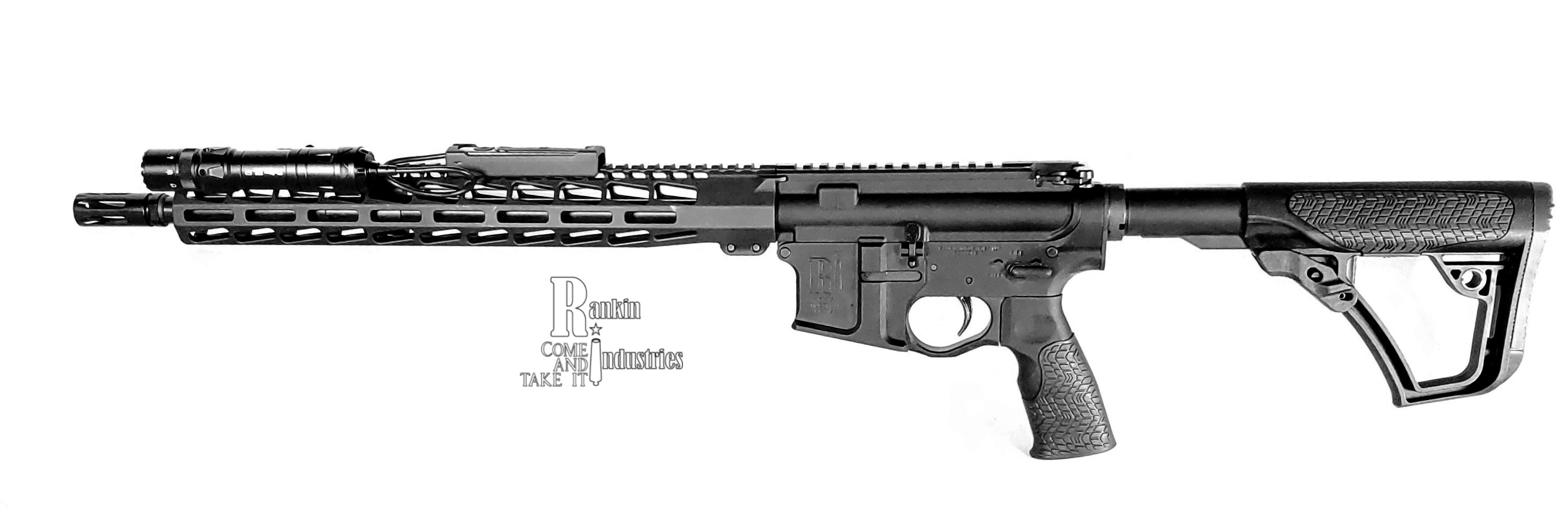
Factory rifles offer one responsible party for the assembled configuration and a simpler path to the range. Component builds offer more control over the trigger, furniture, optic height, and handling, but they place more responsibility on the builder. Buyers who want a known starting point can review Rankin Industries Duty Rifle alongside complete-rifle options without assuming that every configuration serves the same role.
Which competing options may be a better fit for different buyers
Different buyers may reasonably choose a complete factory rifle, a complete upper, or a custom build. Someone prioritizing a light competition setup may value a different configuration than someone preparing a general-purpose training rifle. We compare the actual options in our AR-15 rifle collection, using use case, budget, and support as the deciding factors.
Who should buy a Voodoo Innovations AR-15 setup
This setup makes the most sense when its documented configuration matches the buyer’s needs and the buyer understands what is included. We would not choose a rifle by brand name alone, and we would not call a component upgrade necessary without a specific purpose. A short checklist at the counter usually prevents an expensive mismatch.
The best fit for builders and performance-focused shooters
Experienced builders can benefit from choosing parts around weight, rail interface, gas system, optic, and trigger preference. Performance-focused shooters should still define performance first: fast handling, repeatable accuracy, easy maintenance, or a particular competition rule set. Our own Rankin Industries options are another route for buyers who want complete uppers, build kits, rifles, or pistols from a family-run shop that builds those categories.

When a budget-focused buyer should look elsewhere
A budget-focused buyer should compare the whole package, including an optic, magazines, ammunition, storage, and training. That does not mean choosing the least expensive item; it means protecting enough budget to make the rifle usable and safe. A simpler complete rifle can be the better fit when assembly tools and armorer time would otherwise erase the savings.
Suitability for training, competition, hunting, and range use
For training and general range use, a familiar 5.56×45 NATO setup with practical controls can be a sensible starting point. Competition may reward a lighter or more specialized configuration, while hunting depends on game, caliber, local regulations, and ethical range. We should make that decision before choosing barrel length or accessories.
Final buying checks for configuration, fit, and intended use
Before ordering, we confirm the chambering, barrel length, twist, gas-system length, rail interface, muzzle device, included sights, and whether the item is a complete rifle, upper, or individual part. We also confirm current price, availability, transfer requirements, and who will perform installation if needed. That final check is more valuable than a broad claim about quality.
See Your Build Options
Bring us the role, budget, and parts you already have, and we can help you choose a suitable AR-15 configuration, complete upper, build kit, rifle, or pistol from the options we actually work with. Talk to our team before placing an order so fit and intended use are clear.
Conclusion
A Voodoo Innovations AR-15 review is most useful when it stays tied to the exact product and configuration. The available Witch Doctor and Dark Moon descriptions show complete 5.56×45 NATO rifles with different rail choices, while the Evo Ultra Lite material points to a lighter 16-inch midlength barrel option. We would judge value by fit, documented parts, support, and the buyer’s intended use, not by a universal promise of performance.
Frequently Asked Questions
Is a complete AR-15 better than a component-based build?
Neither is automatically better. A complete rifle is simpler and arrives as one tested configuration, while a component-based build gives the owner more control and more responsibility for fit and function.
What should we check before buying an AR-15 upper?
Confirm chambering, barrel length, twist rate, gas-system length, handguard interface, muzzle device, carrier compatibility, and whether the upper includes the charging handle or bolt carrier group.
Does barrel length determine AR-15 accuracy?
Barrel length affects handling, velocity, and practical use, but accuracy also depends on barrel quality, ammunition, twist, optic, shooter technique, and maintenance.
How should we choose an AR-15 twist rate?
Choose a twist rate that suits the bullet weights and ammunition we expect to use. The barrel maker’s specifications and ammunition guidance are the proper starting points.
What parts usually need the most maintenance?
The bolt carrier group, chamber, extractor, gas rings, magazines, buffer system, and exposed fasteners deserve regular inspection. Lubrication and cleaning should follow the maker’s instructions.
When should a gunsmith install AR-15 parts?
Use a qualified gunsmith or armorer when the work involves headspace, barrel installation, gas alignment, torque-sensitive assembly, or any function problem that cannot be safely diagnosed at home.
What should be included in an AR-15 buying budget?
Allow for the firearm or parts, magazines, ammunition, an optic or sights, sling, storage, training, shipping, transfer costs where applicable, and professional installation if the build requires it.

Lance Rankin is the owner and Chief Gunsmith of Western Sport, a family-run Type 07 FFL and Class 3/SOT dealer in Roanoke, Texas, serving shooters since 2007. Born and raised in Texas with over 50 years of experience handling firearms, Lance purchased Western Sport in 2017 and turned his lifelong passion into his profession. He specializes in AR-15 and AR-10 platform rifles, manufactures Western Sport’s own AR-15 line under the Rankin Industries brand, and runs the shop’s in-house Cerakote coating operation. When he’s not behind the counter or the workbench, you’ll find him on his ranch deep into the night, hunting coyotes with an AR-15 and thermal optics. Lance holds an MBA and personally shoots and tests the products Western Sport sells.


