


A texas made ar 15 can mean a rifle assembled in Texas, a rifle built with some Texas-made components, or a product whose maker is based here. We should pin down which meaning a seller is using before we give the label much weight. Then we can compare the actual rifle, its support, and the paperwork that comes with it.
What “Texas-made AR-15” actually means
“Texas-made” does not describe one universal level of local production. It may refer to where a rifle is assembled, where certain parts are made, or where the company operates. We get a clearer answer by asking the maker to spell out what happens at each stage.
Texas assembly is not the same as Texas-made parts
A rifle assembled in Texas can still include components made elsewhere. Assembly location tells us where parts were brought together, not necessarily where the barrel, receivers, bolt carrier group, or other components were produced. We should ask the seller to distinguish those facts rather than assume the label describes every part.
Ask which parts are made in-house and which are sourced
A builder’s answer should separate its own manufacturing from assembly and purchased components. For example, our Rankin Industries line includes complete AR-15 uppers, build kits, rifles, and pistols; that description alone does not establish where each component is made. Before treating a rifle as locally manufactured, we can ask for a part-by-part explanation.
A short set of questions can make that conversation useful instead of vague:
- Which components are manufactured by the company?
- Which components are made by outside suppliers?
- Where does final assembly take place?
- Can the maker document those details for this specific model?
The answers may vary between models, even within the same product line. We should keep the distinction between a company’s location and the origin of a rifle’s parts clear.
Check the manufacturer’s location and product details
A Texas business address is relevant, but it does not settle a product’s manufacturing history. Check the maker’s published details for the specific model, then ask the dealer to confirm anything that remains unclear. Product descriptions can help us compare options, but we should not treat a general company profile as proof about every rifle it sells.
Look past the “made here” claim to the rifle itself
Once we understand what the origin claim means, we can judge the rifle on the details that affect fit and use. A locally assembled rifle is not automatically a better match than one assembled elsewhere, and a broad label does not tell us what components are included. We can use the AR-15 rifle selection as a starting point for comparing complete-rifle configurations, then verify the details on the model we are considering.
How build quality matters more than the state on the label
State of assembly is only one piece of a buying decision. The barrel, bolt carrier group, trigger, assembly, and inspection process all deserve attention, and the answers should be specific to the rifle in front of us. Specific component details give us a better basis for comparison than a broad claim about origin.
Check the barrel, bolt carrier group, and trigger specifications
These parts have distinct jobs, so we should compare their documented specifications rather than rely on a model name or general description. Ask for the barrel’s listed material, chambering, and twist rate, along with the bolt carrier group and trigger details provided by the manufacturer. If a feature is not listed, it is fair to ask whether it is known or simply not specified.
A useful comparison keeps the same fields in view for each rifle. We can record what is actually documented and leave blank any detail the seller cannot verify.
| Component | Details to compare | What to confirm |
|---|---|---|
| Barrel | Material, chambering, and twist rate | Exact model specifications |
| Bolt carrier group | Included configuration and listed materials | Whether it is included with the complete rifle |
| Trigger | Type and any published specifications | Whether the listed trigger is the one supplied |
| Receiver and handguard | Materials and configuration | What comes on the exact model being sold |
This table is a prompt for questions, not a claim that every builder publishes the same information. We should use the answers to compare like with like and avoid filling gaps with assumptions.
Look for consistent fit, finish, and assembly
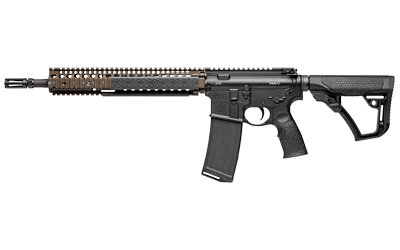
A careful visual check can help us spot obvious inconsistencies, though appearance alone cannot prove how a rifle will perform. Look over the fit of the parts, the finish, and the overall assembly, and ask the dealer to explain anything that seems out of place. The Daniel Defense M4A1 is one example of a model with published details such as its RIS II quad rail and cold hammer-forged barrel; those specifics give a buyer something concrete to evaluate rather than a state label by itself.
Ask what inspection and testing each rifle receives
Ask whether the maker inspects each rifle and what that process covers. If testing is part of the process, ask what the maker means by testing and whether the answer applies to the exact model under consideration. We should not infer a test protocol from a brand name or from a general statement about quality.
Treat vague component descriptions as a reason to ask questions
Terms such as “premium” or “duty-ready” do not identify a particular component or inspection step. We can ask the seller to translate broad wording into specifications, included parts, and documented checks. If a detail is unavailable, we can factor that uncertainty into our comparison without assuming either a defect or a benefit.
What local manufacturing can mean for accountability
Buying locally may make it easier to identify who assembled a rifle and where to direct a question. That can be useful, but a nearby address is not a warranty or a promise of quick service. We should find out which company is responsible for the complete rifle and how it handles support after the sale.
Identify who stands behind the complete rifle
Some rifles combine parts from multiple suppliers, so ask which company handles a claim involving the finished firearm. The answer may be the rifle’s maker, the dealer, or a process involving both. Getting the responsible party’s name before purchase can save confusion if we later need help.
Find out how the maker handles defects and service claims
Ask how to start a service claim, what information the maker requires, and whether the rifle must be returned through a dealer. Read the written terms rather than relying only on a conversation at the counter. For any service process, we should understand who to contact and what steps we are expected to follow.
Ask whether replacement parts are readily available
Availability can affect the time and effort involved in maintaining a rifle. Ask which replacement parts the maker or dealer can provide and whether any parts have to be ordered from another source. A clear answer helps us plan, though it does not guarantee future availability.
Consider the value of dealing directly with the manufacturer
A direct conversation can help us clarify the origin of parts, the scope of a warranty, or the correct service contact. It is worth asking whether the maker answers those questions directly or routes them through the selling dealer. If we need help comparing models, we can ask our team what information to gather before making a decision.
How to compare Texas builders and rifle models
We can compare builders fairly by using the same questions for each complete rifle. Start with documented specifications and included components, then consider warranty and price. A maker’s Texas address can matter to us, but it should sit alongside the facts about the rifle rather than replace them.
Compare complete-rifle specifications, not just brand names
Make a short comparison of the exact models, including the components and specifications each maker actually lists. Western Sport’s complete AR-15 uppers can also help us understand the separate upper configurations available, but an upper is not the same thing as a complete rifle. Keep those product types distinct when comparing what is included in a purchase.
Check warranty coverage before comparing prices
Warranty terms affect what support we can expect after the sale. Check the length and scope of coverage, any exclusions, who processes a claim, and whether the terms apply to the complete rifle or only certain parts. Once we understand those differences, a price comparison is more meaningful.
Separate useful features from add-ons you may not need
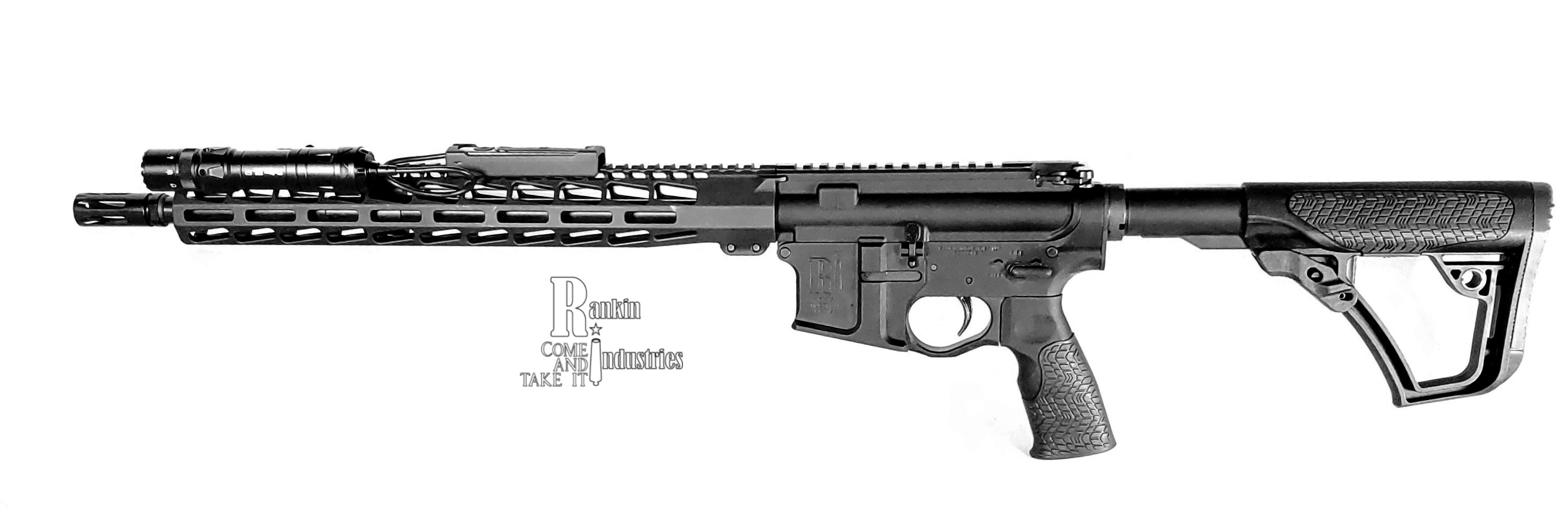
A feature is useful when it fits the way we intend to use the rifle, not simply because it appears on a longer feature list. We can decide which configuration suits our needs before adding accessories or paying for features that do not matter to us. For a concrete model name to include in a comparison, the Rankin Industries Duty Rifle is identified in Western Sport’s guide to beginner AR-15 options; we should check the current product details for its exact included components.
Confirm the exact model and included components
Model names can cover more than one configuration, so ask the seller to identify the exact version and list what comes in the box. That includes checking the included components against the rifle’s written description rather than relying on a photograph or a broad product-family name. A separate Rankin Suppressed Build is described as a custom rifle designed for permanent suppression, with a permanently attached suppressor and a 16.25-inch barrel; those are specific details of that build, not general specifications for other rifles.

What to verify before buying
Before we buy, we should confirm the product details in writing and know who will handle questions afterward. A few minutes spent reading the product description, warranty, and dealer paperwork can prevent a mismatch between what we expect and what we receive. We can also inspect the rifle and ask the dealer to resolve any uncertainty before completing the transaction.
Get the rifle’s country-of-origin and manufacturing details in writing
Ask the seller to clarify the meaning of any “Texas-made” or similar claim for the exact rifle. We can request the manufacturer’s location, the assembly location, and whatever component-origin information the maker provides. Written details give us a record of what was represented at the time of purchase.
Read the warranty terms and return policy
Check the warranty document and the seller’s return policy before paying. Confirm who receives a claim, how to begin the process, and whether the policies differ for the rifle and its included parts. If a point is unclear, ask for an explanation while we still have time to make an informed choice.
Check dealer support and service options
Find out whether the dealer can help with a manufacturer claim or whether we should contact the maker directly. Ask what service options are available and how to arrange them. Clear expectations matter more than assuming a local seller or manufacturer will handle every issue in the same way.
Inspect the rifle and paperwork at the point of sale
Compare the rifle in hand with the model and components listed on the sales documents. Ask the dealer to resolve a discrepancy before the transaction is complete, and make sure we understand what paperwork and care information accompany the purchase. A careful handoff is a sensible final check, not a substitute for confirming the maker’s claims in advance.
Texas-made does not change the rules of ownership
Where a rifle is made or assembled does not determine the rules that apply to buying, possessing, storing, or transporting it. Requirements can depend on the firearm and the circumstances, and they may change over time. We should check current official information and resources like the NRA-ILA gun law summaries, and get qualified advice when a legal question is specific to us.
Confirm federal and Texas requirements that apply to your purchase
Before buying, check current federal and Texas requirements that apply to the specific transaction and firearm. Do not assume that a product’s local origin creates an exception. A licensed dealer can explain the purchase process, while legal questions about an individual situation should go to a qualified attorney.
Check current rules for your city, workplace, or destination
Rules and policies may also depend on where we plan to take or store a firearm. Check the current requirements for the relevant city, workplace, property, or destination before traveling or bringing the rifle into a new setting. When in doubt, confirm with the responsible authority rather than rely on an old summary.
Follow safe-storage practices at home and in transport
Plan for secure storage that keeps the rifle inaccessible to unauthorized people, and follow safe handling practices whenever it is moved. Check the applicable transport rules for the route and destination, and use a secure case when appropriate. We should make storage and transport part of the purchase plan, not an afterthought.
Ask a qualified dealer or attorney about legal questions
A dealer can answer questions about the transaction and point us toward current resources, but no general article can resolve every legal situation. For questions about individual circumstances, consult a qualified attorney. We should verify current rules before acting rather than treat a product label as legal guidance.
Conclusion
A Texas-made claim is worth understanding, but it is only one detail in a rifle purchase. When we confirm where the rifle is assembled, ask which parts are sourced, compare the specifications, and read the warranty, we can judge what the local connection means for us and whether the rifle itself fits our needs.
Talk with our team
Visit our Roanoke shop to discuss AR-15 options, compare the details that matter to you, and get help from a firearms dealer before you buy.
Frequently Asked Questions
Does “Texas-made” mean every part was made in Texas?
No. The phrase can refer to assembly or to a particular part of the manufacturing process. Ask the maker which components are made in-house, which are sourced, and where final assembly occurs.
Is a rifle assembled in Texas the same as a Texas-made rifle?
Not necessarily. Assembly location describes where components were put together, while the origin of individual parts can be different. Ask the seller to explain the claim for the specific model.
What parts should we compare on an AR-15?
Start with the barrel, bolt carrier group, and trigger, then compare the receiver, handguard, and other included components. Use documented specifications and avoid assuming details that are not listed.
Does local manufacturing guarantee easier service?
No. A nearby maker may be easier to contact, but service depends on the company’s policies and process. Find out who handles claims and what steps are required before buying.
What should we get in writing before purchase?
Ask for the specific model, its included components, any manufacturing or origin details the seller can provide, and the warranty terms. Written information helps make expectations clear.
Does a Texas-made label change firearm laws?
No. A rifle’s place of manufacture does not by itself determine the rules that apply to a purchase or ownership. Check current requirements for the transaction and your circumstances.
How can we check whether a model description matches the rifle?
Compare the model name and included components on the rifle and sales paperwork with the manufacturer’s written product details. Ask the dealer to resolve any mismatch before completing the purchase.

Lance Rankin is the owner and Chief Gunsmith of Western Sport, a family-run Type 07 FFL and Class 3/SOT dealer in Roanoke, Texas, serving shooters since 2007. Born and raised in Texas with over 50 years of experience handling firearms, Lance purchased Western Sport in 2017 and turned his lifelong passion into his profession. He specializes in AR-15 and AR-10 platform rifles, manufactures Western Sport’s own AR-15 line under the Rankin Industries brand, and runs the shop’s in-house Cerakote coating operation. When he’s not behind the counter or the workbench, you’ll find him on his ranch deep into the night, hunting coyotes with an AR-15 and thermal optics. Lance holds an MBA and personally shoots and tests the products Western Sport sells.


