



For most new shooters, the best first shotgun is a 20 gauge pump that fits. Our top pick is the Mossberg 500 Super Bantam 20 gauge. It has a 13 inch length of pull, a 22 inch barrel and three choke tubes, so a smaller adult or a growing teenager can mount it correctly and still use it for doves, clays and squirrels. If you are a full-size adult who wants one gun for birds and clays, a 12 gauge pump like the Winchester SXP is the next stop. Below are the four shotguns we point beginners to most, what each one does well, and the fit checks we run at the counter before anyone buys.
Shop the gear in this guide
-
Add to cart

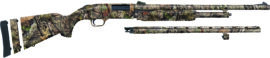
Mossberg 500 Super Bantam 20 Gauge Pump-Action Shotgun, 22″ Barrel
$698.60 -
Add to cart

TriStar Cobra III Max-7 20 Gauge Pump-Action Shotgun, 26″ Barrel
$539.00 -
Add to cart

Winchester Repeating Arms SXP Camp/Field 12 Gauge Pump-Action Shotgun
$549.99 -
Sale!Add to cart

Beretta A400 Xplor Action 12 Gauge Semi-Auto Shotgun, 26″ Barrel
Original price was: $2,099.00.$1,999.00Current price is: $1,999.00.


How to pick the best shotgun for beginners
Three things decide whether a first shotgun gets shot or sits in the safe: fit, gauge and action. Brand and finish come after those.
Fit comes first. Length of pull is the distance from the trigger to the end of the butt pad. When it is too long, the stock snags under the arm as you mount the gun, the shooter leans back to compensate, and every shot hits harder than it should. When the gun fits, your cheek lands on the stock, your eye looks straight down the rib, and recoil goes into your shoulder instead of your face. A lot of “this gun kicks too much” complaints are really fit problems.
Gauge comes second. A 20 gauge throws a lighter payload than a 12, so in a gun of similar weight it kicks less. That makes it a better teacher for most new shooters. A 12 gauge is the most versatile choice and has the widest shell selection, and with light target loads it is very manageable for a full-size adult. We break the trade-offs down in our 12 gauge vs 20 gauge guide.
Action comes third. A pump is simple, tough and teaches you to run the gun, because you see and feel every step. A gas semi-auto does the cycling for you and spreads recoil out over a longer push, which most shooters feel as softer. It also has more parts to keep clean. A break-action single shot holds one shell, which is great for teaching safe habits and not much else.
| Pick | Gauge | Action | Barrel | Capacity | Best for |
|---|---|---|---|---|---|
| Mossberg 500 Super Bantam | 20 | Pump | 22 inch | 5+1 | Smaller adults and young shooters |
| TriStar Cobra III Max-7 | 20 | Pump | 26 inch vent rib | 5+1 | An affordable 20 gauge for clays and doves |
| Winchester SXP Camp/Field | 12 | Pump | 28 inch vent rib | 4+1 | Full-size adults, birds and clays |
| Beretta A400 Xplor Action | 12 | Gas semi-auto | 26 inch | 3+1 | New shooters who want less felt recoil |
Barrel and capacity figures come from each gun’s product page.
1. Mossberg 500 Super Bantam 20 Gauge: best overall for beginners
The Super Bantam tops our list because it solves the fit problem. The Mossberg 500 Super Bantam 20 gauge has a 13 inch length of pull and a 39.75 inch overall length, which is short enough for a smaller adult or a teenager to mount without reaching. The 22 inch barrel keeps the weight out front light, so it swings quickly without feeling like a broom handle.
It is a real Mossberg 500, not a toy. It has a 3 inch chamber, a 5+1 tubular magazine, a bead sight and Improved Cylinder, Modified and Full choke tubes, so the same gun covers clays, doves, squirrels and rabbits. The receiver is drilled and tapped if you want to add an optic later. The stock wears Mossy Oak Break-Up Country camo.
The Mossberg 500’s safety sits on top of the tang, right where your thumb already rests, and it works the same for left-handed and right-handed shooters. For a new shooter learning to keep the gun on safe until the bird is up, that matters more than any spec on the box.
Who should skip it: a tall adult with long arms. If the stock feels cramped when you mount it, step up to a full-size 20 gauge like the TriStar below or to a 12 gauge.
2. TriStar Cobra III Max-7 20 Gauge: best budget 20 gauge for clays and doves
For a full-size adult who wants the softer push of a 20 gauge, the TriStar Cobra III Max-7 20 gauge pump is an easy recommendation. It has a 26 inch chrome-lined vent rib barrel, a 3 inch chamber and a 5+1 tubular magazine, and it comes with Improved Cylinder, Modified and Full chokes.
The longer barrel is a plus for a beginner shooting moving targets. It swings smoother and keeps going through the shot, which is exactly what you want on a crossing dove or a clay coming off the trap. The red fiber optic front sight gives new eyes a bright reference at the end of the rib. Overall length is 46.5 inches, so this is a full-size gun. Have the shooter mount it before you buy it for a smaller frame.
3. Winchester SXP Camp/Field 12 Gauge: best 12 gauge pump for a full-size adult
If the shooter is a full-size adult and wants one shotgun that can do almost everything, a 12 gauge pump is hard to beat. The Winchester SXP Camp/Field 12 gauge is our pick here. It has a 28 inch back-bored, chrome-lined vent rib barrel, a 3 inch chamber, a 4+1 tubular magazine, a brass bead and Winchester’s Invector-Plus Improved Cylinder, Modified and Full chokes.
Winchester builds the SXP with an inertia-assisted action. After a shot, recoil helps push the forend back, so the pump stroke feels fast and light. That helps new shooters who tend to short-stroke a pump under pressure. The 28 inch barrel and 48.5 inch overall length make it a natural fit for clays, doves and ducks.
A word of advice from the counter: start a new 12 gauge shooter on light target loads from our ammunition section, not 3 inch magnum hunting shells. Light loads build good habits. Heavy loads in the first box build a flinch that takes a long time to fix.
4. Beretta A400 Xplor Action 12 Gauge: best semi-auto for less felt recoil
Some new shooters, especially ones who are sensitive to recoil, do better with a gas semi-auto from day one. The Beretta A400 Xplor Action 12 gauge is gas operated with Beretta’s Comp Valve, has a 3 inch chamber, a 26 inch barrel, 3+1 capacity and a red fiber optic sight.
The gas system spreads recoil over a longer push, so a box of shells at the range feels like less work. The adjustable stock shim system lets you change how the stock sits so the gun lines up with your eye. That is a big deal for a beginner, because a gun that fits is a gun you hit with.
The trade-offs are real. A gas gun needs regular cleaning to run its best, and the A400 is a bigger investment than the pumps on this list. If you know you will shoot a lot of clays, it pays you back every time you pull the trigger.
What about a .410 or a single shot?
This question comes up a lot at the counter. A .410 kicks very little, which is why people buy it for a first gun. The catch is that it throws a small shot charge, so it is harder for a beginner to hit moving targets with it. Missing over and over is no fun, and a new shooter who is not having fun quits. For a first wingshooting gun, a 20 gauge usually puts more birds and clays down.
A break-action single shot is a different tool. It holds one shell, so it is a fine way to teach a young shooter safe handling under close supervision. You can see those, along with every pump and semi-auto we carry, in our shotguns category.
Fit checks we run at the counter
Before anyone buys a first shotgun from us, we run through a few quick checks with the gun unloaded and the action open:
- The mount. Bring the gun up from the hip to the shoulder. The butt pad should clear your armpit without snagging.
- The cheek weld. With your cheek on the stock, your eye should look straight down the rib, not at the back of the receiver.
- The safety. Your thumb or trigger finger should reach the safety without shifting your grip.
- The pump stroke. Shorter arms should be able to run the forend all the way back without leaning.
- The weight. Hold the gun mounted for a slow count of ten. If it shakes, it is too heavy or too long for now.
Then plan the rest of the setup: a lock or safe, a box of light target loads, ear and eye protection, and time with a qualified instructor.
Taking a new shooter hunting in Texas
If the first shotgun is headed to the dove field or the deer lease, check hunter education before the trip. According to Texas Parks and Wildlife’s hunter education page, the minimum age for certification is 9, and hunters born before September 2, 1971 are exempt. Hunters 17 or older can buy a one-time Hunter Education Deferral that lets them hunt for that license year while accompanied by someone who has completed hunter education or is exempt. Our Texas deer season 2026 gear check covers the rest of the trip.
Shop your first shotgun
Every shotgun we sell ships to your local FFL for pickup. While you are here, see our buy any gun, get a free suppressor offer. If this is your first purchase, our guide to how to buy a gun in Texas walks through the transfer step by step. Looking for a shotgun mainly for the house? Read our best home defense shotguns guide next. Ready to compare models? Browse all shotguns.
Frequently Asked Questions
Is a 12 gauge too much for a beginner?
Not for most full-size adults, as long as the gun fits and you start with light target loads. Smaller adults and young shooters usually do better with a 20 gauge like the Mossberg 500 Super Bantam.
Is a pump or a semi-auto better for a first shotgun?
A pump is simpler, tougher and teaches you to run the gun. A gas semi-auto softens felt recoil and does the cycling for you. If recoil is the main worry, look at a gas gun like the Beretta A400. Otherwise, a pump is a great place to start.
Is a .410 a good beginner shotgun?
It has very little recoil, but its small shot charge makes moving targets harder to hit. For clays and birds, a 20 gauge is usually the better first gun.
Do new hunters in Texas need hunter education?
Hunters born on or after September 2, 1971 need hunter education or a one-time deferral, which is available to hunters 17 and older. The minimum age for certification is 9. Check the Texas Parks and Wildlife hunter education page for the full rules.

Lance Rankin is the owner and Chief Gunsmith of Western Sport, a family-run Type 07 FFL and Class 3/SOT dealer in Roanoke, Texas, serving shooters since 2007. Born and raised in Texas with over 50 years of experience handling firearms, Lance purchased Western Sport in 2017 and turned his lifelong passion into his profession. He specializes in AR-15 and AR-10 platform rifles, manufactures Western Sport’s own Rankin Industries parts and rifles, and runs the shop’s in-house Cerakote coating operation. When he’s not behind the counter or the workbench, you’ll find him on his ranch deep into the night, hunting coyotes with an AR-15 and thermal optics. Lance holds an MBA and personally shoots and tests the products Western Sport sells.


