



Pick a red dot if most of your AR-15 shooting happens inside 100 yards and you want the lightest, fastest setup with no rings to turn. Pick an LPVO (low power variable optic) if you want to see and hit smaller targets past 200 yards, because a 1-6x scope gives you a true 1x view up close and real magnification when you need it. If you can’t decide, a red dot with a flip-to-side magnifier sits in the middle. Below we lay out the real numbers on optics we carry so you can see the tradeoff in ounces and inches, not guesses.
Shop the gear in this guide
-
Add to cart

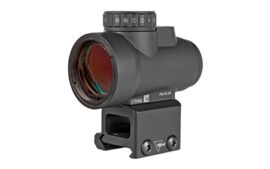
Trijicon MRO HD, Red Dot, Black, Lower Co-w
$1,075.00 -
Sale!Add to cart
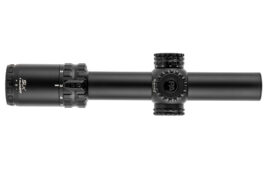
Primary Arms SLx, Rifle Scope, Black
Original price was: $399.99.$349.99Current price is: $349.99. -
Add to cart
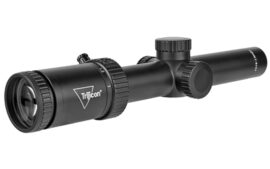
Trijicon Credo HX 1-6x24mm Second Focal Plane Riflescope with Red LED Dot, BDC Hunter Holds .223, Satin Black
$1,338.00 -
Add to cart
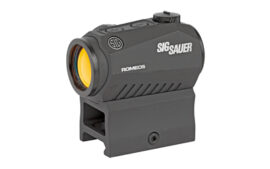
Sig Sauer ROMEO5 Red-Dot Sight
$117.99
LPVO vs Red Dot: The Short Answer
Both optics work on an AR-15. They just solve different problems.
- Red dot: a 1x sight with an illuminated dot. Unlimited eye relief, light weight, both eyes open, very little to learn. It does not magnify anything.
- LPVO: a variable scope, usually 1-6x or 1-8x. At 1x it acts close to a red dot. Turn the ring and the target gets bigger. It weighs more, costs more with the mount, and asks you to put your eye in the right spot behind it.
- Red dot plus magnifier: a red dot with a separate 3x or 5x magnifier on a flip mount. You get some magnification without giving up the dot, but you add a second optic to the rail.
The right answer comes from three questions: how far you shoot, how much weight you will carry, and how much time you will put into practice.
Real Specs: One Red Dot and Two LPVOs
Here is how the categories compare when you put actual products side by side. Numbers come from the makers’ published specs.
| Optic | Type | Magnification | Eye relief | Weight |
|---|---|---|---|---|
| Trijicon MRO HD | Red dot, 2 MOA dot with 68 MOA circle | 1x | Unlimited | 4.6 oz (optic only, before the mount) |
| Primary Arms SLx 1-6×24 Gen IV | LPVO, second focal plane, ACSS Nova reticle | 1-6x | 4 in. | 17.9 oz with battery |
| Trijicon Credo HX 1-6×24 | LPVO, second focal plane, BDC Hunter Holds .223 | 1-6x | 3.5-3.9 in. | 18.9 oz |
The MRO HD figures come from Trijicon’s MRO spec sheet. The SLx numbers come from Primary Arms’ SLx 1-6×24 Gen IV page, and the Credo HX numbers from Trijicon’s Credo HX 1-6×24 page.
The weight gap is the first thing to notice. These 1-6x LPVOs run roughly four times the weight of the MRO HD before you add a scope mount, and that weight sits high on the rifle.
Speed Up Close
Inside 50 yards, a red dot is hard to beat. You keep both eyes open, put the dot on the target and press. Trijicon lists unlimited eye relief on the MRO, which means your head does not have to be in one exact spot to see the dot. That matters when you are shooting from a barricade, a truck window or an awkward position.
An LPVO at 1x gets close to that, and a good one is fast in trained hands. The difference is the eye box. The SLx wants your eye about 4 inches behind the eyepiece, and the Credo HX wants 3.5 to 3.9 inches. Get your head too far forward or back and the picture shrinks or goes dark at the edges. Practice fixes most of this, but a red dot asks for less of it.
Illumination matters too. Both LPVOs here have illuminated reticles, and the Credo HX puts a red LED dot in the center. With the illumination on, the 1x view works a lot like a dot sight.
Seeing and Hitting Farther Out
This is where the LPVO earns its weight. At 6x a deer, a hog or a steel plate at 300 yards looks six times bigger. That helps you see what you are shooting at and place the shot where it needs to go. A 2 MOA dot covers about 2 inches at 100 yards and about 6 inches at 300, so the dot itself starts to hide a small target as the distance grows.
Reticles help too. The SLx ACSS Nova and the Credo HX BDC both have holdover marks below center so you can aim for bullet drop at longer range once you have confirmed them with your load. A red dot gives you one aiming point, so past your zero you are holding over by feel.
Field of view is the price. Primary Arms lists 120 feet at 100 yards on 1x and 20 feet at 6x for the SLx. At full power you see a narrow slice of the world, which is great for a careful shot and slow for finding a second target.
If you hunt hogs or coyotes in open Texas country, or shoot steel past 200 yards, the LPVO makes more sense. If your AR is a truck gun, a home rifle or a range toy inside 100 yards, the red dot is the better buy.
Weight, Balance and Carry
Ounces add up on an AR-15. The MRO HD body is listed at 4.6 ounces. The SLx is 17.9 ounces and the Credo HX is 18.9 ounces, and both still need a 30mm scope mount on top of that. On a light carbine that difference shows up in your arms after an hour of carrying it.
Length matters as well. Primary Arms lists the SLx at 10.4 inches and Trijicon lists the Credo HX at 10.9 inches. A compact red dot takes up a few inches of rail. That leaves room for a magnifier, a light or backup sights.
Batteries are one more point for the red dot. Trijicon rates the MRO HD at 2.5 years of continuous use on day setting 3 with the dot only, and SIG builds MOTAC motion-sensing power into the ROMEO5 so it shuts down when the rifle sits still and wakes when it moves. Both LPVOs here keep a black reticle you can still aim with if the illumination battery dies, which is a real advantage of its own.
Cost of the Whole Setup
Don’t compare the optic alone. Compare what it takes to get it on the rifle and zeroed.
- Red dot: many come with a mount in the box. The MRO HD we carry includes a lower 1/3 co-witness mount.
- LPVO: plan on a 30mm one-piece mount, plus a throw lever if the scope does not have one. The SLx Gen IV has an integrated throw lever.
- Red dot plus magnifier: add the magnifier and its flip mount. Our red dot magnifier guide covers four of them and how to match the mount height to your dot.
Leave room in the budget for ammo to zero and practice. An optic you don’t train with won’t help much, no matter which kind it is.
Which One Fits Your AR-15
Go with a red dot if
- Most of your shooting is inside 100 yards.
- You want the lightest, simplest rifle you can grab and use.
- The AR is for home, the truck or quick range trips.
The SIG ROMEO5 is a popular starting point, and the Trijicon MRO HD adds the big window and a 68 MOA circle you can switch on for fast close work. Browse more in our red dot and holographic sights or read our best red dot sights for the AR-15 roundup.
Go with an LPVO if
- You shoot past 200 yards on a regular basis.
- You hunt hogs, coyotes or deer with your AR in open country.
- You want holdover marks for bullet drop and will practice with them.
The Primary Arms SLx 1-6×24 gives you the longest eye relief of the two here, and the Trijicon Credo HX 1-6×24 has a BDC built for .223. See more in our riflescopes and in our best AR-15 scope guide, which compares four LPVOs.
Split the difference if
You want a dot for close work most days but a 3x view now and then. A red dot plus magnifier does that, and you can flip the magnifier off to the side when you don’t need it.
Whichever way you go, zero it before you trust it. Our how to sight in an AR-15 guide walks through it step by step.
Frequently Asked Questions
Is an LPVO or a red dot better for an AR-15?
Neither one wins for everybody. A red dot is lighter and faster up close. An LPVO is heavier but lets you see and hit smaller targets farther out. Match it to the distances you actually shoot.
Is an LPVO as fast as a red dot at 1x?
Close, with practice. An LPVO needs your eye at the right distance behind it, about 3.5 to 4 inches on the two scopes above. A red dot has unlimited eye relief, so it is more forgiving of head position.
Is an LPVO good for hunting?
Yes. For hogs, coyotes or deer with an AR, 6x of magnification helps you see the animal clearly and place the shot. Check your state’s hunting rules for caliber and season before you go.
Should I get a red dot with a magnifier instead of an LPVO?
It is a good middle choice if you shoot close most of the time and only want magnification sometimes. You get 3x or 5x, not a full 1-6x range, and you add a second optic to the rail.

Lance Rankin is the owner and Chief Gunsmith of Western Sport, a family-run Type 07 FFL and Class 3/SOT dealer in Roanoke, Texas, serving shooters since 2007. Born and raised in Texas with over 50 years of experience handling firearms, Lance purchased Western Sport in 2017 and turned his lifelong passion into his profession. He specializes in AR-15 and AR-10 platform rifles, manufactures Western Sport’s own Rankin Industries parts and rifles, and runs the shop’s in-house Cerakote coating operation. When he’s not behind the counter or the workbench, you’ll find him on his ranch deep into the night, hunting coyotes with an AR-15 and thermal optics. Lance holds an MBA and personally shoots and tests the products Western Sport sells.


