


We can make the best ar 15 upper choice much easier by starting with the job, not the rail color or the most impressive product photo. Barrel length, caliber, gas system, included parts, and the lower receiver all matter. We will keep this practical and match each setup to the buyer standing at the counter.
1. Best AR-15 complete upper overall
For an all-purpose build, we would start with a complete 5.56 NATO upper using a 16-inch barrel and a standard direct-impingement system. That combination gives us a useful balance of handling, velocity, parts availability, and manageable recoil. It also works well for range practice, training, and general rifle use.
The word “complete” still needs checking. Some uppers include the bolt carrier group and charging handle, while others leave one or both out. Before ordering, we should confirm the barrel chamber, gas system, handguard interface, and exactly what arrives in the box. Our complete AR-15 upper selection is a sensible place to compare those details.
A good overall upper should also leave room for a sighting system and a practical support-hand position. We do not need every accessory on day one. A properly matched lower, a reliable magazine, and a clear zeroing plan matter more than cosmetic extras.
2. Best budget AR-15 complete upper
A tighter budget does not change the basic checklist. We still want the correct caliber marking, a barrel and gas system that agree with each other, and a handguard that accepts the accessories we actually plan to use. Saving money is most useful when it does not create a second round of replacement parts.
For a first purchase, we would compare the total cost rather than the upper price alone. A missing bolt carrier group, charging handle, sights, or muzzle device can change the final number quickly. The AR-15 upper parts collection helps us see whether a complete assembly or a separate-parts route makes more sense.
Budget also means being honest about use. A range rifle, a training carbine, and a hunting setup may all use 5.56 NATO, but they do not need the same barrel profile or handguard. We can spend less intelligently by choosing the configuration that fits the job the first time.
3. Best AR-15 complete upper for a first build
For a first build, a complete upper reduces the number of small assembly decisions. We still need to choose a compatible lower receiver, but the barrel, gas block, gas tube, handguard, and receiver arrive together as an assembly. That makes the project easier to understand and gives us fewer fitment questions at the bench.
We should verify whether the upper includes the bolt carrier group and charging handle before buying. We also need to match the lower’s intended caliber and confirm that the receiver, buffer system, and controls are compatible. Our first AR-15 build guide covers the parts, tools, and compatibility checks in a more deliberate order.
Rankin Industries is an option when we want a complete AR-15 upper, build kit, rifle, or pistol from the same shop that writes this guide. We will not assign a barrel length, twist rate, or included part to a Rankin Industries product unless that specification is listed for the exact configuration we are considering.
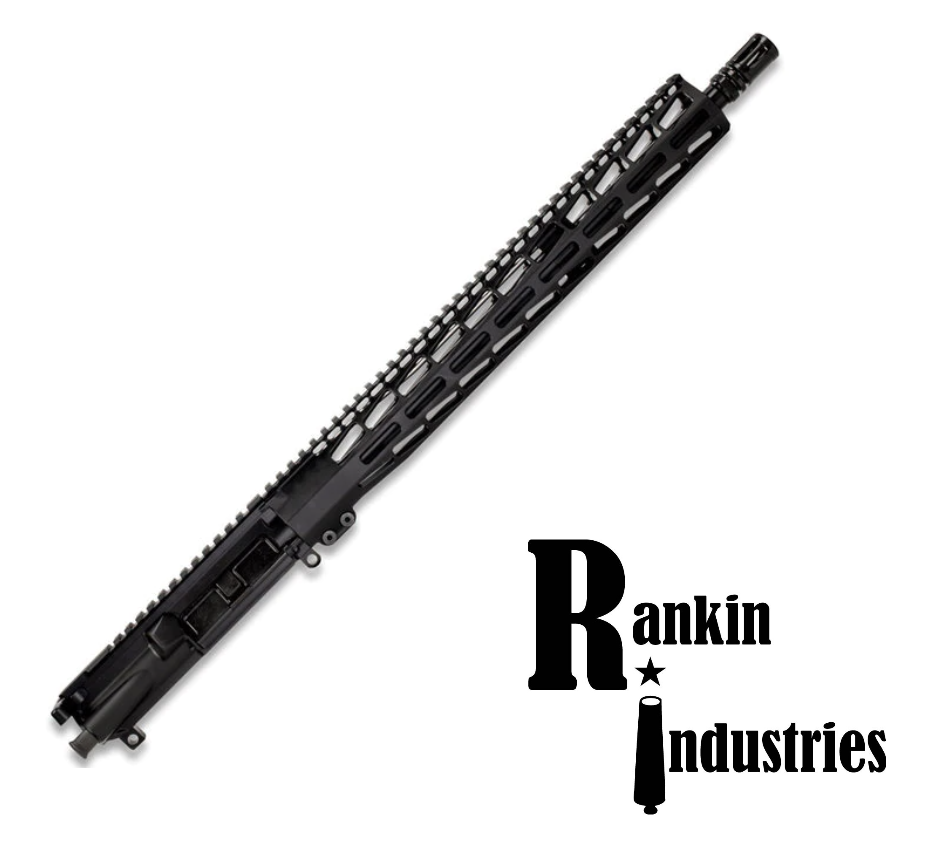
4. Best lightweight AR-15 complete upper
A lightweight upper is useful when we carry the rifle often or move through a course with it. The goal is not simply to remove weight everywhere. We want a manageable front end that still gives us the barrel length, sighting space, and heat tolerance appropriate for the intended use.
One documented example is the Adams Arms COR Ultra Lite Upper. It has a 16.5-inch Ultra Lite barrel, a 7.5-ounce low-mass bolt carrier, an optic-ready A3 flat-top, and a short-stroke piston system. The configuration is described for speed and close-range competition, including 3-Gun-style courses.
That setup makes sense for a buyer who values fast handling and a piston operating system. We should still compare the complete weight, included components, and accessory needs before choosing it for a different role. Lightweight is a handling decision, not a promise that every application will benefit equally.
5. Best 16-inch 5.56 NATO complete upper
The 16-inch 5.56 NATO upper remains a straightforward starting point because it avoids the extra questions that come with very short configurations. We get a familiar general-purpose format, and the length is easy to pair with a standard lower and common accessories. We should still read the markings rather than assume two similar-looking uppers are configured alike.
The following checklist keeps the comparison focused on the parts that affect fit and use:
- Confirm the chamber marking and the ammunition we plan to use.
- Check whether the bolt carrier group and charging handle are included.
- Match the gas block and gas tube to the barrel and handguard.
- Leave enough rail space for the optic, light, and sling hardware we actually need.
After that list, we can narrow the choice by barrel profile, handguard interface, and operating system. Our 5.56 upper buying guide is useful here because it emphasizes compatibility, included components, and standard configurations rather than appearance alone.
A 16-inch upper is not automatically the best answer for every shooter, but it is often the easiest baseline to explain and maintain. We should choose a different length only when the handling, transport, or intended use gives us a clear reason.
6. Best mid-length AR-15 complete upper
A mid-length gas system is a common choice for a 16-inch 5.56 NATO upper. It gives us a familiar general-purpose configuration and keeps the controls and accessory layout conventional. The exact feel still depends on the barrel, ammunition, buffer system, and overall build, so the gas-system label is only one part of the decision.
We should avoid treating “mid-length” as a complete performance description. The barrel profile, handguard, gas block, and bolt carrier group all remain relevant. A buyer comparing two mid-length uppers should read the full specifications and confirm what is included rather than relying on the category name.
For builders who expect future changes, standard interfaces can make maintenance and replacement simpler. That is why we generally favor clearly documented parts over a setup whose important components are difficult to identify. The right mid-length upper is the one that fits the lower and the owner’s actual shooting routine.
| Checkpoint | Why it matters | What we verify |
|---|---|---|
| Barrel and chamber | Establishes caliber compatibility | Markings and intended ammunition |
| Gas system | Affects configuration and fit | Length, gas block, and gas tube |
| Handguard | Determines accessory placement | Interface and available rail space |
| Included parts | Changes the real purchase cost | Bolt carrier group and charging handle |
The table is a reminder that no single label settles the purchase. Once those four checkpoints agree, we can compare price, handling, and the amount of future customization we expect.
7. Best AR-15 complete upper for home defense
For a defensive rifle, we would prioritize reliability, safe handling, a clear sighting system, and a setup we can operate under stress. A shorter upper may be easier to maneuver indoors, but short configurations bring additional technical and legal questions. We should confirm the configuration with qualified counsel and follow applicable federal, state, and local rules rather than guessing.
A practical home-defense upper should leave room for a dependable light and a sling. We also want controls and accessories that we have practiced with, not a collection of parts added because they looked useful online. A simple, familiar setup is easier to inspect and maintain.
Our AR-15 upper and lower guide explains the difference between upper and lower receivers, including the fact that serialized lower receivers require an FFL transfer while upper receivers and parts follow a different shipping process. We should still confirm current requirements before placing an order.
8. Best AR-15 complete upper for accuracy
Accuracy starts with the barrel, but the barrel does not work in isolation. Ammunition, optic stability, shooter technique, receiver fit, and maintenance all affect what we see on paper. We should decide whether we need repeatable practical groups for general shooting or a setup built around more deliberate bench work.
A free-float handguard can help keep accessory pressure from affecting the barrel, but it does not turn every upper into a precision rifle. We should pay attention to barrel profile, twist rate, chamber marking, and the ammunition weights the manufacturer documents. If a specification is not listed for the exact upper, we should not fill in the blank from a similar model.
For a more detailed parts review, our AR-15 component guide explains why the barrel and bolt carrier group deserve attention during a build. That approach keeps the accuracy discussion grounded in parts we can inspect, service, and match to the lower.
9. Best .300 Blackout complete upper
A .300 Blackout upper is a different tool from a 5.56 NATO upper, even when both use the same general AR-15 platform. We need to match the upper to the correct ammunition and confirm the caliber marking before loading or firing. The appeal is the ability to build around a different cartridge while retaining much of the familiar lower-receiver format.
Before choosing one, we should decide whether the rifle will be used with supersonic ammunition, subsonic ammunition, or both. Suppressor plans also affect the conversation, but we should select the upper first by its documented configuration rather than assuming every .300 Blackout barrel or gas system behaves the same way.
The practical checks are easy to keep in front of us:
- Confirm the upper is marked for .300 Blackout.
- Keep .300 Blackout and 5.56 NATO ammunition physically separated.
- Verify the barrel length, twist rate, and gas system listed for that exact model.
- Confirm suppressor compatibility and current legal requirements before purchase or installation.
Those checks prevent an attractive configuration from becoming a confusing one. We should also label magazines and storage clearly, especially when more than one AR-15 caliber is kept in the same workspace. For the reference document behind that habit, SAAMI publishes the industry list of generally accepted firearm and ammunition combinations, and a pairing that is not on it stays out of the rifle.
10. Best AR-15 complete upper for easy upgrades
For easy upgrades, we would choose a documented, standard configuration with an accessible handguard interface and clearly identified replacement parts. That gives us room to change the optic, sling mount, light, charging handle, or handguard without rebuilding the entire rifle. The best upgrade path is usually the one that keeps future decisions ordinary.
We should write down the upper’s caliber, barrel length, twist rate, gas-system length, handguard interface, and included components before ordering. This small record helps us avoid buying a part that looks compatible but does not match the original assembly. Our AR-15 upper receiver guide is a useful reference for those choices.
Western Sport also offers build parts for buyers who want to replace or add individual components over time. We can begin with a complete upper, shoot it as configured, and upgrade only where the rifle’s use gives us a reason. That keeps the build practical and the changes measurable.
Shop With Our Team
If we are comparing configurations or need help identifying what a complete upper includes, we can shop AR-15 uppers and contact Western Sport for guidance from a family-run Roanoke, Texas gun store and range.
Conclusion
The right AR-15 complete upper is the one whose caliber, barrel, gas system, included parts, and intended use all agree. We can start with a 16-inch 5.56 NATO setup for general use, choose a lighter configuration for faster handling, or move to .300 Blackout when the cartridge fits the plan. A careful compatibility check is worth more than a flashy specification.
Frequently Asked Questions
What does a complete AR-15 upper usually include?
A complete upper commonly includes the receiver, barrel, gas system, handguard, and muzzle device, but the bolt carrier group and charging handle are not universal. We should read the exact product listing before assuming either part is included.
Can any AR-15 upper fit any lower receiver?
Many standard AR-15 uppers and lowers are designed to work together, but caliber, receiver pattern, fit, and operating-system details still matter. We should confirm compatibility for the specific upper and lower before assembly.
Is a 16-inch barrel a good general-purpose choice?
A 16-inch barrel is a practical baseline for many 5.56 NATO builds because it offers a familiar general-purpose format. The best length still depends on handling, transport, intended use, and the complete configuration.
What is the difference between carbine-length and mid-length gas systems?
They place the gas port at different positions along the barrel and require matching gas-system components. The choice should be evaluated with the barrel length, gas block, gas tube, buffer system, and manufacturer’s specifications together.
Should we choose 5.56 NATO or .300 Blackout?
That depends on the ammunition, barrel configuration, and intended use. The two cartridges require careful caliber identification, and we should keep their ammunition separated whenever both are present in the same workspace.
Does a free-float handguard guarantee better accuracy?
No. A free-float handguard can reduce contact between accessories and the barrel, but accuracy also depends on the barrel, ammunition, optic, shooter, maintenance, and the complete rifle setup.
Are short AR-15 uppers subject to special rules?
Short configurations can raise federal, state, and local legal questions depending on how the firearm is configured. We should not rely on a general article for legal advice and should confirm the current rules with qualified counsel before building or modifying one.

Lance Rankin is the owner and Chief Gunsmith of Western Sport, a family-run Type 07 FFL and Class 3/SOT dealer in Roanoke, Texas, serving shooters since 2007. Born and raised in Texas with over 50 years of experience handling firearms, Lance purchased Western Sport in 2017 and turned his lifelong passion into his profession. He specializes in AR-15 and AR-10 platform rifles, manufactures Western Sport’s own AR-15 line under the Rankin Industries brand, and runs the shop’s in-house Cerakote coating operation. When he’s not behind the counter or the workbench, you’ll find him on his ranch deep into the night, hunting coyotes with an AR-15 and thermal optics. Lance holds an MBA and personally shoots and tests the products Western Sport sells.


