



The best hunting binoculars for most deer hunters are a full-size 8×42 or 10×42. An 8×42 gives a wider, brighter, steadier view for brush country and the last minutes of light. A 10×42 pulls more detail out of senderos, open pastures and long fence lines. Go to 12x or 15x only if you plan to glass off a tripod. Below we cover how to read the numbers, what actually matters in the field, and the binoculars we would put around our own neck this season.
Texas general deer season opens November 7, 2026, and glass is the one piece of gear hunters use every minute they sit. A good rifle and a good scope do their work in a few seconds. Binoculars do the work for hours before that shot, so they deserve real thought. If you are still finishing your opening weekend checklist, our Texas deer season 2026 gear check covers the rest.
Shop the gear in this guide
-
Add to cart

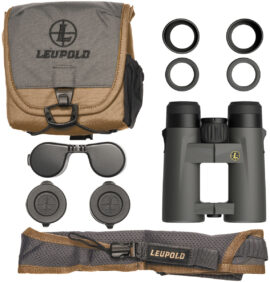
Leupold BX4 Pro Guide HD 8×42 Gen 2 Binocular
$599.99 -
Sale!Add to cart

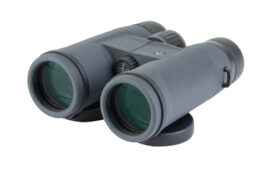
Leupold BX-2 Timberline HD, Binocular, Shadow Gray, Leup Bino 10X42MM
Original price was: $199.99.$149.99Current price is: $149.99. -
Add to cart

Sig Sauer Buckmaster 10×42 Binocular
$149.99 -
Add to cart

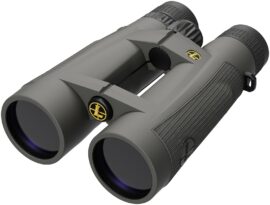
Leupold BX-5 Santiam HD 15 Binocular
$1,549.99

How to choose the best hunting binoculars
Every binocular carries two numbers, like 10×42. Leupold explains it plainly in its guide to understanding the numbers on your binoculars: the first number is magnification and the second is the diameter of the objective lenses in millimeters. Those two numbers tell you most of what you need to know about how a binocular will behave in a stand or blind.
Magnification: 8x, 10x or more
Magnification is how much closer the animal looks. More power sounds better, but it comes with a smaller field of view and more visible shake. Leupold recommends 8x to 10x for most situations, especially if you glass free-hand, and says that once you get into the 12x to 15x range you will need a tripod to steady the optic.
Here is how we break it down at the counter:
- 8x is the easiest to hold steady and gives the widest view. It is our pick for thick cover, timber, cedar breaks and still-hunting where deer show up close and move fast.
- 10x is the all-around choice for Texas. It gives you enough reach to count points across a pasture or down a sendero and is still easy to hold for a few minutes at a time.
- 12x and 15x are glassing tools. Put them on a tripod on a ridge, a tailgate or a stand rail and they will pick apart country a 10x only skims. Hand-held, they bounce.
Objective size and low light
The objective lenses gather light. Bigger lenses mean a brighter image, which matters most in the first and last few minutes of legal shooting light, when deer move the most. The tradeoff is weight and bulk. A 42mm objective is the sweet spot for most hunters. A 50mm or 56mm objective gathers more light but belongs on a tripod or in a pack, not bouncing on your chest all day.
A quick way to compare low light performance is exit pupil. Divide the objective size by the magnification. An 8×42 gives a 5.25mm exit pupil and a 10×42 gives 4.2mm. The bigger number means a bigger beam of light reaching your eye, which is why an 8×42 often looks a touch brighter at dusk than a 10×42 with the same glass.
Eye relief, coatings and build
- Eye relief is the distance your eye can sit from the eyepiece and still see the full picture. If you wear glasses, look for longer eye relief and twist-up eyecups you can run down flat.
- Lens coatings cut glare and help the glass shed water, dust and fingerprints. Leupold calls theirs Guard-Ion. It matters on a wet morning in a box blind.
- Waterproof and fogproof builds matter when you walk from a heated truck into a cold blind. Fogging on the inside of the glass is the one problem you cannot wipe away.
- A tripod adaptor thread lets you mount high-power glass on a tripod. If you buy 12x or more, make sure it has one.
- A chest harness keeps binoculars quiet, protected and ready. It is far better than a neck strap for a long sit or a long walk.
Our picks for this deer season
These are binoculars we carry and would hand to a friend headed to a lease. We picked them by how they fit the way Texas hunters actually hunt, not by spec sheet bragging.
Best for brush country and low light: Leupold BX4 Pro Guide HD 8×42 Gen 2
If most of your deer show up inside 150 yards in mesquite, cedar or creek bottoms, an 8×42 is the right tool, and the Leupold BX4 Pro Guide HD 8×42 Gen 2 is a serious one. It has 18mm of eye relief and twist-up eyecups, which makes it a good fit for hunters who wear glasses. It carries Guard-Ion lens coating and a 1/4-20 tripod adaptor thread, so it works hand-held in a blind and on a tripod when you want to sit and pick a hillside apart. The wider view and bigger exit pupil make it easy to find a deer slipping through cover at first light.
Best all-around 10x for most hunters: Leupold BX-2 Timberline HD 10×42
For a hunter who sits a stand over a feeder, food plot or sendero and needs to judge a buck before he steps out, a 10×42 does it all. The Leupold BX-2 Timberline HD 10×42 comes with a chest harness, lens covers and a cleaning cloth in the box, so it is ready to hunt the day you get it. That makes it a great pick for a first real pair of hunting binoculars or a gift for a new hunter in the family.
Another strong 10×42: Sig Sauer Buckmaster 10×42
Some hunters already run Sig glass on their rifles and want binoculars to match. The Sig Sauer Buckmaster 10×42 is a full-size 10-power binocular with 42mm objectives, built for glassing distant ground. It is a solid choice for hunters who split time between deer leases, hog hunts and spotting at the range.
Best for glassing big country off a tripod: Leupold BX-5 Santiam HD 15×56
West Texas, the Panhandle and big open ranches reward patience behind high-power glass. The Leupold BX-5 Santiam HD 15×56 is built for exactly that. It has 15 power magnification, 56mm objectives, Guard-Ion coating, a 1/4-20 tripod adaptor and a bino harness in the box. Put it on a tripod, sit on a high point and grid the country. It is not the binocular to hold free-hand on a walk, and it is not meant to be.
Want to see more options, including compact pairs for the truck and 12×50 models? Browse our full binoculars category or the wider optics section.
Quick comparison
| Binocular | Power x objective | Exit pupil | Best use |
|---|---|---|---|
| Leupold BX4 Pro Guide HD Gen 2 | 8×42 | 5.25mm | Brush country, low light, glasses wearers |
| Leupold BX-2 Timberline HD | 10×42 | 4.2mm | All-around stand and blind hunting |
| Sig Sauer Buckmaster | 10×42 | 4.2mm | All-around, leases and hog hunts |
| Leupold BX-5 Santiam HD | 15×56 | 3.7mm | Tripod glassing in open country |
How we use binoculars on a deer hunt
Good glass only helps if you use it right. A few habits make a big difference:
- Set the diopter once. Close your right eye, focus with the center wheel, then close your left eye and focus with the diopter ring. Remember that setting and leave it.
- Glass first, scope second. Your rifle scope is for confirming and shooting, not searching. Using binoculars to look around keeps your muzzle down and gives you a wider view.
- Brace everything. Rest your elbows on your knees, the blind window or a shooting rail. Even an 8x shows more detail when it is steady.
- Grid the country. Move the glass slowly in overlapping strips instead of sweeping. Look for parts of a deer, like an ear flick, a leg or the horizontal line of a back, not a whole animal.
- Know the range too. If you hunt open country, pair your binoculars with a rangefinder from our rangefinders category so the shot is as sure as the ID.
Your glass and your cartridge should fit the same country. If you are still picking a rifle, our guide to the best deer hunting caliber for Texas lines up well with the picks above. Hunting hogs after dark is a different job, and that is where a thermal comes in. See our best thermal monocular guide.
Frequently asked questions
Which is better for deer hunting, 8×42 or 10×42?
For thick cover and close shots, 8×42. It is steadier, wider and a little brighter at dusk. For senderos, pastures and longer looks, 10×42. If you only buy one pair for Texas whitetail, most hunters are happy with a 10×42.
What binocular magnification is best for deer hunting?
8x to 10x for hand-held use. Leupold recommends that range for most situations. Save 12x and 15x for tripod glassing in open country.
What is better than 10×42 binoculars?
It depends on the job. For more reach, a 12×50 or 15×56 on a tripod. For more brightness and a steadier view, an 8×42. Better glass and coatings in the same 10×42 size also make a real difference in low light.
Do I need binoculars if my rifle has a scope?
Yes. Binoculars let you search and judge animals for long periods without pointing a rifle at anything. They are also far easier on your eyes during a long sit.
Ready for opening weekend? Shop our hunting binoculars and get your glass set up before you head to the blind.

Lance Rankin is the owner and Chief Gunsmith of Western Sport, a family-run Type 07 FFL and Class 3/SOT dealer in Roanoke, Texas, serving shooters since 2007. Born and raised in Texas with over 50 years of experience handling firearms, Lance purchased Western Sport in 2017 and turned his lifelong passion into his profession. He specializes in AR-15 and AR-10 platform rifles, manufactures Western Sport’s own Rankin Industries parts and rifles, and runs the shop’s in-house Cerakote coating operation. When he’s not behind the counter or the workbench, you’ll find him on his ranch deep into the night, hunting coyotes with an AR-15 and thermal optics. Lance holds an MBA and personally shoots and tests the products Western Sport sells.


