


The useful question in an ar-15 vs ar-10 comparison is not which rifle is more powerful. It is which one fits the cartridges you plan to shoot, the distance you care about, and the time and money you can put into practice. We can narrow the choice by looking at platform size, ammunition, ownership costs, and the job you have in mind.
AR-15 vs AR-10: the basic difference
Both platforms use a similar general layout, but they are sized for different cartridges. An AR-15 is typically the lighter, smaller option, while an AR-10 pattern rifle is built around larger cartridges and has larger components. Names alone do not settle the choice: check the exact model, caliber, and maker’s specifications before buying.
The AR-15 is the lighter, smaller-platform option
The AR-15’s smaller size is a practical advantage when we want a rifle that is easier to carry, store, and handle for extended range sessions. The platform is commonly chambered in 5.56 NATO and .223 Remington, though other chamberings are available. Western Sport’s AR-15 rifle selection is a useful place to compare current configurations, and Rankin Industries makes complete AR-15 uppers and build kits.

The AR-10 pattern is built around larger cartridges
An AR-10 pattern rifle is generally a larger, heavier rifle intended for cartridges such as .308 Winchester or 6.5 Creedmoor. That can make sense when a shooter values those cartridges’ range and energy characteristics, but it also means more weight to carry and ammunition costs to consider. For a look at available configurations, see AR-10 rifles.
AR-10 parts compatibility varies by manufacturer
AR-10 is often used as a broad platform label, but dimensions and component patterns can vary among manufacturers. That means we should not assume that receivers or other parts from different makers will fit together. Rankin Industries makes complete rifles as well as uppers and kits; when comparing any components, check the specific maker’s compatibility information rather than relying on the platform name.
Platform names do not tell you the exact caliber
A platform label does not tell us which cartridge a particular rifle is chambered for. Even within the AR-15 family, available chamberings can serve quite different purposes. Read the rifle’s markings and product specifications, then use only ammunition that the firearm’s manufacturer identifies as appropriate.
Calibers and what they do well
Caliber is where the platform decision starts to become personal. A cartridge that works well for economical practice may not be the one we want for a longer-range or hunting application. We should compare ammunition availability, cost, and intended use together rather than choosing by a caliber’s reputation alone.
5.56 NATO and .223 Remington suit general range use
These are common AR-15 chamberings for general range use, and ammunition availability can make regular practice more practical. The names are related, but they are not a reason to assume every rifle can use both types of ammunition. Check the chamber marking and the manufacturer’s guidance for the particular rifle. Our guide to 5.56 and .300 Blackout explains how different AR-15 chamberings can change a build’s purpose.
Other AR-15 calibers change the rifle’s role
An AR-15 can be configured for cartridges beyond 5.56 NATO and .223 Remington, but the change affects more than the label on a box. It can change ammunition costs, availability, and what the rifle is suited to do. Rankin Industries makes complete AR-15 uppers, though the exact caliber and compatibility must be confirmed for the specific upper and lower combination.
.308 Winchester and 7.62 NATO offer more reach and energy
Both cartridges are associated with AR-10 pattern rifles, but their names should not be treated as interchangeable chamber specifications. A rifle’s markings and manufacturer’s instructions determine what ammunition it is designed to use. For a buyer considering either cartridge, the practical trade-off is a larger rifle and generally higher ammunition costs in exchange for the performance characteristics that draw many shooters to these cartridges.
6.5 Creedmoor favors long-range performance
6.5 Creedmoor is another chambering found in AR-10 pattern rifles, often considered by shooters focused on longer-range use. Whether it makes sense depends on the rifle, ammunition availability, and the distances we expect to shoot. It is worth comparing its ongoing ammunition cost with .308 Winchester before settling on a setup.
Check the rifle’s chamber markings before choosing ammunition
We should verify the chamber marking on the rifle itself, then check the owner’s manual or manufacturer guidance. Cartridge names that sound similar do not establish safe compatibility. The SAAMI accepted cartridge and chamber list is the reference we check at the counter. If the marking is unclear, pause and ask a qualified gunsmith or the manufacturer instead of guessing.
What each platform costs to own
The purchase price is only the starting point. We also need to think about ammunition, magazines, optics, maintenance, and the amount of practice we intend to do. A simple comparison of the cost categories helps keep an attractive sticker price from crowding out the rest of the budget.
Compare complete rifle prices, not just entry-level tags
When we compare rifles, it helps to look at what is included and what we would need to buy separately. The examples below are cost categories, not quoted prices; actual prices vary by configuration and availability.
| Cost area | AR-15 | AR-10 pattern |
|---|---|---|
| Complete rifle | Compare included components and configuration | Compare included components and configuration |
| Ammunition | Check local price and availability | Check local price and availability |
| Magazines and parts | Confirm model-specific fit | Confirm manufacturer-specific fit |
| Practice and care | Plan for regular range use and maintenance | Plan for regular range use and maintenance |
After comparing the complete package, we can see whether a lower initial price leaves enough room for the gear and practice the rifle will need. A budget AR-15 guide can also help frame a purchase around the whole setup rather than the rifle alone.
Larger-caliber ammunition usually costs more per round
Ammunition cost has a direct effect on how often we can practice. Larger-caliber options often cost more per round, but prices move and local availability varies, so check current ammunition listings before deciding. A cartridge that fits the intended use but rarely gets fired may be a worse practical match than one we can train with consistently.
Optics, magazines and spare parts add to the total
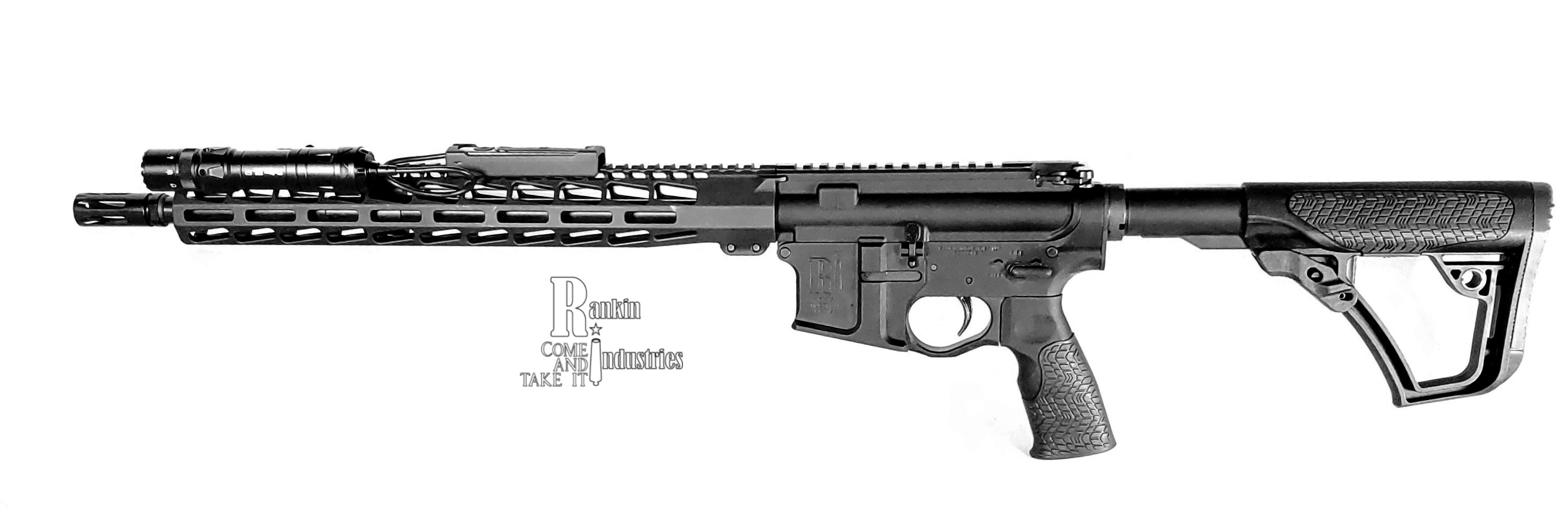
A complete ownership budget includes compatible magazines, an optic or sights, and any spare parts we expect to need. AR-10 components can be especially dependent on the exact manufacturer and model, so it pays to confirm fit before ordering. Rankin Industries also makes complete rifles, giving buyers another product type to consider when comparing a ready-to-use rifle with a parts-based purchase.
Budget for practice, maintenance and any needed training
Set aside money for ammunition and routine care rather than spending the entire budget on the firearm. If we are new to a platform, training and time at a range are part of learning to use it responsibly. An honest budget makes it easier to choose a rifle we can afford to keep practicing with, not merely one we can purchase once.
Size, recoil and handling differences
The larger cartridge is only one part of how a rifle feels. Overall weight, stock fit, optic choice, and how the rifle balances in our hands all affect handling. A rifle that feels comfortable during a brief look at a counter may feel different after a longer range session, so try to assess fit as well as platform.
AR-15s are generally lighter and easier to carry
An AR-15 is generally the easier platform to carry over time because it is smaller and commonly uses lighter cartridges. The exact weight depends on the rifle’s configuration, so compare the specifications of the models under consideration. Barrel length and other setup choices also affect balance; our barrel-length guide covers some of the trade-offs.
AR-10s usually bring more weight and recoil
The larger cartridge and components of an AR-10 pattern rifle usually mean more weight and more felt recoil than a comparable AR-15. The difference varies by rifle and ammunition, but it matters if we plan to carry the rifle or shoot many rounds in a session. A larger platform can still be the right answer when its chambering and intended use matter more than minimizing weight.
Magazine size and rifle dimensions affect handling
Magazine dimensions, stock length, and the rifle’s overall size influence how easily it moves and how it fits our storage and transport arrangements. We should confirm that the magazines are made for the exact platform and cartridge, rather than assuming a familiar-looking magazine will work. These practical details can matter as much as a headline caliber difference.
Fit and setup matter as much as platform
A comfortable stock position and manageable controls can make practice more consistent. We can compare rifles in person, paying attention to how each fits without assuming that one platform suits every shooter. A well-matched setup is often more useful than choosing a heavier or lighter option based on a specification alone.
Match the rifle to your actual use
The right answer follows from what we intend to do with the rifle and how often we will use it. Start with range distance, the type of shooting, and the amount of practice that fits our schedule. Then narrow the options by budget, storage, and local requirements.
Choose an AR-15 for a versatile range and general-purpose rifle
For a general range rifle, an AR-15 in a commonly available chambering can be a practical choice, particularly when lighter weight and regular practice matter. The particular model and caliber still deserve a close look. We can compare options in Western Sport’s AR-15 selection and choose based on fit and intended use rather than the platform label alone.
Consider an AR-10 for larger game or longer-range shooting
An AR-10 pattern rifle may suit a buyer whose plans call for a larger cartridge or longer-range shooting. The rifle’s weight, recoil, and ammunition cost should be part of that decision, not afterthoughts. We should also check the specific model’s chambering and parts support before choosing it for a particular use.
Think through storage, transport and how often you will practice
Before we settle on either platform, it helps to consider a few everyday questions:
- Where will we store the rifle securely?
- How will we transport it to the range or hunting area?
- How often can we realistically practice with its ammunition?
- What budget remains for maintenance and training?
Those answers can quickly reveal whether a lighter rifle and lower ongoing costs matter more than the larger cartridge. A realistic use plan keeps the purchase grounded in how we will actually use the rifle.
Let local laws and your intended use narrow the options
Rules can vary by location and configuration, so check current requirements where you live before purchasing or changing a firearm. This is not legal advice; when a rule is unclear, confirm it with a qualified attorney or the relevant authorities. The lawful uses you have in mind should help narrow the platform and configuration choices.
Make the decision before you buy
A sound decision is usually a short list of specific rifles, not an abstract debate about platforms. Compare models that fit the same intended role, then weigh their chambering, total cost, and parts support. That gives us a more useful answer than asking which platform is best in every situation.
Set a realistic budget for the rifle and ongoing costs
Write down the total amount available for the rifle, ammunition, magazines, optics, storage, and training. If the purchase uses the whole budget, the plan may not leave enough for regular practice. A slightly different configuration can be a better fit if it leaves room for the costs that continue after the sale.
Compare specific models and their parts support
Once we have a short list, compare the exact specifications and ask about compatible parts and magazines. This is particularly useful with AR-10 pattern rifles, where dimensions can vary between manufacturers. For an AR-15 purchase, our guide to choosing an AR-15 upper is a helpful reference when comparing a complete rifle with an upper-based setup.
Confirm ammunition availability where you live
Check local availability and current prices for the exact cartridge before buying. A caliber that is hard to find nearby can limit practice, while prices can change over time. If we are considering more than one chambering, comparing real local options is better than relying on general impressions.
Pick the platform that fits your needs, not just its maximum capability
The AR-15 usually makes sense when we prioritize a lighter rifle and accessible practice, while the AR-10 pattern can suit a need for a larger cartridge and longer-range use. Neither choice is automatically right for every shooter. If you want to compare options in person, contact our team and bring your intended use and budget into the conversation.
Conclusion
The AR-15 and AR-10 pattern rifles answer different needs: one is generally lighter and easier to practice with, while the other accommodates larger cartridges at the cost of more weight and higher ongoing expense. We can make a better choice by checking the exact chambering, comparing complete ownership costs, and matching the rifle to our actual use. For a hands-on comparison, visit Western Sport and talk through the options with our team.
Frequently Asked Questions
What is the main difference between an AR-15 and an AR-10?
An AR-15 is generally the smaller, lighter platform, while an AR-10 pattern rifle is larger and designed around larger cartridges. The exact specifications depend on the model and manufacturer.
Is an AR-15 or an AR-10 cheaper to shoot?
An AR-15 in a common chambering is often less expensive to practice with, but local ammunition prices and availability vary. Compare current prices for the exact cartridges you are considering.
Can an AR-15 shoot .308 Winchester?
No. .308 Winchester is a larger cartridge associated with AR-10 pattern rifles, not standard AR-15 chamberings. Always follow the rifle’s chamber markings and manufacturer instructions.
Are .223 Remington and 5.56 NATO interchangeable?
Do not assume they are interchangeable in every rifle. Check the firearm’s chamber marking and manufacturer guidance to confirm which ammunition is appropriate.
Can AR-10 parts from different manufacturers be mixed?
Not necessarily. AR-10 pattern dimensions and components can vary by manufacturer, so verify compatibility for the exact models and parts involved.
Is an AR-10 better for long-range shooting?
It may be a suitable choice for some longer-range uses because it can be chambered in larger cartridges, including 6.5 Creedmoor. The right option depends on the rifle, ammunition, distance, and shooter’s needs.
Which platform is easier to carry?
An AR-15 is generally lighter and smaller, making it easier to carry in many configurations. Compare the actual rifle specifications, since accessories and configuration affect weight and balance.

Lance Rankin is the owner and Chief Gunsmith of Western Sport, a family-run Type 07 FFL and Class 3/SOT dealer in Roanoke, Texas, serving shooters since 2007. Born and raised in Texas with over 50 years of experience handling firearms, Lance purchased Western Sport in 2017 and turned his lifelong passion into his profession. He specializes in AR-15 and AR-10 platform rifles, manufactures Western Sport’s own AR-15 line under the Rankin Industries brand, and runs the shop’s in-house Cerakote coating operation. When he’s not behind the counter or the workbench, you’ll find him on his ranch deep into the night, hunting coyotes with an AR-15 and thermal optics. Lance holds an MBA and personally shoots and tests the products Western Sport sells.


