



To sight in a rifle scope, mount and level the scope, bore sight the rifle at 25 yards, fire a 3-shot group, move the turrets to put the group on the bullseye, then confirm at 100 yards with the same ammo you hunt with. Most hunting scopes move 1/4 MOA per click, so at 100 yards it takes about 4 clicks to move your impact 1 inch. Plan on a box of ammo and an hour at the bench, and do it before you head to the deer lease, not the morning of.
We walk hunters through this at the counter every fall. The steps below are for a bolt-action deer rifle with a standard hunting scope. If you are zeroing a carbine, our AR-15 sight-in guide covers the 50/200 zero and the higher sight height.
Shop the gear in this guide
-
Sale!Add to cart

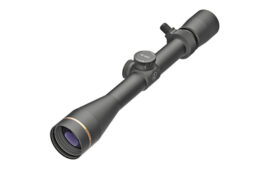
Leupold VX-3HD, Rifle Scope, 1″ Tube, Matte Black Finish, Leup 3.5-10X40 Dplx
Original price was: $599.99.$499.99Current price is: $499.99. -
Add to cart

Leupold VX-Freedom, Rifle Scope, 1″ Main Tube Diameter, Black
$399.99 -
Add to cart
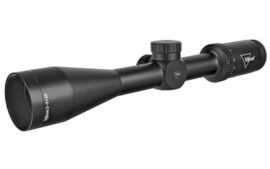
Trijicon Huron 3-9x40mm Riflescope BDC Hunter Holds, 1 in. Tube, Satin Black
$735.00

What You Need Before You Start
Bring everything to the range in one trip. Running back to the truck for a screwdriver is how a one-hour job turns into a whole afternoon.
- Your rifle with the scope mounted in solid rings and bases
- At least 20 rounds of the exact load you will hunt with (same brand, same bullet weight)
- A solid rest: sandbags, a bag set or a rifle rest on a sturdy bench
- Targets with a 1-inch grid so you can count inches without guessing
- A spotting scope or binoculars to see holes at 100 yards
- Ear and eye protection
- A screwdriver or Torx driver that fits your ring screws, plus a torque driver if you have one
- A bore sighter, or just the ability to remove your bolt
How to Sight In a Rifle Scope, Step by Step
Step 1: Mount and Level the Scope
A bad mount will fight you through every step that follows. Set eye relief first. Shoulder the rifle the way you would in the stand, with your head in its natural spot on the stock, and slide the scope forward or back until you see a full, clear picture with no black ring around the edge. Then level the reticle so the vertical crosshair lines up with the rifle’s bore. A canted reticle sends shots left or right at longer range even when your 100-yard zero looks perfect.
Tighten ring screws a little at a time in a crisscross pattern, like lug nuts on a wheel. Use the torque values printed in your scope and ring instructions. Vortex says over-torqued rings are the most common problem it helps customers with, and a crushed scope tube is not something you can fix at the range.
Step 2: Bore Sight at 25 Yards
Bore sighting gets your first shot on paper and saves ammo. On a bolt action it takes about two minutes. Set the rifle in your rest, pull the bolt and look through the bore from the back. Move the rifle until the bullseye sits in the center of the bore. Without moving the rifle, look through the scope and turn the elevation and windage turrets until the crosshairs sit on that same bullseye. Check the bore again, since the rifle may have shifted, and repeat until both line up.
A laser bore sighter does the same job if your action does not let you see through the bore. Either way, bore sighting only gets you close. It is not a zero.
Step 3: Fire a 3-Shot Group at 25 Yards
Settle the rifle in the rest so it points at the target without you holding it there. Squeeze, do not jerk. Fire three careful shots at the same aiming point, then look at the group, not any single hole. One flyer usually means the shooter, not the scope.
Measure from the center of the group to the bullseye. Here is the part that trips people up: 1/4 MOA clicks move the impact about 1/4 inch at 100 yards, but only about 1/16 inch at 25 yards. So at 25 yards it takes roughly 15 to 16 clicks to move 1 inch. If your group is 2 inches low, that is about 30 clicks up.
Step 4: Adjust the Turrets
Turn the turrets in the direction you want the bullet to go. The caps are marked UP and R (right) with an arrow. If your group is low, dial up. If it is left, dial right. Vortex sums it up the same way in its guide to sighting in a hunting rifle in three shots or less: if the impact was high, dial down, and if it was left, dial right.
Check what one click is worth on your scope before you dial. It is printed on the turret or in the manual. Most hunting scopes use 1/4 MOA per click, and Vortex notes that four clicks usually equals 1 MOA. Some scopes use 1/8 MOA or 0.1 MRAD, and the math changes with them.
| Distance | 1 MOA covers about | 1/4 MOA clicks per inch |
|---|---|---|
| 25 yards | 0.26 inch | About 15 to 16 |
| 50 yards | 0.52 inch | About 8 |
| 100 yards | 1.05 inches | About 4 |
| 200 yards | 2.09 inches | About 2 |
Fire another 3-shot group at 25 yards. When it lands within an inch or so of center, move out.
Step 5: Move to 100 Yards and Fine-Tune
Most deer hunters zero at 100 yards, and it is the easiest distance to confirm. Shoot a 3-shot group, measure from the group center to the bullseye, and dial using 4 clicks per inch. Let the barrel cool between groups. A hot barrel can walk shots, and your first shot on a deer comes out of a cold barrel, so that is the shot your zero needs to match.
Keep going until the center of your groups sits on the aiming point. Then fire one more group from a cold barrel as a check. If it holds, you are zeroed.
Step 6: Reset the Turrets to Zero
Many hunting scopes let you lift or loosen the turret cap and spin it back to zero without moving the reticle. Do it now, so if a turret gets bumped in the truck you can tell at a glance and turn it back. Check your manual, because each brand does this a little differently.
100 Yards or 200 Yards for a Deer Rifle?
A 100-yard zero is simple to shoot and simple to check. A 200-yard zero puts most common deer cartridges a little high at 100 and closer to dead-on farther out, which suits hunters who sit over long senderos or open pasture. There is no single right answer. Pick the one that fits the shots you take, then look up the drop numbers for your exact load on the ammo maker’s ballistics chart so you know where it hits at 200, 250 and 300 yards. If you are still choosing a cartridge, our best deer hunting caliber for Texas breakdown compares the popular options.
Common Sight-In Mistakes We See
- Chasing single shots. Adjust off the center of a group, never one hole.
- Switching ammo. A different bullet weight or brand can land in a different spot. Zero with the load you hunt with, and re-check if you change it.
- Shooting off a wobbly rest. If the rifle moves when you breathe, the group grows and the zero lies.
- Loose rings or bases. Groups that wander from string to string usually point to a mount problem, not the scope.
- Skipping the cold-bore check. Confirm your zero with a cold barrel before the hunt.
- Dialing the wrong way. Move the turret toward where you want the bullet to go, following the arrow on the cap.
Scopes and Rifles Worth a Look
If you are setting up a new deer rifle, these are the kind of hunting scopes we point folks toward. All of them are simple to sight in with standard capped turrets.
- The Leupold VX-3HD 3.5-10×40 Duplex is a 1-inch tube scope with a magnification range that covers thick brush and open fields alike.
- The Leupold VX-Freedom 3-9×40 keeps it simple with a Duplex reticle, a good match for a first deer rifle.
- The Trijicon Huron 3-9×40 BDC Hunter Holds adds holdover marks for longer shots. BDC reticles are built around a set zero distance, so zero it at the distance Trijicon’s manual calls for so the marks line up.
- Want the rifle and scope together? The Winchester XPR Scope Combo in .270 Win comes with a Vortex Crossfire II 3-9×40 already on it. You still need to sight it in with your hunting ammo before season.
Browse the full lineup in our riflescopes and rifles sections. Firearms ship to your local FFL. Good glass helps you find the deer, too, and our best hunting binoculars guide covers that side.
Frequently Asked Questions
How many shots does it take to sight in a rifle scope?
With a good bore sight, most hunters finish in 10 to 20 rounds. Vortex lays out a method that can get there in three shots if your reticle has measured marks, but bring a full box so you can confirm your zero with groups.
Should I sight in at 25 yards or 100 yards?
Both. Start at 25 yards to get on paper, then fine-tune and confirm at 100 yards. A 25-yard zero alone will not put you where you want at deer distances.
Which way do I turn the turret if I am shooting low?
Turn the elevation turret toward UP. You always dial in the direction you want the bullet to move.
How often should I re-check my zero?
Before every season, after any fall or hard knock, after you change ammo, and any time you remove and remount the scope.
Texas general deer season opens November 7. If your rifle has not been shot since last year, take an hour this week and run through our deer season gear check while you are at the range.

Lance Rankin is the owner and Chief Gunsmith of Western Sport, a family-run Type 07 FFL and Class 3/SOT dealer in Roanoke, Texas, serving shooters since 2007. Born and raised in Texas with over 50 years of experience handling firearms, Lance purchased Western Sport in 2017 and turned his lifelong passion into his profession. He specializes in AR-15 and AR-10 platform rifles, manufactures Western Sport’s own Rankin Industries parts and rifles, and runs the shop’s in-house Cerakote coating operation. When he’s not behind the counter or the workbench, you’ll find him on his ranch deep into the night, hunting coyotes with an AR-15 and thermal optics. Lance holds an MBA and personally shoots and tests the products Western Sport sells.


