


A lower price can reflect a simpler configuration, while a higher one may pay for materials, testing, or assembly work that matters for your use. To understand what makes a good ar 15 upper, we need to look past the finish and compare the parts, their fit, and the evidence behind the specifications. The right choice is the one that suits the rifle we intend to build and can be maintained over time.
What makes a good AR-15 upper
An upper is a group of components, not a single cosmetic part. We should assess the receiver, barrel, bolt carrier group, gas system, and handguard as a working assembly. A useful comparison starts with the configuration and documented details, then checks whether the parts suit the intended role.
Look beyond the receiver’s exterior finish
A clean finish may look good on the counter, but it tells us little about how the upper was machined or assembled. Receiver material and construction are worth checking, along with whether the seller identifies the configuration clearly. Our AR-15 upper receiver guide explains common upper styles and fitment considerations, which helps separate a useful specification from a surface-level sales point.
Check machining, dimensions, and assembly quality
Look for consistent machining, properly seated components, and clear information about what the assembly includes. If we are buying a complete upper, we should confirm whether the bolt carrier group and charging handle are included rather than assume “complete” means every part we expect. The AR-15 upper parts selection is a useful reference for the kinds of components that may be purchased individually or as part of a build.
Judge fit without mistaking a tight fit for accuracy
A snug fit between upper and lower can feel reassuring, but it is not a direct measure of accuracy. Accuracy depends on the whole system and on conditions such as ammunition, support, and shooter input. We should value consistent function and proper compatibility over a fit that merely feels tight when the receivers are joined.
Match the upper to its intended use
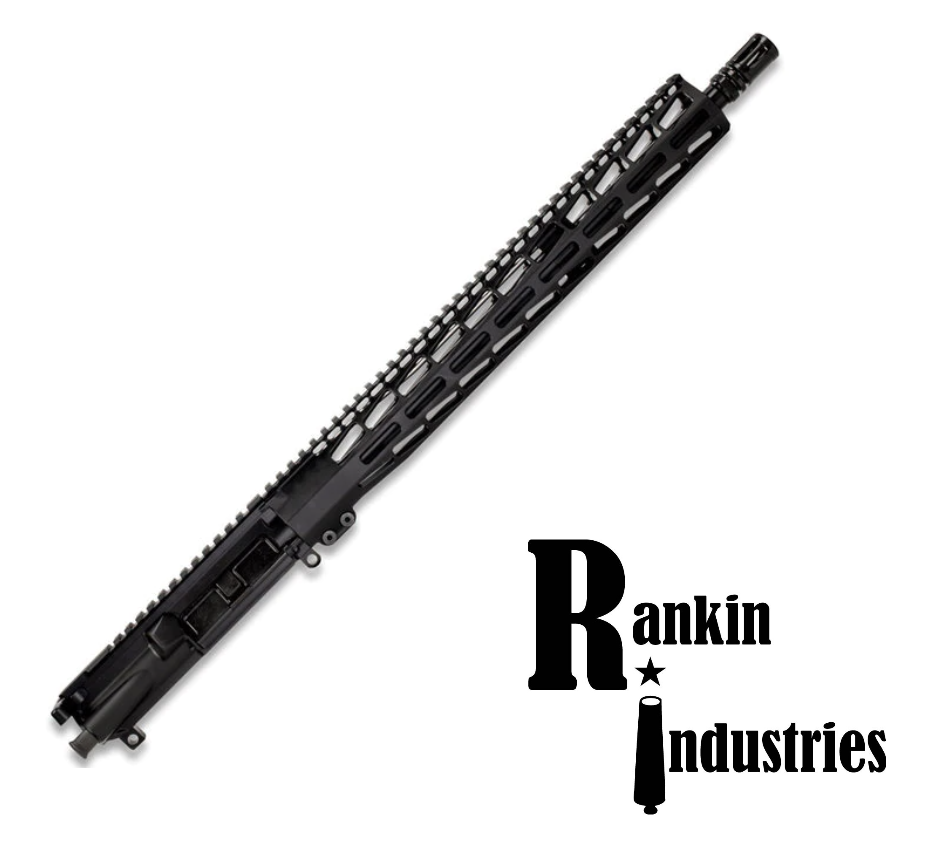
Start by deciding what the rifle needs to do. A general-purpose build, a lighter setup, and a configuration intended for precision shooting can call for different choices in barrel, handguard, and included parts. Rankin Industries makes complete AR-15 uppers and build kits, giving buyers those product types to consider when planning an assembly.
The barrel sets the performance ceiling
The barrel has a major effect on how an upper performs, so its specifications deserve more attention than decorative details. Compare the material and treatment, chambering, twist rate, and intended use as a set. When a specification is missing, we should ask for it rather than fill in the blank ourselves.
Compare steel, lining, and surface treatment
Barrel material and treatment can affect wear, maintenance, and how the barrel suits a particular use. A product description should state what the barrel is made from and identify any lining or surface treatment. We should compare documented details, not assume that a particular finish automatically means better accuracy or longer life.
Check chamber, twist rate, and caliber
Chambering and caliber must match the ammunition and the rest of the build. Twist rate is another specification to verify against the ammunition we expect to use; it should not be guessed from the barrel length or the product photo. Published SAAMI cartridge and chamber drawings are the standard reference for chamber dimensions. For a broader set of components to compare, the AR-15 and AR-10 upper parts category includes the kinds of parts buyers may need to match to a build.
Weigh accuracy against heat, weight, and service life
A heavier barrel may suit a build where steadiness matters more than minimizing carry weight, while a lighter configuration may be easier to handle for extended periods. How quickly a barrel heats depends on use, and a buyer should avoid treating a single material label as a complete account of service life. We can compare the stated barrel profile and intended use before deciding whether the trade-off makes sense.
Treat accuracy claims as test results, not guarantees
An accuracy claim is meaningful only when we understand how it was measured. Ask about the ammunition, distance, group size, and test conditions; without those details, a number may be hard to apply to our own rifle. Even a well-documented result is a test outcome, not a promise that every shooter and setup will reproduce it.
The bolt carrier group needs more than a polished finish
The bolt carrier group is a working part of the assembly, so appearance should come after material and inspection information. We should check that its specifications suit the upper and that the manufacturer explains what testing was performed. Clear records are more useful than a bright finish or a broad claim of premium quality.
Look for appropriate materials and manufacturing details
A useful listing identifies the bolt carrier group’s materials and relevant manufacturing details rather than relying on a general quality label. Coatings and finishes may matter for upkeep, but they do not replace information about the underlying parts. Compare what is documented and ask the seller to clarify anything left vague.
Check inspection and testing claims
Inspection language should say what was inspected and how. If a manufacturer states that a bolt or other component was tested, we should look for the specific test and the parts it covered. That lets us distinguish a defined quality-control step from a phrase that sounds reassuring but cannot be evaluated.
Examine the gas key, staking, and overall assembly
Check that the gas key is seated and secured appropriately, and inspect the assembly for obvious looseness or damage. Staking is one visible detail to assess, but it should be considered alongside the rest of the carrier and the manufacturer’s assembly information. We should not infer the quality of every internal part from one visible feature.
Consider whether replacement parts are easy to source
A build is easier to maintain when its components and replacement parts are identified clearly. Before purchasing, find out whether common service parts can be matched to the specific bolt carrier group and whether the manufacturer provides support. That practical question can matter more over time than a small cosmetic difference between two assemblies.
Gas system and handguard quality affect reliability and handling
Gas system details and handguard construction influence how the rifle functions and feels in use. We should evaluate them as parts of the same configuration rather than as isolated upgrades. Product descriptions should identify the relevant components so we can check fit and suitability before buying.
Look for a gas system suited to the barrel and intended use
The gas system should be considered alongside the barrel and the intended configuration. Verify that the listed system is compatible with the barrel assembly, and be cautious about assuming one setup is right for every use. The goal is a coherent build, not a collection of individually appealing parts.
Check that the gas block and gas tube are properly aligned
The gas block and tube need to be installed and aligned as part of a functioning assembly. If buying a complete upper, ask whether the manufacturer assembled and checked those parts; if buying components separately, confirm that their dimensions and fit are compatible. Clear assembly details help us make a better comparison.
Assess handguard rigidity and attachment
A handguard should attach securely and provide the mounting space the build needs. Consider how it is secured to the upper and whether its dimensions suit the accessories planned for the rifle. A long list of attachment points is not useful if the handguard is heavier or bulkier than the buyer wants.
Consider how weight and heat affect practical use
Weight adds up across the barrel, handguard, optic, and accessories. A setup that handles well at the counter may feel different after a longer session, and heat can affect how comfortable the handguard is to hold. For that reason, buyers should compare the assembled configuration rather than judging a single component in isolation.
Quality control is where hidden differences show up
Two uppers with similar parts lists can differ in how carefully those parts were inspected and assembled. We should ask what the maker checks, whether the answer is specific, and whether the same process applies consistently across production. Good documentation helps us understand what we are paying for without leaning on marketing language.
Ask what inspections are performed on the barrel and bolt
Ask which components are inspected and what the inspection involves. A statement about testing is more useful when it identifies the part and the method, rather than suggesting that the entire upper received an unspecified examination. We can then compare the information on equal terms.
Look for clear, specific manufacturing claims
Specific claims give us something to verify: a material, a process, a dimension, or an identified assembly detail. General descriptions such as “built for performance” tell us much less. When the documentation is clear, buyers can compare products without relying on appearance or assumptions.
Separate useful testing from vague marketing language
A useful testing claim explains what was tested and what the result means. A broad statement that a product is tested, without explaining the scope, is difficult to weigh. We should treat test information as one part of the purchase decision, not as proof that a particular upper is right for every rifle or use.
Factor in consistency across production, not just one sample
A single well-finished sample does not tell us how consistently a product is made. Look for a manufacturer that can describe its quality-control process and answer questions about the individual configuration. Consistency matters because buyers are purchasing an assembly, not the specific display sample they handled.
Compare compatibility, support, and total value
Price makes sense only in relation to what the upper includes and how well it fits the rest of the build. Before buying, confirm the lower, caliber, accessories, and any included components. Our complete upper selection guide offers another way to frame those choices around intended use rather than appearance alone.
Confirm fit with your intended lower and accessories
Check the upper’s receiver pattern and intended fit with the lower you plan to use, then confirm that the handguard and other parts leave room for the accessories you need. Compatibility should be confirmed from manufacturer information when possible. A small amount of research before purchase can prevent a parts mismatch later.
Check caliber and component compatibility before buying
Verify that the barrel, chambering, bolt, and ammunition are compatible as specified by their manufacturers. Also check what the package includes, especially whether a bolt carrier group or charging handle is part of the listing. Rankin Industries offers complete AR-15 uppers and build kits; when comparing any configuration, we should still confirm the listed contents and specifications for that particular item.
Compare warranty terms and customer support
Warranty coverage can differ in duration, exclusions, and the process for getting help. Read the terms before purchase and note whether the seller or manufacturer is the first contact for questions. A clear support path is part of the overall value, particularly for buyers putting together their first build.
Decide whether the price reflects meaningful upgrades or cosmetic extras
A higher price may reflect documented materials, more extensive inspection, included components, or a configuration suited to a particular use. A lower price may simply leave out features that a buyer does not need. We can make the comparison concrete by checking what each configuration includes and what the manufacturer actually documents:
| Comparison point | What to verify | Why it matters |
|---|---|---|
| Barrel | Material, chamber, twist rate, and treatment | Connects the specifications to intended use |
| Bolt carrier group | Materials, inspection, and included parts | Clarifies what is in the assembly |
| Gas system | Listed components and compatibility | Helps assess the configuration as a whole |
| Support | Warranty terms and contact process | Shows what help is available after purchase |
That comparison keeps the decision focused on useful differences rather than price alone. If a feature is not documented, we should not pay extra based on an assumption about it.
When we compare several options, a short written checklist can keep the details straight:
- Confirm the intended use and desired configuration.
- Verify barrel and chamber specifications.
- Check what parts the upper includes.
- Review warranty and support terms.
Once those points are covered, we can judge whether the price reflects features we will actually use. Rankin Industries makes AR-15 uppers and build kits, and buyers can explore AR-15 options while comparing each listing’s stated configuration.
Conclusion
A good AR-15 upper is one with clearly documented components, sensible assembly, compatible specifications, and a configuration that fits its intended use. We should compare the barrel, bolt carrier group, gas system, handguard, quality-control information, and support together. That gives us a more useful answer than finish or price alone.
Frequently Asked Questions
What is included in a complete AR-15 upper?
The term can vary by listing. Check whether the package includes the barrel, handguard, gas system, bolt carrier group, and charging handle instead of assuming every component is included.
Does a tighter upper-to-lower fit improve accuracy?
Not by itself. A snug fit does not establish the accuracy of the barrel, ammunition, or complete rifle, so it should not be used as a substitute for those considerations.
Which barrel specifications should we check first?
Start with caliber and chambering, then confirm the twist rate, material, and any lining or surface treatment. Compare those details with the intended use and manufacturer’s information.
Does a higher price always mean better quality?
No. Price may reflect included components, materials, inspection, or other documented differences. Compare those details rather than treating price as a quality measurement on its own.
Is a polished bolt carrier group necessarily better?
No. Appearance does not explain the materials, manufacturing details, inspection, or assembly. Look for specific information about the component instead.
How can we judge an accuracy claim?
Ask what ammunition and test conditions were used, and how the result was measured. Treat the figure as a reported test outcome, not a guarantee for every rifle or shooter.
What should we check before pairing an upper with a lower?
Confirm receiver fit and compatibility, then check caliber, chambering, bolt, and ammunition requirements from the manufacturers. Also make sure the upper’s included parts match what the build requires.

Lance Rankin is the owner and Chief Gunsmith of Western Sport, a family-run Type 07 FFL and Class 3/SOT dealer in Roanoke, Texas, serving shooters since 2007. Born and raised in Texas with over 50 years of experience handling firearms, Lance purchased Western Sport in 2017 and turned his lifelong passion into his profession. He specializes in AR-15 and AR-10 platform rifles, manufactures Western Sport’s own AR-15 line under the Rankin Industries brand, and runs the shop’s in-house Cerakote coating operation. When he’s not behind the counter or the workbench, you’ll find him on his ranch deep into the night, hunting coyotes with an AR-15 and thermal optics. Lance holds an MBA and personally shoots and tests the products Western Sport sells.


