


A multi caliber suppressor guide is most useful when it starts with the host firearms, not the marketing label. We look at bore size, mounting, intended cartridges, and how often the can will move between guns. A larger opening can cover more cartridges, but the best fit still depends on the firearm and the job.
1. SilencerCo Hybrid 46M: Best overall multi-caliber suppressor
The Hybrid 46M earns this position for buyers who want one suppressor to cover a wide spread of rifle and handgun hosts. We would start here when the goal is broad coverage rather than the smallest possible package. The trade is familiar: a can built around flexibility may not handle every host as neatly as a dedicated model.
Before buying, confirm the cartridge rating, barrel requirements, thread pattern, and mounting hardware for each firearm. The suppressor is only one part of the setup, and adapters can change balance and cost. Our suppressor selection guide is a useful place to compare those pieces before committing.
For pistol use, we also need to check whether the host requires a booster and whether the sights provide a usable picture. A rifle can often accept a direct-thread or quick-detach arrangement, while a tilting-barrel pistol needs a compatible system. That is why we match the can to the whole setup, not just the largest cartridge on the box.
2. Dead Air Primal: Best for big-bore rifles and heavy handgun use
A large-bore suppressor makes sense when the collection includes cartridges that rule out a typical .30-caliber can. We would point this category toward the shooter who values coverage for big-bore rifles or heavy handguns over a short, light package. The host firearm still determines the correct mount and operating limits.
Big-bore use also makes ammunition selection and shooting purpose more important. Hunting, occasional range work, and repeated high-volume firing place different demands on a suppressor. We should read the manufacturer’s current rating information for the exact cartridge and barrel before using it.
The practical question is whether the larger bore will spend most of its time on guns that need it. If so, the extra flexibility has a clear purpose. If the safe is mostly built around 5.56, .300 Blackout, 9mm, and .308, a smaller-bore option may be easier to carry and mount.
3. Rugged Alaskan360: Best balance of size, weight, and caliber coverage
The middle ground is often the easiest place to live. A suppressor in this class can appeal to buyers who want more coverage than a rifle-only model without moving all the way to the largest bore. We would compare its dimensions, weight, mounting method, and approved cartridges against the firearms already in the safe.
Balance matters once a suppressor is attached. A few ounces at the muzzle can change how a carbine swings, how a hunting rifle carries, and how a pistol feels in the hand. Those are fit questions, so we prefer to handle the complete setup when possible rather than judge the suppressor in isolation.
We also need to separate caliber coverage from sound expectations. A multi-caliber suppressor reduces muzzle blast, but it does not make every firearm silent. Ammunition, barrel length, action noise, and the host’s gas system all remain part of the result.
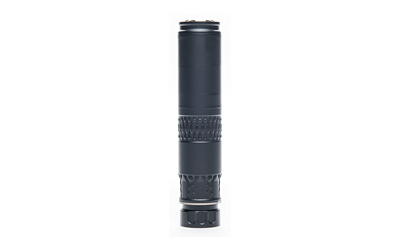
4. Griffin Armament Bushwhacker 46: Best for rifles, pistols, and subsonic loads
This type of suppressor suits a buyer who wants to move between rifle and pistol platforms and who also plans to use subsonic ammunition where appropriate. We would begin by listing the actual hosts, then checking their threads, operating systems, and cartridge requirements. That simple inventory prevents an expensive mismatch.
Subsonic ammunition can change the sound profile, but it does not automatically make every firearm cycle or every load suitable. Gas-operated rifles may need a load that runs the action reliably, while a pistol may need a booster system. Our pistol suppressor guide covers the host-side details, including fitment and mounting considerations.
The most useful comparison is the one made at the firing line: how often will the can be removed, how much weight can the host carry, and what maintenance will the owner actually perform? A flexible suppressor earns its place when it gets used across the collection, not when its rating sheet simply looks broad.
5. BANISH 46: Best for maximum caliber flexibility
Maximum flexibility has a straightforward appeal. Buyers with several very different firearms may prefer a large-bore option that keeps more of those hosts in play. We would still treat the approved cartridge list and barrel restrictions as hard boundaries, not suggestions.
This is also where a written comparison helps. The table below is not a performance ranking; it is a way to sort the decision by the job each kind of suppressor needs to perform.
| Buyer priority | What to compare first | Why it matters |
|---|---|---|
| Broad cartridge coverage | Manufacturer rating and bore | Confirms which hosts are eligible |
| Easy host changes | Mount and thread compatibility | Affects transfer time between firearms |
| Carrying comfort | Weight and length | Changes balance on rifles and pistols |
| Rifle gas behavior | Backpressure design and host setup | Can affect handling and cycling |
The broadest rating is useful only if the owner will use it. If most sessions involve one rifle, a dedicated or tighter-bore suppressor may be a better everyday choice. If several platforms rotate through the safe, flexibility can justify the added size.

6. SilencerCo Omega 36M: Best modular option for 9mm through .308
Modularity gives us another way to solve the one-can problem. Rather than treating every host the same, a modular suppressor can let the buyer configure the package around the firearm and session. We would verify which configurations, mounts, and cartridges are approved before putting the plan into practice.
For a 9mm host, thread pitch and booster compatibility matter. For a .308 rifle, barrel restrictions, attachment method, and balance move higher on the list. The 9mm suppressor guide is a sensible cross-check when the same purchase needs to serve a centerfire pistol and a rifle.
The right modular setup is the one we can explain clearly at the counter. We should know which parts stay installed, which parts travel in the range bag, and which host gets priority. That keeps the system useful instead of turning flexibility into a pile of unused accessories.
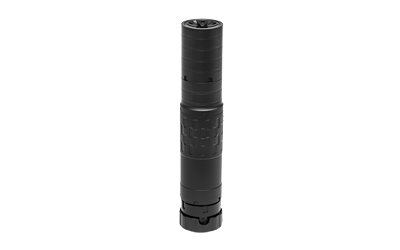
7. CGS Helios QD Ti: Best lightweight rifle-focused multi-caliber suppressor
A lightweight rifle suppressor is aimed at buyers who care about preserving the host’s handling. That is especially relevant on hunting rifles, compact carbines, and builds where the muzzle already carries an optic, light, or other equipment. We would confirm the rifle’s cartridge and barrel requirements before focusing on weight.
Quick-detach systems can make sense for a collection with several compatible hosts. They are not universal, though, and the mount must be installed and checked correctly on every firearm. Direct thread can be simpler for a rifle that will wear the suppressor most of the time.
Our .308 suppressor guide helps frame the rifle side of the decision around weight, durability, host type, and mounting. Those priorities usually tell us more than a general claim that a can is versatile.
8. HUXWRX FLOW 762 Ti: Best low-backpressure option for modern rifles
Low-backpressure designs appeal to rifle shooters who want to manage the gas coming back toward the shooter. We would look at this category for modern semiautomatic rifles where gas behavior affects comfort and handling. The rifle’s barrel, gas system, ammunition, and tuning still shape the final result.
A short checklist keeps the comparison grounded:
- Confirm the rifle cartridge and barrel requirements.
- Match the mounting system to the muzzle device or thread pattern.
- Check clearance around sights, handguards, and other equipment.
- Decide whether the rifle will use one can or share it among several hosts.
That list keeps low backpressure in its proper place. It is one buying factor, not a substitute for fitment or a promise that every rifle will behave identically. For AR-15 owners, our 5.56 suppressor guide adds host-focused questions about mounting, barrel length, and gas management.
9. Rex Silentium MG7: Best value for intermediate rifle calibers
Value begins with using the suppressor often enough to justify the complete setup. We would compare the can, mount, muzzle device, storage, and ammunition rather than looking at the tube alone. Intermediate rifle users should also confirm the exact cartridges and barrel conditions allowed by the manufacturer.
A practical buyer may prefer a straightforward setup over a collection of options. Fewer changes can mean fewer chances to install the wrong part or forget which configuration belongs on which rifle. That simplicity has real value for range days and training.
We also want realistic expectations about noise. Suppressors reduce muzzle blast and can improve the shooting experience, but the action, bullet flight, and impact remain audible. Hearing protection and safe handling still belong in the plan.
10. Yankee Hill Machine Turbo T3: Best budget pick for 5.56 and .308 rifles
A budget-minded rifle buyer still needs a complete, compatible system. We would start with the two rifles, their thread patterns, and the intended shooting schedule before comparing price. The least expensive initial option is not necessarily the lowest total cost if the setup needs extra mounting parts or a later replacement.
For a 5.56 or .308 rifle, the important checks are cartridge rating, barrel restrictions, attachment method, and clearance. We should also consider whether one rifle will wear the can permanently or whether the suppressor will move between hosts. That decision can make direct thread or quick detach more practical.
If the collection is centered on AR-pattern rifles, our AR-15 host guide gives us a useful way to compare the rifle, suppressor, ammunition, and mounting system as one package. The same method works for a bolt gun, provided we use its specific requirements.
Shop the Right Setup
Bring us the host firearm details, intended cartridges, and shooting plan, and we can help narrow the choices. Western Sport is a licensed FFL and SOT dealer with an on-site gunsmith, and our suppressor inventory is the natural next stop for checking current options and fitment questions.
Conclusion
The best multi-caliber suppressor is the one that matches the cartridges, hosts, mounting system, and shooting schedule we actually have. Broad coverage is useful, but size, weight, gas behavior, and pistol compatibility can matter just as much. We should compare the complete setup, verify current manufacturer requirements, and choose the can we will use most often.
Frequently Asked Questions
What is a multi-caliber suppressor?
It is a suppressor rated for use with more than one cartridge, subject to the manufacturer’s approved calibers, barrel restrictions, and mounting requirements.
Is a larger-bore suppressor better for every firearm?
No. A larger bore can provide broader cartridge coverage, while a tighter-bore suppressor may better suit a particular rifle or cartridge. The host and intended use decide the fit.
Can one suppressor be used on rifles and pistols?
Some models are designed for both, but the firearm may require different mounts, a booster, or other compatible components. Confirm the complete setup before use.
Does subsonic ammunition make a firearm silent?
No. Subsonic ammunition can reduce the sonic crack when it remains below the speed of sound, but action noise, impact noise, and muzzle blast still exist.
Should we use direct thread or quick detach?
Direct thread can suit a firearm that keeps the suppressor installed, while quick detach can help when compatible hosts share a system. Each firearm must be checked for proper fitment.
What should we check before buying?
Confirm the intended cartridges, barrel restrictions, thread pattern, mounting parts, weight, length, and the legal process that applies to the buyer and location. The American Suppressor Association education page is a good primer on how suppressors work and the rules around them.
Do suppressors remove the need for hearing protection?
No. A suppressor reduces muzzle blast but does not eliminate all firearm noise. Hearing protection remains a sensible part of safe shooting.
One can, one stamp, one process
The appeal of a multi-caliber can is that you only do the paperwork once. Here is what that paperwork actually looks like at Western Sport: we hold the SOT, we file the eForm 4 at our counter, and filing is free on anything you buy from us. Browse suppressors in stock or call 817-393-4000.

Lance Rankin is the owner and Chief Gunsmith of Western Sport, a family-run Type 07 FFL and Class 3/SOT dealer in Roanoke, Texas, serving shooters since 2007. Born and raised in Texas with over 50 years of experience handling firearms, Lance purchased Western Sport in 2017 and turned his lifelong passion into his profession. He specializes in AR-15 and AR-10 platform rifles, manufactures Western Sport’s own AR-15 line under the Rankin Industries brand, and runs the shop’s in-house Cerakote coating operation. When he’s not behind the counter or the workbench, you’ll find him on his ranch deep into the night, hunting coyotes with an AR-15 and thermal optics. Lance holds an MBA and personally shoots and tests the products Western Sport sells.


