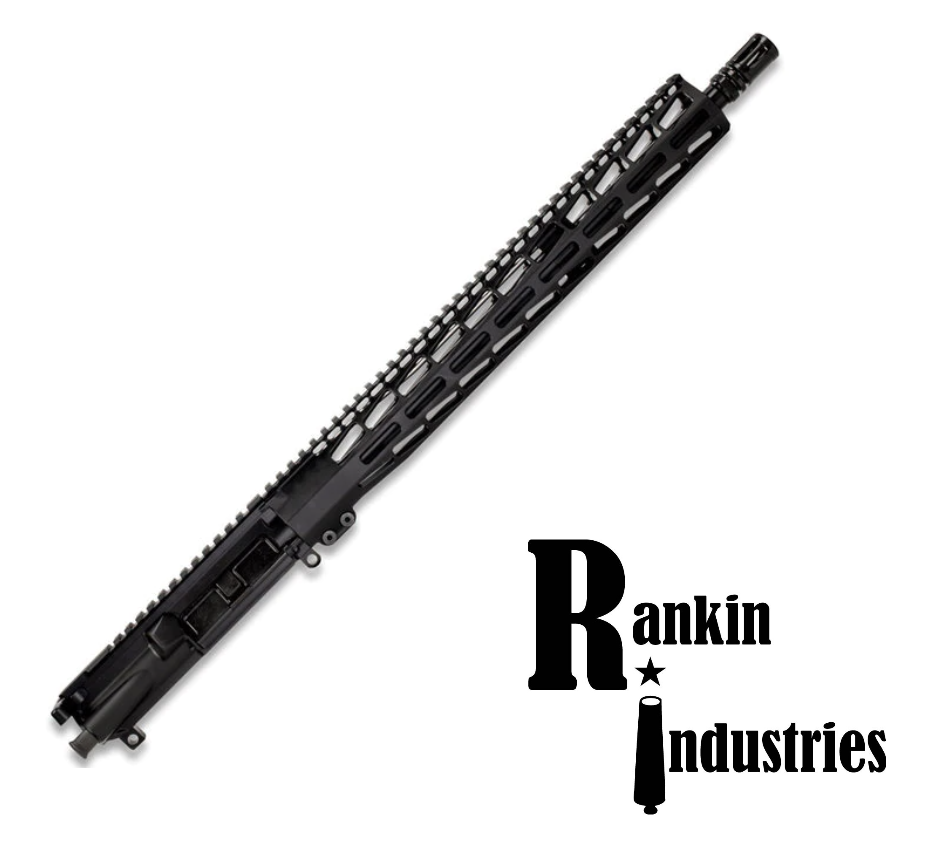
An ar 15 build kit can save shopping time, but the name does not guarantee a complete firearm. We need to read the parts list, identify what is missing, and confirm that the remaining components fit the lower receiver and intended use. At our counter, that simple check prevents most unpleasant surprises after checkout.
What an AR-15 build kit usually means
An AR-15 build kit is generally a grouped collection of parts intended to become a rifle or pistol after a compatible lower receiver is added. The exact contents vary widely, so we should treat the word “kit” as a starting point rather than a parts guarantee. Before ordering, we should compare the written contents with the receiver, chambering, and configuration we plan to use.
The difference between a complete rifle, upper assembly, and build kit
A complete rifle includes the serialized lower receiver and is ready for its required transfer and final checks. A complete upper normally includes the upper receiver, barrel, bolt carrier group, charging handle, and related upper components, although “complete” still needs to be verified in each listing. A build kit usually combines an upper with some or all of the lower components, but it may stop short of including the lower receiver.
Our complete upper guide explains why barrel length, gas-system length, receiver material, and included components matter when comparing upper assemblies. That distinction matters because buying an upper is not the same transaction as buying a complete firearm.
How “everything minus lower” kits are commonly packaged
The phrase “everything minus lower” commonly means the kit includes the upper assembly and the parts needed to finish the non-serialized portion of the lower. Depending on the listing, that can include a lower parts kit, fire-control components, pistol grip, stock, buffer tube, buffer, and spring. It does not automatically mean that sights, magazines, tools, or every small installation part are included.
We should open the manufacturer’s contents list and mark each part as included, optional, or absent. Product photographs are useful for orientation, but they are not a substitute for the written specification.
Why kit contents vary between manufacturers
Manufacturers package kits around different buyers and configurations. One may include a complete upper and lower parts kit, while another may leave out the bolt carrier group, charging handle, stock, or buffer assembly. Chambering, barrel length, handguard style, stock type, and intended use all affect what belongs in the box.
That is why we compare like with like. A lower-priced kit may simply be a partial bundle, while another listing includes more parts and requires fewer separate purchases.
Where the serialized lower receiver fits into the purchase
The lower receiver is the serialized part that generally receives special treatment under federal and state law. A kit without that receiver is not automatically a complete firearm, and the transfer requirements for the lower are different from the shipping arrangements for ordinary upper parts. We should confirm the current rules with the seller, a licensed dealer, and qualified counsel when necessary.
Western Sport’s receiver selection guide covers stripped and complete receivers, including the need for a Federal Firearms License transfer for serialized lowers. That practical distinction should be settled before we order the rest of the kit.
Parts commonly included in an AR-15 build kit
A well-described kit may cover most of the mechanical parts needed for a particular configuration. We still need to check the chambering, receiver pattern, gas system, and stock arrangement before assuming the parts form one compatible package. The list below describes common contents, not a promise that every kit contains every item.
Upper receiver and barrel assembly
The upper receiver and barrel assembly form the front half of the firearm. Depending on the listing, this section may include the receiver, barrel, barrel nut, gas block, gas tube, handguard, and muzzle device. Assembled versions are listed in our complete AR uppers category. Some kits ship these parts assembled, while others provide a partially assembled upper that requires additional work.
The barrel marking and chambering deserve special attention. A listing that says 5.56 NATO, .223 Remington, .223 Wylde, or another chambering should be matched to appropriate ammunition and to the bolt supplied with the kit.
Bolt carrier group and charging handle
The bolt carrier group and charging handle are sometimes included with a complete upper and sometimes sold separately. We should confirm both items in writing because leaving either one out changes the real cost of the build. The bolt also needs to match the cartridge and chambering selected for the barrel.
For broader parts guidance, our AR-15 parts guide discusses the role of the barrel, bolt carrier group, charging handle, trigger, and buffer assembly. It is a useful reference when a kit description uses broad terms instead of listing every component.
Handguard, gas system, and muzzle device
The handguard, gas block, gas tube, and muzzle device need to be considered as a group. The handguard must provide the correct clearance for the gas block, and the gas system must correspond to the barrel and receiver arrangement. A muzzle device may be included, but a crush washer, shims, or installation work may not be.
We should also check whether the handguard is free-floating or drop-in, and whether its mounting system matches the upper assembly. Those details affect installation, accessory placement, and future maintenance.
Lower parts kit and fire-control components
A lower parts kit may include pins, springs, detents, controls, and a fire-control group. Some kits include a trigger guard, while others leave it out. Buffer assemblies, stocks, grips, and upgraded triggers are often listed separately, so the phrase “lower parts kit” needs to be read carefully.
Our lower parts kit guide breaks down the usual components and explains why receiver pattern and intended controls matter more than relying on the phrase “mil-spec” alone. We should use that same careful approach when checking a bundled kit.
Stock, buffer assembly, and pistol grip
The rear of the build may include a receiver extension, buffer, action spring, castle nut, end plate, stock, and pistol grip. These items are not always bundled with the lower parts kit. A stock also needs to match the receiver extension type and the configuration allowed by applicable law.
If the listing includes a brace rather than a stock, we should stop and review current federal, state, and local requirements before purchase or assembly. Configuration details can change the legal analysis.
Parts and equipment that may not be included
The most common budgeting mistake is treating a parts bundle as a ready-to-assemble package. The missing items may be inexpensive individually, or they may be the parts that determine whether the build can be completed at all. We should make a second list for equipment and accessories, not just firearm components.
The lower receiver and its legal significance
Many build kits exclude the lower receiver because it is serialized and subject to transfer requirements. That omission is normal for an “everything minus lower” package, but it must be included in the total project plan. We should not assume that a lower receiver can be shipped or acquired in the same way as an upper assembly.
The legal status of privately assembled firearms and unfinished or stripped receivers can depend on the facts and the jurisdiction. We should confirm the current requirements before buying, rather than relying on an old forum post or a product photograph.
Sights, optics, and other aiming equipment
A kit may arrive without iron sights, a red dot, a scope, or a mount. Flat-top upper receivers commonly leave the choice of aiming equipment to the buyer, which can be useful when we already have a defined setup. It also means the rifle may not be ready for sight-in on the day it is assembled.
We should budget for the optic or sights, the correct mounting hardware, and the time needed to confirm zero. A bare upper can be mechanically complete while still lacking a practical aiming system.
Magazines and ammunition
Magazines and ammunition are often separate purchases. The correct magazine pattern depends on the chambering and platform, and local rules may limit magazine capacity or other features. Ammunition selection should follow the barrel marking and the firearm manufacturer’s instructions.
We should also account for enough ammunition for function checks and sight-in, while following safe handling practices and the range’s rules. The kit price alone does not represent the cost of a usable setup.
Armorer’s tools, torque tools, and small installation supplies
A build can require an armorer’s wrench, receiver blocks, punches, torque equipment, a torque specification, thread treatment, shims, or other small supplies. The exact tools depend on which parts arrive assembled and which tasks remain. Improvised tools can damage finishes, threads, or small controls.
Before ordering, we can sort the required equipment into three groups:
- Tools we already own and know how to use.
- Tools we need to buy or borrow for this specific assembly.
- Tasks that should go to a qualified gunsmith.
That short inventory turns a vague “assembly cost” into a realistic plan. It also gives us a chance to stop before forcing a part that does not fit.
Optional upgrades such as triggers and ambidextrous controls
An included fire-control group is not necessarily an upgraded trigger, and standard controls are not necessarily ambidextrous. Enhanced triggers, charging handles, safeties, magazine releases, and bolt catches may be optional additions. We should decide whether the upgrade serves the intended use before adding it to the order.
The safest comparison is functional: identify what the part changes, verify that it fits the selected lower and upper, and confirm that the manufacturer’s instructions support the installation.
How to check whether the parts will work together
Compatibility is more than matching the words “AR-15” on two product pages. Chambering, receiver pattern, gas-system length, buffer system, and mounting dimensions all matter. We should make these checks before buying, because returning one mismatched component can be slower and more expensive than choosing correctly at the start.
Matching the chambering to the barrel and bolt
Start with the barrel marking and the kit’s stated chambering. The bolt carrier group must use a bolt suitable for that cartridge, and the magazines must support the same platform and ammunition. We should never infer compatibility from a similar-looking bolt or from a photograph.
If the listing leaves the chambering unclear, we should ask the seller for the exact specification. That one answer can determine the upper, bolt, magazines, and ammunition we need.
Confirming receiver, handguard, and gas-system compatibility
The upper receiver, barrel nut, handguard, gas block, and gas tube need to work as a complete system. Receiver dimensions and mounting standards affect fit, while gas-system length affects the relationship between the barrel, gas block, and handguard. Our upper receiver guide explains how assembled, stripped, forged, and billet receivers differ and why dimensions matter.
We should confirm the handguard’s mounting method and the gas block’s clearance before assuming that a favorite rail will fit. The product description should answer those questions without requiring guesswork.
Checking buffer-system and stock compatibility
The buffer tube, buffer, action spring, stock, and lower receiver extension must be selected as a matching group. A stock designed for one receiver extension type may not fit another. The same caution applies when a kit combines a carbine-length component with a different rear configuration.
We should record the exact parts included and compare them with the stock manufacturer’s fitment information. If the listing does not identify the buffer or receiver extension, we should treat that as an open question in the budget.
Identifying parts that require a specific platform or pattern
Some components are platform-specific even when they look interchangeable. Lower parts, magazines, controls, receiver extensions, handguards, and bolts can vary by chambering or receiver pattern. Terms such as “AR-15 compatible” are helpful, but they do not replace the detailed parts list.
A useful check is to trace the part from the cartridge outward: barrel to bolt, bolt to upper, upper to lower, lower to controls, and lower to buffer system. Any unanswered connection deserves a manufacturer or gunsmith review.
Reading the manufacturer’s parts list instead of relying on product photos
Photos often show a configured firearm with accessories that are not included. We should read the title, specifications, contents list, exclusions, and installation notes together. If a product page says “pictured accessories not included,” the photograph cannot be used as a packing list.
For another perspective on complete uppers, our complete upper checklist covers the bolt carrier group, charging handle, handguard, gas components, caliber markings, and the costs that can sit outside the advertised price. That is the level of detail we want before checkout.
Legal and safety checks before buying
Firearm assembly involves both product fitment and legal responsibility. Rules can differ by federal, state, and local jurisdiction, and configuration details may affect the analysis. We can provide practical product information, but we should confirm legal questions with the appropriate authority or qualified counsel before buying or assembling.
Understanding federal, state, and local requirements
We should check the law that applies where we live, where the seller is located, and where the transfer will occur. That includes rules for serialized receivers, private assembly, firearm configuration, transport, storage, and magazine capacity where applicable. A general internet answer may be outdated or may omit a local requirement.
For Texas buyers, a licensed dealer can explain the transfer process, but that conversation is not a substitute for legal advice. We should ask specific questions and keep the answers tied to the parts and configuration we actually plan to purchase.
Confirming rules for the lower receiver and private assembly
The lower receiver is the point at which transfer and recordkeeping questions usually become most immediate. Whether a buyer may privately assemble a firearm, what markings or records may be required, and how an unfinished receiver is treated can depend on current law and individual circumstances.
We should confirm those rules before ordering a lower or beginning work. If the answer is uncertain, pause the project and consult a licensed dealer or qualified attorney rather than relying on assumptions.
Reviewing restrictions on barrel length, stocks, braces, and muzzle devices
Barrel length and overall configuration can affect legal classification. Stocks, braces, muzzle devices, and permanently attached components may also matter, particularly on short configurations. We should measure and document the intended setup instead of assuming that a part is lawful because it is sold online.
The legal status of suppressors, short-barreled rifles, and other NFA-regulated configurations also requires current review. Rules and fees can change, so we should use current government information, resources like the American Suppressor Association, and qualified advice before proceeding.
Buying from a reputable seller and keeping required records
A reputable seller should provide a clear parts list, manufacturer information, shipping terms, and transfer instructions. We should keep the invoice, serial-number information where applicable, manuals, and correspondence about the configuration. Those records help with future maintenance and make it easier to resolve a parts question.
Western Sport has operated as a licensed FFL and SOT since 2007, and we can explain the transfer steps for items that require an FFL. We should still verify the current requirements for our own situation.
Using the correct manuals, tools, and qualified help for assembly
We should follow the manufacturer’s manual for every part and use the specified torque values and tools. A gunsmith is the right resource when we lack the equipment, when a part does not fit as described, or when a safety-critical function needs inspection. A build should not proceed simply because the parts are close enough.
Before live fire, the completed firearm should receive a careful inspection and function check appropriate to the design. We should follow safe firearm handling rules, keep the muzzle pointed in a safe direction, and use a qualified professional when anything remains uncertain.
How to compare AR-15 build kits before ordering
The best comparison is not the shortest product title or the lowest advertised total. We should compare what is physically included, which specifications are verified, and what remains to be purchased. A clear worksheet makes two kits easier to compare and exposes missing hardware before the order is placed.
Separating a complete kit from a partial parts bundle
A complete kit, as the seller defines it, may include an upper, bolt carrier group, charging handle, lower parts, fire-control components, buffer system, grip, and stock. A partial bundle may include only an upper and handguard. We should write down every included component instead of treating “build kit” as a standardized term.
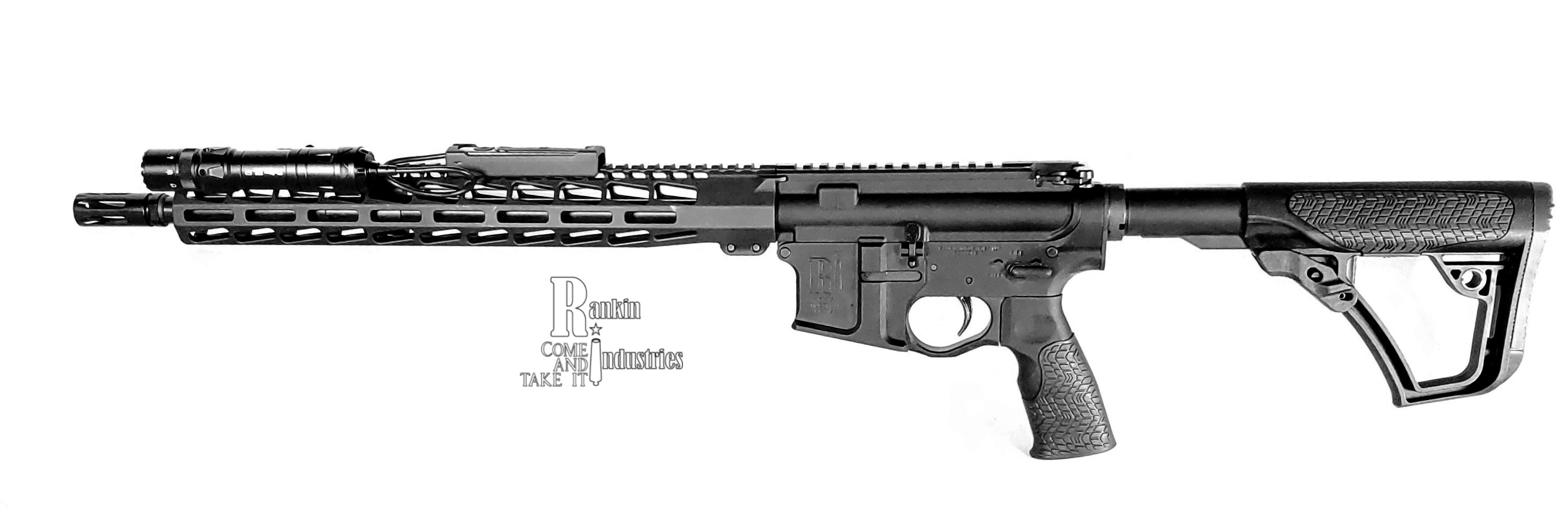
Rankin Industries builds complete AR-15 uppers, build kits, rifles, and pistols. When that product category fits our project, we can compare the specific contents of the offered configuration with the parts we already own rather than assuming every kit has the same package.

Comparing included components by brand, material, and specification
The useful comparison is part by part. We should record the barrel chambering and length, receiver type, handguard system, bolt carrier group status, trigger, buffer components, stock, and muzzle device. If a specification is not listed, we should ask before using it as a reason to choose one kit.
For buyers who prefer a complete firearm instead of an assembly project, the Rankin Industries Duty Rifle is documented in our beginner’s rifle guide alongside its intended ready-to-shoot role. That is a different purchase category from a kit and should be compared on that basis.
Spotting missing hardware, tools, and installation parts
Small omissions can stop an otherwise attractive build. We should look for the barrel nut, gas tube, gas block hardware, pins, detents, springs, receiver extension parts, stock hardware, muzzle-device washer or shims, and any special tool the installation requires. The seller’s exclusions section is often as useful as the included-parts list.
We should also verify whether the upper is assembled, whether the gas block is installed, and whether the bolt carrier group and charging handle are present. Those answers affect both the work involved and the tools required.
Budgeting for the lower receiver, sights, magazines, and setup costs
The advertised kit price is only the first line of the project budget. We may still need the lower receiver, transfer costs, sights or an optic, magazines, ammunition, tools, shipping, and professional assembly or inspection. Adding those items now gives us a more honest comparison.
A buyer choosing a ready-to-shoot option may prefer the Rankin Industries Suppressed AR-15 build, which is documented as a custom rifle with a permanently attached suppressor and a legal 16.25-inch barrel length. That is a specialized configuration, so we should compare its legal and practical characteristics with a conventional build rather than treating it as a standard kit.

Using a final parts-and-compliance checklist before checkout
Before ordering, we should be able to answer five questions: What exactly is included? Which lower receiver and chambering will we use? What tools and installation work remain? What accessories are needed for the intended use? Which legal requirements apply to the final configuration?
If any answer is unclear, we should contact the seller or a qualified gunsmith first. A few minutes of clarification is usually easier than correcting a mismatched or incomplete order.
Conclusion
An AR-15 build kit is best understood as a parts package, not a guarantee that every component and tool is in the box. We should verify the lower receiver, chambering, bolt, gas system, buffer system, accessories, tools, and legal requirements before ordering. For help matching a kit or complete configuration to our project, we can contact the shop and bring the parts list to the Western Sport counter.
Frequently Asked Questions
Does an AR-15 build kit include the lower receiver?
Many kits exclude the serialized lower receiver, especially packages described as “everything minus lower.” We should confirm the written contents and review the transfer requirements before ordering.
Does a complete upper include a bolt carrier group?
Not always. Some complete uppers include the bolt carrier group and charging handle, while others include only the assembled upper components. The product specification should state whether both parts are present.
Are sights included with an AR-15 build kit?
Sights and optics are commonly separate purchases. A kit may be mechanically complete while still requiring iron sights, a red dot, a scope, or the correct mount.
Do build kits include magazines and ammunition?
Magazines and ammunition are often sold separately. We should match the magazine pattern and ammunition to the chambering and check any applicable local restrictions.
What tools are needed to assemble an AR-15 kit?
The tools depend on which parts are already assembled. Common needs may include an armorer’s wrench, receiver blocks, punches, torque equipment, and small installation supplies, but we should follow the specific manufacturer’s instructions.
Can any AR-15 parts be combined across different kits?
No. Chambering, bolt design, receiver pattern, gas-system length, handguard mounting, buffer system, and controls can affect compatibility. We should verify each connection instead of relying on similar product names.
Should a first-time builder assemble an AR-15 alone?
A first-time builder should use the correct manuals and tools and seek qualified gunsmith help when unsure. Any uncertainty about fit, function, safety, or legal configuration is a good reason to pause before assembly or live fire.

Lance Rankin is the owner and Chief Gunsmith of Western Sport, a family-run Type 07 FFL and Class 3/SOT dealer in Roanoke, Texas, serving shooters since 2007. Born and raised in Texas with over 50 years of experience handling firearms, Lance purchased Western Sport in 2017 and turned his lifelong passion into his profession. He specializes in AR-15 and AR-10 platform rifles, manufactures Western Sport’s own AR-15 line under the Rankin Industries brand, and runs the shop’s in-house Cerakote coating operation. When he’s not behind the counter or the workbench, you’ll find him on his ranch deep into the night, hunting coyotes with an AR-15 and thermal optics. Lance holds an MBA and personally shoots and tests the products Western Sport sells.