



Daniel Defense MK18 at a glance
- What it is: A 10.3-inch 5.56 NATO AR-15 built to the SOCOM CQBR pattern, sold as a factory SBR, as a pistol, or as a standalone upper receiver group.
- Barrel: 10.3 inches, cold hammer forged and chrome lined, 1:7 twist, carbine-length gas system.
- Rail: RIS II free-float quad rail on the standard MK18; RIS III M-LOK on the MK18 RIII.
- Receivers: 7075-T6 aluminum, with a fully ambidextrous lower on RIII models.
- What it costs: The MK18 sits at the top of Daniel Defense’s carbine range, above a standard DDM4 V7 and below the specialty rifles. A complete pistol is the cheapest way in, a factory SBR costs more, and a standalone URG is the least expensive route if you already own a lower. See Daniel Defense MK18 for sale for live pricing on every configuration we stock.
- Can a civilian buy one? Yes. The pistol and the URG are ordinary Title I transfers through an FFL. Since October 9, 2026 the SBR transfers on a standard Form 4473 too, with no Form 4 or tax stamp; outside Texas it ships to an SOT dealer.
- Is the MK18 just an M4? No. Same operating system and controls, but a 10.3-inch CQBR barrel in place of the M4’s 14.5 inches, which changes velocity, gas timing and muzzle blast.
- Can a civilian own one? Yes. The pistol and the upper receiver group need no NFA paperwork. Since October 9, 2026 the SBR needs no Form 4, tax stamp or registration either. State law still applies.
- What makes it special: It is the commercial version of the rifle Naval Special Warfare actually issued, built on Daniel Defense’s own in-house cold hammer forged barrel rather than an assembled parts kit.
I’ve been a Daniel Defense dealer and gunsmith since 2017. In that time, I’ve handled dozens of DD models, tuned gas systems, installed suppressors, and talked hundreds of customers through the pistol-vs-SBR decision. The MK18 comes up in those conversations more than any other rifle in the lineup. This guide covers the history, the specs, the Mod 0 vs Mod 1 differences, and the buying decision in one place.
This is the review I wish existed when I started selling them. Not a spec sheet repackage: an actual breakdown of what this rifle is, who it’s for, and what to know before you hand over that kind of money.
Ready to buy? Western Sport is an authorized Daniel Defense dealer in Roanoke, TX.
See every configuration we stock on our Daniel Defense MK18 for sale page: complete SBR, pistol and upper receiver group, with live pricing.
➤ Shop the Daniel Defense MK18 (complete SBR)
➤ Shop the MK18 RIII upper (URG)
➤ Browse Daniel Defense pistols and MK18 configurations
What Is the Daniel Defense MK18?
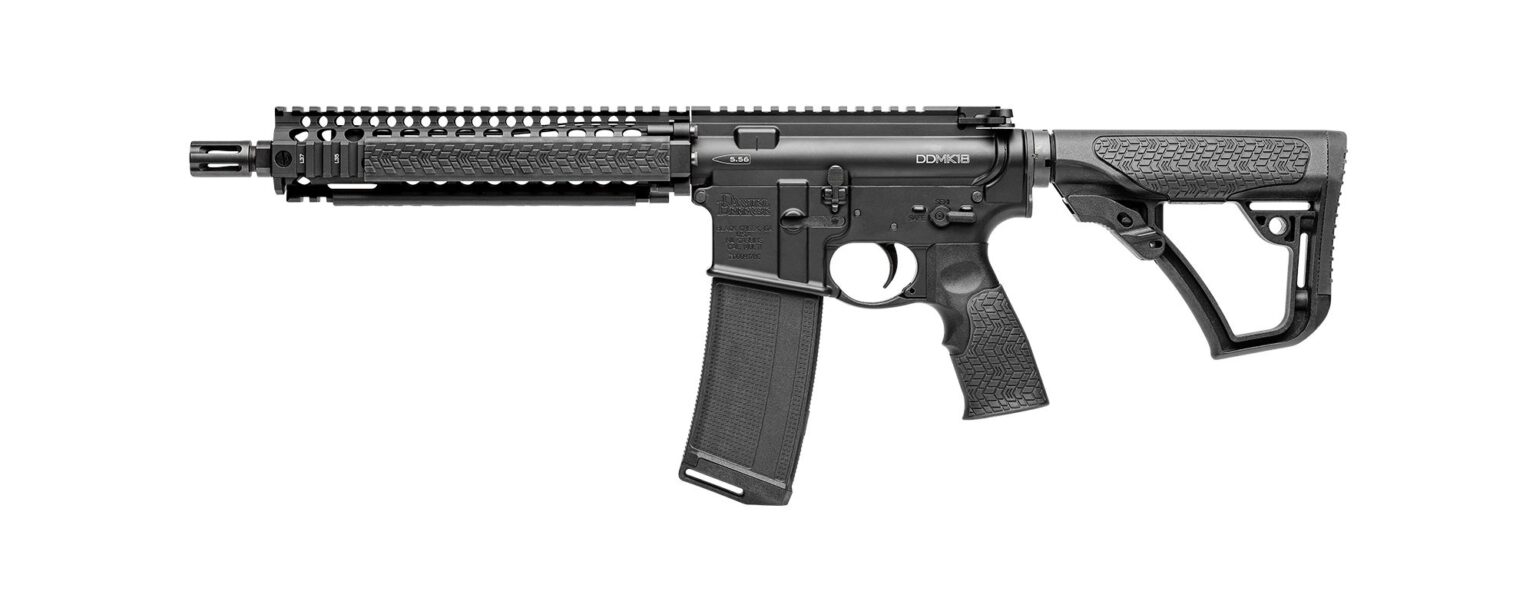
The MK18 is a commercial reproduction of the 10.3-inch Close Quarters Battle Receiver (CQBR) used by U.S. Naval Special Warfare units. If you’ve seen the rifle slung across a DEVGRU operator in any photo from Afghanistan or Iraq in the 2000s and 2010s, you’ve seen the MK18.
The concept is simple: the standard M4A1 runs a 14.5-inch barrel. For clearing rooms, vehicles, and aircraft, that length becomes a liability. You’re banging the muzzle into doorframes, fighting for clearance in tight corridors. The CQBR cuts the barrel to 10.3 inches. Same platform, same optics, same magazines, same manual of arms as the M4A1, just eight inches shorter where it matters most.
Daniel Defense began producing the civilian version of this upper assembly for SOCOM under contract, and eventually offered a complete commercial rifle built around the same specification. That’s what you’re buying when you buy a Daniel Defense MK18.
What Is Special About the MK18?
What makes the MK18 special is that it isn’t a clone. Daniel Defense builds it to the same print as the CQBR upper receiver group it supplies to U.S. Naval Special Warfare, the 10.3-inch cold hammer-forged barrel and the RIS II rail are the issued parts, not reproductions of them. Every other 10.3-inch AR on the market is approximating this rifle. This one is it, in semi-auto.
Daniel Defense MK18 Specs
Here’s the full specification for the current Daniel Defense MK18:
| Specification | MK18 (RIS II) | MK18 RIII |
|---|---|---|
| Caliber | 5.56 NATO / .223 Rem | 5.56 NATO / .223 Rem |
| Barrel length | 10.3 in. | 10.3 in. |
| Barrel twist | 1:7 RH | 1:7 RH |
| Barrel material | Cold hammer-forged, chrome-lined | Cold hammer-forged, chrome-lined |
| Gas system | Carbine | Carbine |
| Handguard | DD RIS II (9 in. quad-rail) | DD RIII (9.5 in. M-LOK) |
| Rail attachment | Fixed via Bolt-Up System | Free-float, M-LOK |
| Upper receiver | Forged 7075-T6 aluminum, mil-spec | Forged 7075-T6 aluminum, mil-spec |
| Lower receiver | Forged 7075-T6 aluminum, mil-spec | Forged 7075-T6 aluminum, mil-spec |
| Trigger | DD mil-spec single-stage | DD mil-spec single-stage |
| Weight (unloaded) | 5.88 lbs | Approx. 5.9 lbs |
| OAL (collapsed / extended) | 26.5 in. / 29.75 in. | ~26.5 in. / ~29.75 in. |
| Muzzle device thread | 1/2×28 | 1/2×28 |
| Configuration | Pistol (brace) or SBR (stock) | Pistol (brace) or SBR (stock) |
| MSRP | $2,499 (Daniel Defense list, Aug 2026) | Similar range |
The cold hammer-forged, chrome-lined barrel is worth calling out specifically. CHF barrels are dimensionally more consistent than cut-rifled alternatives and hold up significantly better over high round counts. The 1:7 twist rate stabilizes the full range of 5.56 projectiles, from 55-grain M193 through 77-grain OTM match loads. If you’re going to run this hard, you want a CHF barrel, and DD uses them across the lineup.
How Much Does the Daniel Defense MK18 Cost?
Prices below are a reference. For live pricing and current stock across every configuration, see our Daniel Defense MK18 for sale page.
What an MK18 costs depends on which configuration you buy. The complete SBR sits at the top, the pistol just under it, and the upper receiver group is the least expensive way in, which is how most of my customers actually get into one, since it needs no FFL transfer if you already own a lower. Current prices on every configuration we stock are in the live grid at the foot of this page, and they update as our inventory does.
| Configuration | Price | What you get |
|---|---|---|
| MK18 SBR (complete rifle) | See live grid below | Factory short-barreled rifle. Since October 9, 2026 it transfers on a standard Form 4473, no Form 4 or tax stamp. Ships in a Daniel Defense full-latch impact case. |
| MK18 Pistol | See live grid below | Same upper, brace instead of a stock. No NFA paperwork. |
| MK18 RIII SBR | See live grid below | M-LOK RIII handguard in place of the RIS II quad rail. Lighter, slimmer. |
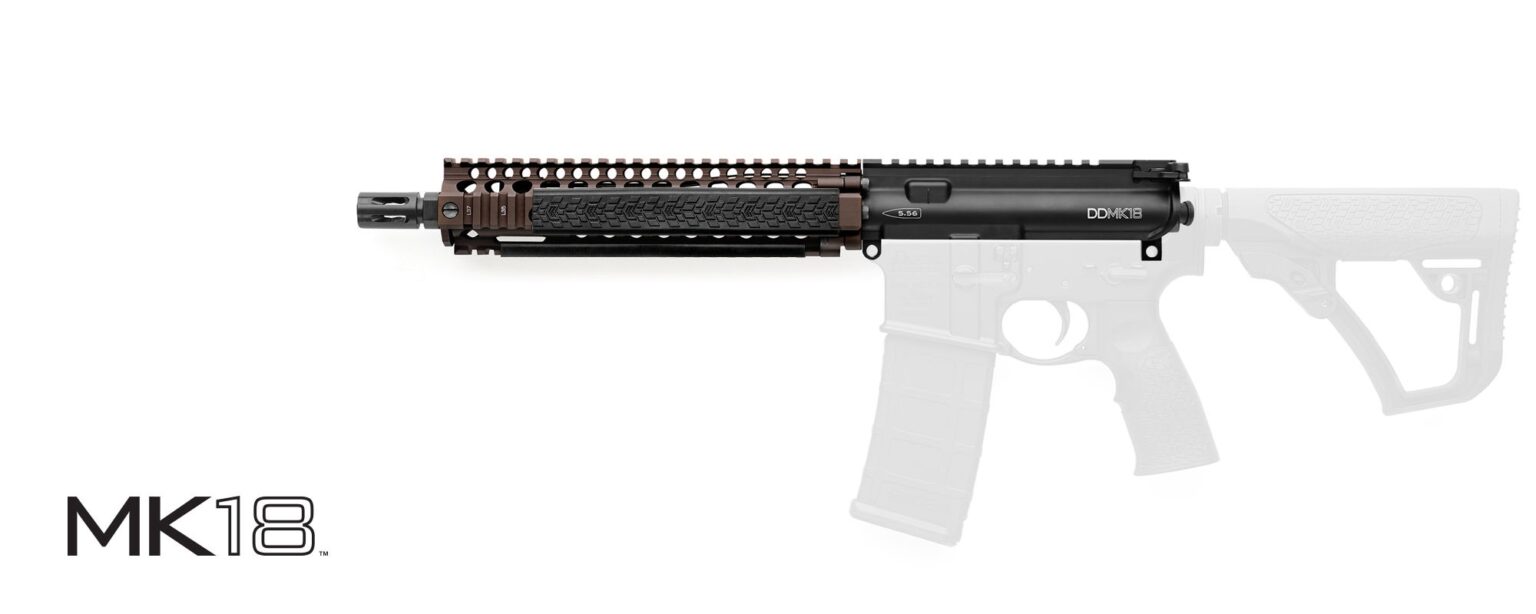
| MK18 URG (complete upper) | See live grid below | Barrel, BCG, charging handle and rail. No FFL transfer required: pair it with a lower you already own. |
| MK18 RIS II rail only | See live grid below | The quad rail on its own, for an existing build. |
| Rankin Industries MK18 pistol | See live grid below | Our Rankin Industries pistol, built on a genuine Daniel Defense MK18 upper. The cheapest way into this barrel and rail. |
Availability on the short-barreled configurations moves fast: check live inventory or email [email protected].
MK18 Barrel Length: Why 10.3 Inches Makes All the Difference
The Daniel Defense MK18 has a 10.3-inch barrel. That is 4.2 inches shorter than the 14.5-inch barrel on a standard M4A1 and 5.7 inches shorter than a 16-inch carbine. The 10.3-inch length is the defining specification of the CQBR pattern the MK18 reproduces, and because it falls under the 16-inch threshold, building one as a rifle means going the short-barreled rifle (SBR) route under the NFA.
| Platform | Barrel length | NFA? |
|---|---|---|
| MK18 / CQBR | 10.3 in. | Yes, as an SBR |
| M4A1 carbine | 14.5 in. | Yes, unless pinned to 16 in. |
| Standard AR-15 carbine | 16 in. | No |
| MK12 SPR | 18 in. | No |
| M16A4 | 20 in. | No |
That abbreviated barrel was specifically designed for close-quarters combat, giving operators faster handling in confined spaces without sacrificing terminal performance on 5.56 NATO. Daniel Defense machines the MK18 barrel from cold-hammer-forged steel with a 1:7 twist rate, which stabilizes both standard M193 and heavier 77-grain loads. At 10.3 inches, you still get reliable cycling with most commercial ammunition. If you’re comparing the MK18 barrel to a longer 14.5-inch or 16-inch carbine, the trade-off is velocity, roughly 350 fps less with 55-grain M193, but for home defense or duty use, it’s a trade most shooters happily make.
MK18 Mod 0 vs Mod 1 vs Mod 2: What Actually Changed
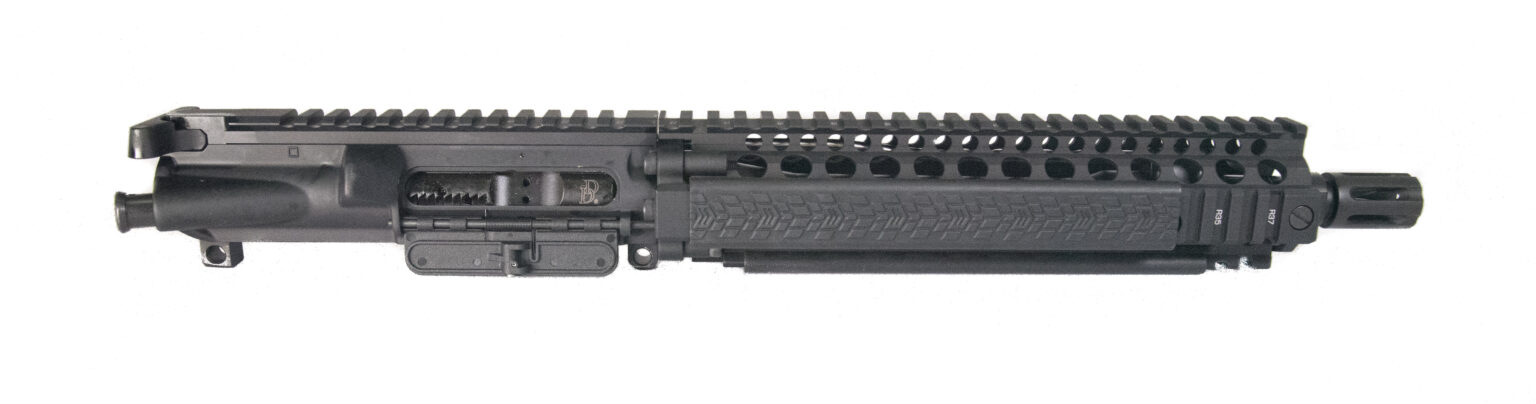
The difference is the handguard and the front sight. The Mod 0 runs a round M4-profile quad rail with a fixed front sight post. The Mod 1 switches to the Daniel Defense RIS II, a free-float quad rail with a low-profile gas block and no fixed sight. Barrel length is 10.3 inches on both. The Mod 1 is what Daniel Defense sells today.
| Feature | Mod 0 | Mod 1 |
|---|---|---|
| Barrel length | 10.3 in. | 10.3 in. |
| Handguard | M4 quad rail (round profile) | Daniel Defense RIS II (free-float) |
| Front sight | Fixed front sight post | Low-profile gas block, no fixed sight |
| Optic clearance | Limited by front sight | Full rail length available |
| IR device mounting | Constrained | Dedicated forward rail section |
| Military status | Phased out | Currently fielded |
| DD civilian version | Not offered | Yes, the DD MK18 |
The Mod 0 was the first fielded version, and it is the historically correct configuration for an early-OIF or Afghanistan-era clone build. The practical complaint was the fixed front sight. It limits where you can mount an optic and blocks rail positions for IR devices. Once the RIS II existed, the upgrade made sense, and the Mod 1 became the standard.
For how the platform got from a Navy armory project to a Daniel Defense catalog item, see our history of the MK18. You will also see references to a Mod 2. Treat Mod 0, Mod 1, and Mod 2 as successive configurations of the same 10.3-inch CQBR platform rather than different rifles, and note that newer NSW builds have moved toward URG-I-style uppers with mid-length gas and M-LOK. If you are building rather than buying, our MK18 clone build guide breaks down the parts and costs.
MK18 Effective Range
The MK18’s effective range is roughly 300 meters, about 328 yards, compared with about 500 meters for a 14.5-inch M4. Cutting the barrel from 14.5 to 10.3 inches costs a few hundred feet per second of muzzle velocity, and that velocity is what 5.56 needs to perform at distance. Inside 200 yards, the practical difference is minimal for most shooters.
Is the MK18 Illegal?
No. The MK18 is legal to own in most U.S. states. In its pistol configuration it needs no NFA paperwork at all, and since October 9, 2026, ATF no longer requires a Form 4, tax stamp or registration for the short-barreled rifle version either: it transfers on a standard Form 4473 with a background check. Your state’s law still applies, and taking an SBR across state lines needs an approved ATF Form 5320.20.
State law is where people actually get tripped up, not federal law. A handful of states prohibit short-barreled rifles outright or restrict the pistol configuration regardless of what ATF says. Check your own state before you order, and if you’re not sure, email [email protected] and ask. We ship to FFL dealers in every state and we’d rather answer the question than unwind a bad transfer.
Can a Civilian Own an MK18? Pistol vs SBR
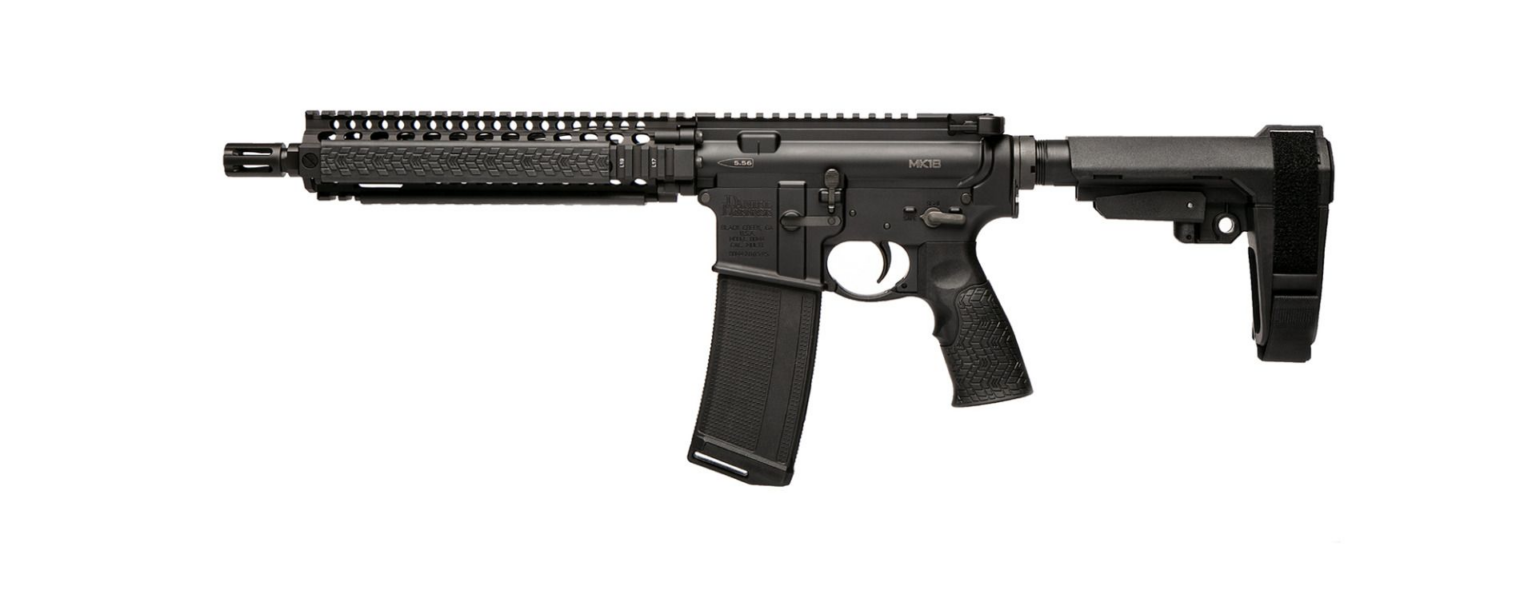
Yes, and both paths are now simple. The pistol configuration ships with a brace instead of a stock and needs no NFA paperwork. Since October 9, 2026, the short-barreled rifle configuration doesn’t either: ATF no longer requires a Form 4, tax stamp or registration for an SBR, so it transfers on a standard Form 4473 with a background check and no ATF wait. State law still applies, and an SBR needs an approved ATF Form 5320.20 to cross state lines.
| Pistol | SBR | |
|---|---|---|
| Furniture | Pistol brace | Rifle stock |
| NFA paperwork | None required | None since October 9, 2026 (Form 4473 only) |
| Federal NFA tax | None | None (was $200 before January 1, 2026) |
| Processing time | None | None since October 9, 2026 |
| Interstate transport | Standard | Approved ATF Form 5320.20 |
| State restrictions | Some brace restrictions | Some states prohibit SBRs |
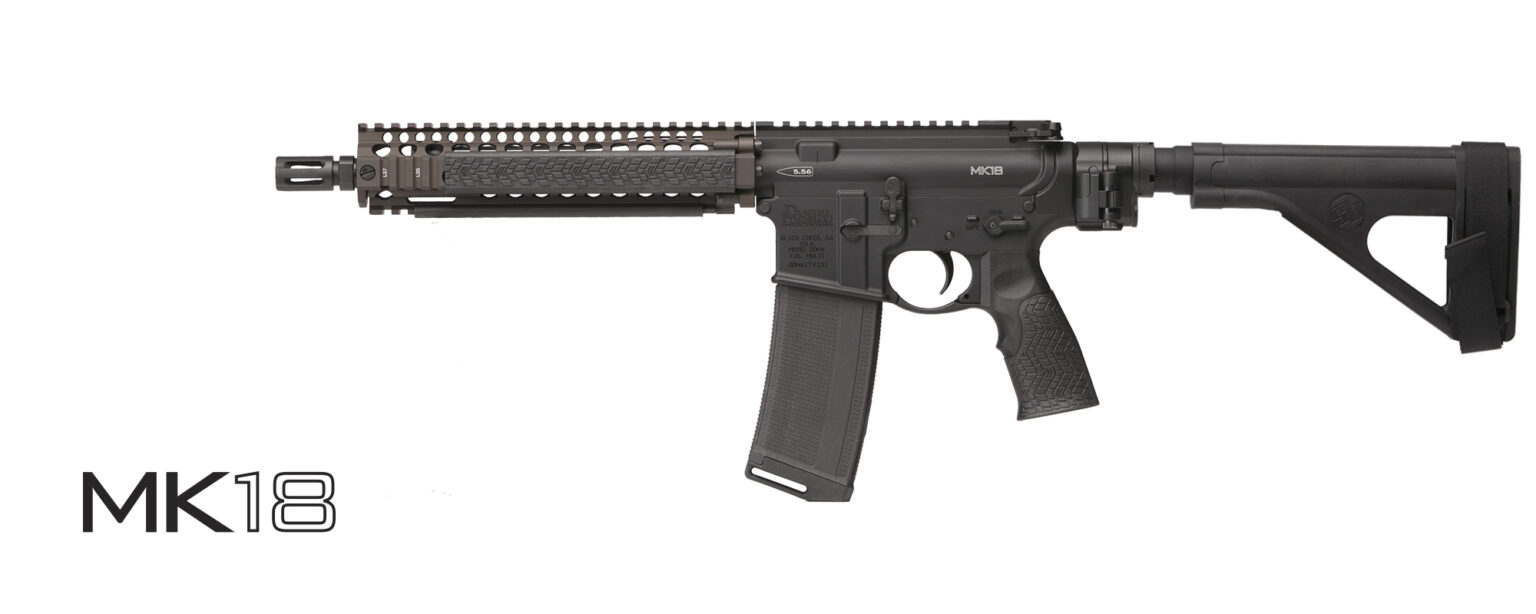
My honest take: buy the pistol configuration if you want to shoot it now, and add a stock later if your state allows SBRs. Plenty of people keep it as a pistol indefinitely: the legal simplicity is genuinely convenient. A well-fitted brace like the SB Tactical SBA3 gives you solid cheek weld and decent recoil management. If you are going to run a suppressor full-time and put real round counts through the gun, the rifle stock is more comfortable long term.
We are a Type 07 FFL and SOT, and since October 9, 2026 there is no Form 4 for the SBR or a suppressor. Email [email protected] if you want help pairing a can with your MK18.
Why Buy a Daniel Defense MK18?
It’s the Closest Civilian-Legal Approximation of What Special Operations Actually Runs
This isn’t marketing language. The Daniel Defense MK18 exists specifically because DD was contracted to manufacture the CQBR upper assembly for SOCOM. The commercial rifle is built on the same tooling, to the same specifications, with the same Daniel Defense RIS II handguard that went to Naval Special Warfare.
That matters beyond the tactical coolness factor. The RIS II has been combat-tested in some of the most demanding environments on earth: sustained heat, sand, water, shock, and high round counts under field conditions with minimal maintenance. When DD says the handguard is “rigorously tested prior to fielding by USSOCOM,” that’s a real testing program, not a box-check.
The MK18 is also a piece of documented history. The 10.3-inch CQBR configuration has been associated with Naval Special Warfare operations from Iraq and Afghanistan through more recent deployments. If you want to own a piece of that lineage in a configuration that is currently in service, not a historical reproduction, the DD MK18 is how you do it.
Building a clone? Which Mod you copy decides the handguard and front sight, and nothing else about the rifle. The full breakdown: handguard, front sight, optic clearance, IR mounting and which configuration is period-correct: is in MK18 Mod 0 vs Mod 1 vs Mod 2 above.
The original MK18 Mod 0 used a round M4-profile quad-rail handguard with a standard-height fixed front sight post. It’s the historically correct configuration for anyone building an early-OIF or Afghanistan-era clone.
The Mod 1 switches to the Daniel Defense RIS II, a free-float quad-rail that eliminates the fixed front sight and drops to a low-profile gas block. That clears the entire top rail and opens up the forward section for IR lasers, weapon lights, and suppressors without the sight post in the way. The RIS II is why the Mod 1 became the dominant configuration, and it’s what DD uses on the commercial MK18.
At 10.3 Inches, It Does Things No Longer Barrel Can
Most AR-15s run 14.5- or 16-inch barrels. Those lengths make the rifle longer, heavier up front, and more awkward in close spaces. The MK18 trades roughly 350 feet per second of muzzle velocity for a platform that is genuinely more maneuverable in any confined environment, your car, your home, a training shoot house.
That velocity trade is real, and it depends on what you feed it. A 55-grain M193 runs roughly 2,700–2,800 fps out of the 10.3-inch barrel against about 3,100 fps from a 16-inch: call it 350 fps. A 77-grain match load like Mk262 lands closer to 2,500 fps from the same barrel. In the 0–150 yard engagement window the MK18 was designed for, that’s not a meaningful performance loss. You’re not running this platform for 400-yard work, and if you are, you want the DDM4 V7 or the DD MK12 SPR, both part of our DDM4 rifle lineup.
The short barrel dramatically reduces overall length, the pistol configuration collapses to 26.5 inches. That’s shorter than many pistol-caliber carbines and significantly easier to stage in a vehicle or closet. The rifle is also lighter than longer-barreled DDs, and the balance point moves back toward the shooter.
RIS II vs. RIII, which handguard should you want?
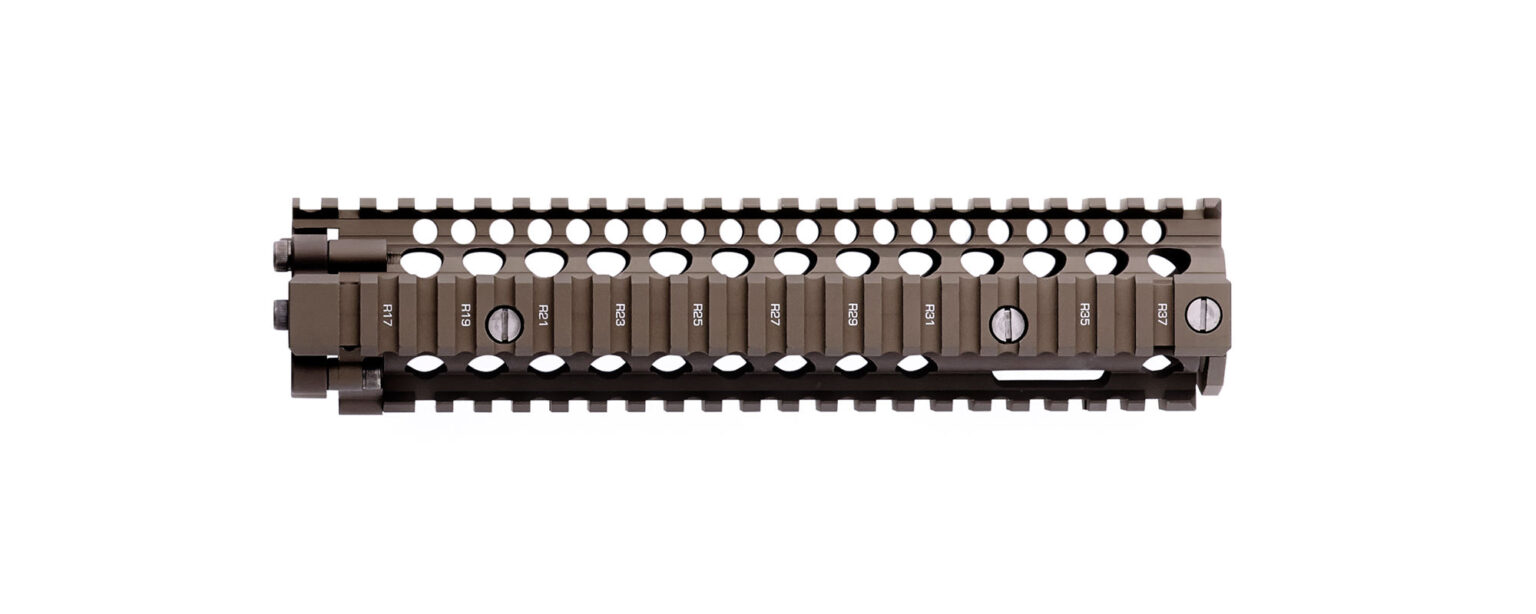
The original DD MK18 uses the RIS II, a quad-rail design that is the correct SOCOM-spec handguard for the Mod 1 configuration. It’s heavier and has full Picatinny rail on all four sides: out of the box, it has more mounting real estate than any M-LOK alternative.
The newer MK18 RIII uses a lighter, free-float M-LOK design that draws on the RIS II’s heritage but replaces the side and bottom Picatinny rails with M-LOK slots. The RIII is more comfortable to hold unsupported and sheds weight; the RIS II is the historically accurate option.
If you want a clone-correct Mod 1 build, you want the RIS II. If you want the lighter, more modern-handling version, the RIII is the better shooter’s rifle.
The SBR Paperwork Is Gone Since October 9, 2026
This is the biggest change in the MK18 market in years, and most reviews haven’t caught up to it.
Since October 9, 2026, ATF no longer requires a Form 4, tax stamp or registration for an SBR. The tax went to $0 on January 1, 2026 under the One Big Beautiful Bill Act, and the paperwork and wait went away on October 9, 2026. A factory MK18 SBR now transfers on a standard Form 4473 with a background check, the same as the pistol.
What this means practically: the pistol-versus-SBR decision is now about how you want to shoot it, not paperwork. Two things still apply: your state’s law, and an approved ATF Form 5320.20 before you take an SBR across state lines. Here is what changed on October 9, 2026, and our SBR guide covers buying, building and travel.
The side-by-side comparison of pistol vs SBR (paperwork, tax, processing time, transport and state restrictions) is in Can a Civilian Own an MK18? Pistol vs SBR above.
If you’re buying a DD MK18 and want the SBR, order the Daniel Defense MK18 SBR in Black online like any other rifle: your own name and address under Billing, your FFL dealer’s business name and address in the Order notes box at checkout, and the dealer emails a copy of their FFL to [email protected]. Outside Texas we ship SBRs to an SOT dealer in your state. The pistol configuration is still the better pick if you live in a state that restricts SBRs or you cross state lines often.
Running the MK18 Suppressed
The MK18 is one of the most popular platforms for suppressor host builds. It ships with a 1/2×28-threaded muzzle device, and the included DD flash suppressor is compatible with the KAC NT4 QD assembly, the same suppressor-ready configuration as the issued military MK18.
The short-barrel issue
At 10.3 inches, the dwell time between bullet passing the gas port and exiting the muzzle is shorter than on a carbine-length or mid-length barrel. Adding a suppressor increases back-pressure in the system, which can cause over-gassing: more gas cycling back into the receiver, increased bolt carrier velocity, and a harsher, faster cycle.
On mild loads and a stock configuration this isn’t always a problem. But if you’re planning to run a suppressor regularly, I strongly recommend one of the following:
- Adjustable gas block: lets you tune the system for suppressed and unsuppressed fire. The DD MK18 ships with a non-adjustable low-profile gas block; swapping to an adjustable unit (Superlative Arms, SLR Rifleworks) gives you control over the cycle rate.
- Heavier buffer weight, an H2 or H3 buffer slows the bolt carrier and reduces the snappiness of the suppressed cycle. Drop-in upgrade, takes five minutes.
- Suppressor-optimized BCG: DLC-coated or nickel-coated carriers clean more easily and run better over extended suppressed strings. The SIONICS NP3-coated bolt carrier group is the one I reach for on suppressed builds, because the carbon wipes off instead of bonding to the metal.
Suppressor pairing
The MK18 works well with multi-caliber suppressors rated for 5.56. Options I’ve seen run reliably on these short-barrel setups include the SureFire SOCOM 5.56 (the historically correct choice. This is what SOCOM runs on the issued MK18), the SilencerCo Omega 36M, and the SureFire SOCOM300-SPS if you want one can for multiple calibers. Testing has shown the MK18 runs around 130 dB suppressed vs. approximately 168 dB unsuppressed.
If you’re going suppressed full-time, budget for the gas tuning. It’s worth doing right.
Is the Daniel Defense MK18 Worth the Money?
The short answer is yes, if you understand what you’re actually buying.
You can build a functional MK18-pattern SBR from quality parts for less. A BCM or DD 10.3-inch barrel, a genuine DD RIS II, a quality BCG, and a mil-spec lower will run you $1,200–$1,700 in parts before your time and any tooling. But you won’t get the matching serials, the factory headspace check, or the Daniel Defense warranty on a parts build.
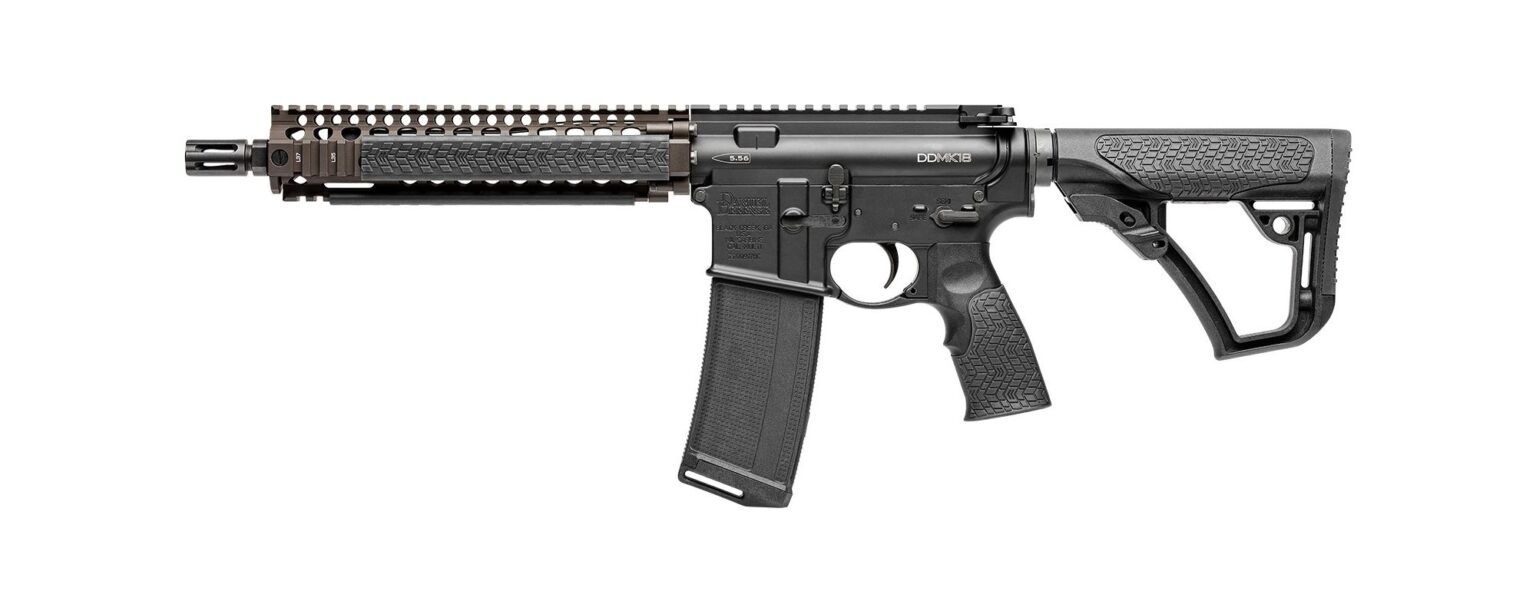
The complete DD MK18 gives you a factory-built, warranty-backed, serial-matched rifle that comes ready to shoot. For most people who want an MK18, not an MK18 build project, the price makes sense.
Where building makes more sense: if you want a non-standard configuration from the start (adjustable gas block, upgraded trigger, RIII handguard on a custom lower) building lets you spec it exactly. If you already have a quality mil-spec lower, a Daniel Defense MK18 complete upper is a clean option. Drop it on your lower, confirm headspace, and you’re running.
Is the MK18 Still Used Today?
Yes. The MK18 CQBR remains in active service with Naval Special Warfare and has been documented in use by DEVGRU into the early 2020s. Optics and IR packages have evolved, but the 10.3-inch upper stayed because the close-quarters mission did not change. Newer builds have begun moving toward URG-I-style uppers, though the MK18 pattern is still fielded.
For a civilian buyer, that service longevity is a practical benefit: parts, rails, and aftermarket support are not going anywhere. If you are setting one up, our suppressor picks for the MK18 cover the gas-system side of running it quiet.
Reliability and Range Performance
The DD MK18 runs reliably. In thousands of rounds through these rifles, including sustained runs with suppressors in training environments, the failures I’ve seen trace back to: insufficient lubrication while running suppressed (carbon builds up faster), over-seating magazines past full capacity, or running a suppressor on a stock-gas-system rifle without tuning. None of those are rifle failures. They’re setup issues.
The factory mil-spec trigger is adequate but not exceptional. For a defensive or duty rifle it’s fine: consistent, predictable, safe. For precision work or if you spend a lot of time at distance, an upgrade to a CMC, Geissele SSA, or similar two-stage unit makes a noticeable difference.
Accuracy at distance is better than most people expect from a 10.3-inch barrel. With quality 77-grain match ammunition, sub-2 MOA groups at 100 yards are achievable. For a platform primarily intended for 0–100 yards, that’s more than adequate.
Frequently Asked Questions
Is the Daniel Defense MK18 a real military rifle?
The Daniel Defense MK18 is a commercial recreation of the 10.3-inch Close Quarters Battle Receiver (CQBR) used by U.S. Naval Special Warfare. It features a 10.3-inch cold hammer-forged chrome-lined barrel, 1:7 twist, carbine gas system, and Daniel Defense RIS II (or RIII) handguard: built to the same spec as the rifle SOCOM actually runs.
Can a Civilian Buy a Daniel Defense MK18?
Yes. It’s available as a pistol (no NFA paperwork) or as a short-barreled rifle. Since October 9, 2026, ATF no longer requires a Form 4, tax stamp or registration for the SBR; it transfers on a standard Form 4473 with a background check. SBR legality varies by state, so confirm your state’s laws before purchasing.
Is there an NFA tax for an MK18 SBR in 2026?
None. The federal tax went to $0 on January 1, 2026 under the One Big Beautiful Bill Act, and since October 9, 2026 ATF no longer requires a Form 4 or tax stamp for an SBR at all. Questions? Email [email protected].
What is the difference between the MK18 Mod 0 and Mod 1?
Mod 0 uses a round quad-rail handguard with a fixed front sight post. Mod 1 uses the Daniel Defense RIS II, a free-float quad-rail with a low-profile gas block and no fixed sight, which clears the rail for IR lasers, lights, and suppressor clearance. The Mod 1 is the current military and commercial standard. Daniel Defense sells the Mod 1 configuration.
What is the MK18 RIII?
The RIII is a newer DD MK18 variant using the RIII handguard, a lighter, M-LOK-compatible free-float rail that replaces the RIS II’s side and bottom Picatinny sections with M-LOK slots. Lighter and more modern-feeling than the RIS II; the RIS II is the historically accurate SOCOM-spec option. We list it as the Daniel Defense MK18 RIII 10.3 inch SBR in black.
How does the MK18 run suppressed?
It runs well with proper setup. At 10.3 inches, short dwell time can cause over-gassing with a suppressor attached. Best practice is to add an adjustable gas block and/or a heavier buffer (H2 or H3). The muzzle device is 1/2×28 and compatible with the KAC NT4 QD suppressor assembly. Suppressed muzzle report drops to approximately 130 dB vs. ~168 dB unsuppressed.
What is the muzzle velocity of the MK18?
It depends on the load. A 55-grain M193 averages roughly 2,700–2,800 fps from the 10.3-inch barrel, against about 3,100 fps from a 16-inch, a loss of around 350 fps. A 77-grain match load such as Mk262 runs closer to 2,500 fps from the same barrel. The reduction is a real tradeoff at distance, and it matters most for M193, which needs roughly 2,700 fps on impact to fragment reliably. At the 0–150 yard profile this rifle was designed for, it is not a meaningful performance loss.
Does the MK18 accept standard 5.56 and .223 ammunition?
Yes. The 5.56 NATO chamber is pressure-rated for both 5.56 NATO mil-spec and commercial .223 Remington ammunition.
What optic does the military run on the MK18?
Typically an EOTech (EXPS2 or EXPS3) with or without a magnifier, a PEQ-15 or MAWL IR laser, and a SureFire weapon light. For civilian use, the EOTech EXPS3 with a G33 magnifier is the historically appropriate pairing and one of the best close-quarters optic setups on any platform.
Can I swap the pistol brace for a rifle stock?
Since October 9, 2026, federal law no longer requires an approved Form 1 or Form 4 for that, so swapping the brace for a rifle stock is a federal non-issue. Your state’s law still applies, and once it wears a stock it is an SBR, which needs an approved ATF Form 5320.20 to cross state lines.
Does the DD MK18 take standard AR-15 magazines?
Yes. The lower receiver uses a standard mil-spec magazine well that accepts any AR-15 pattern magazine: PMAG, aluminum GI, Lancer, D60 drum, and others.
Is the RIS II handguard the same one SOCOM uses?
Yes. Daniel Defense manufactures the RIS II under contract for SOCOM and uses the same handguard on the commercial MK18. It is not a clone or recreation. It is the same part.
Is the Daniel Defense MK18 Discontinued?
No. Daniel Defense still catalogs the MK18 in SBR, pistol and RIII configurations, and still sells the MK18 upper receiver group separately. What does happen is that individual finishes and configurations go in and out of production, so a specific colour you saw last year may no longer be listed. Availability at the dealer level is a bigger constraint than production.
Is the MK18 Just an M4?
No. The M4 uses a 14.5-inch barrel with a carbine-length gas system. The MK18 uses a 10.3-inch barrel with a pistol-length gas system, which changes dwell time, recoil impulse and muzzle blast substantially. They share a receiver set and a manual of arms, but the MK18 was developed specifically as a close-quarters weapon for boarding and vehicle work, not as a general-issue carbine.
Do Navy SEALs Still Use the MK18?
Yes. The MK18 remains in service with U.S. Naval Special Warfare and other special operations units, and it is still fielded alongside newer platforms rather than replaced by them. The CQBR upper it is built around has been in the inventory since the early 2000s and continues to be issued for missions where a 10.3-inch barrel is the right tool.
Is There an MK18 in 300 Blackout?
Not from Daniel Defense: the MK18 is a 5.56 NATO rifle. If you want a 10.3-inch .300 Blackout upper on Daniel Defense hardware, the equivalent is the DDM4 300S upper receiver group, which uses the same barrel length and rail with a 1:8 twist barrel chambered in .300 AAC Blackout. See our Daniel Defense 300S URG.
Is the MK18 Airsoft Gun the Same Thing?
No. Airsoft MK18 replicas are non-firearm training and recreation products that copy the exterior dimensions of the real rifle. They share no parts with a Daniel Defense MK18 and are not sold by Western Sport. If you searched for an MK18 and landed here, this page is about the live-fire firearm.
Where to Buy the Daniel Defense MK18
Live pricing and stock on the MK18 configurations we carry: complete SBR, pistol, and the upper on its own:
-
Sale!Add to cart

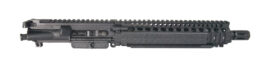
Daniel Defense MK18 5.56 NATO 10.3″ Upper Receiver Group, RIS II, Black 23-004-08013-006
Original price was: $1,641.00.$1,527.00Current price is: $1,527.00. -
Sale!Add to cart

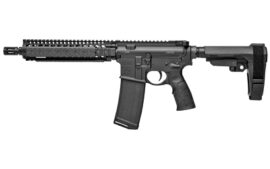
Daniel Defense MK18, 5.56 NATO, 10.3″ Cold Hammer Forged Barrel, Black Anodized Finish, Ambidextrous Safety
Original price was: $2,499.00.$2,250.00Current price is: $2,250.00. -
Add to cart

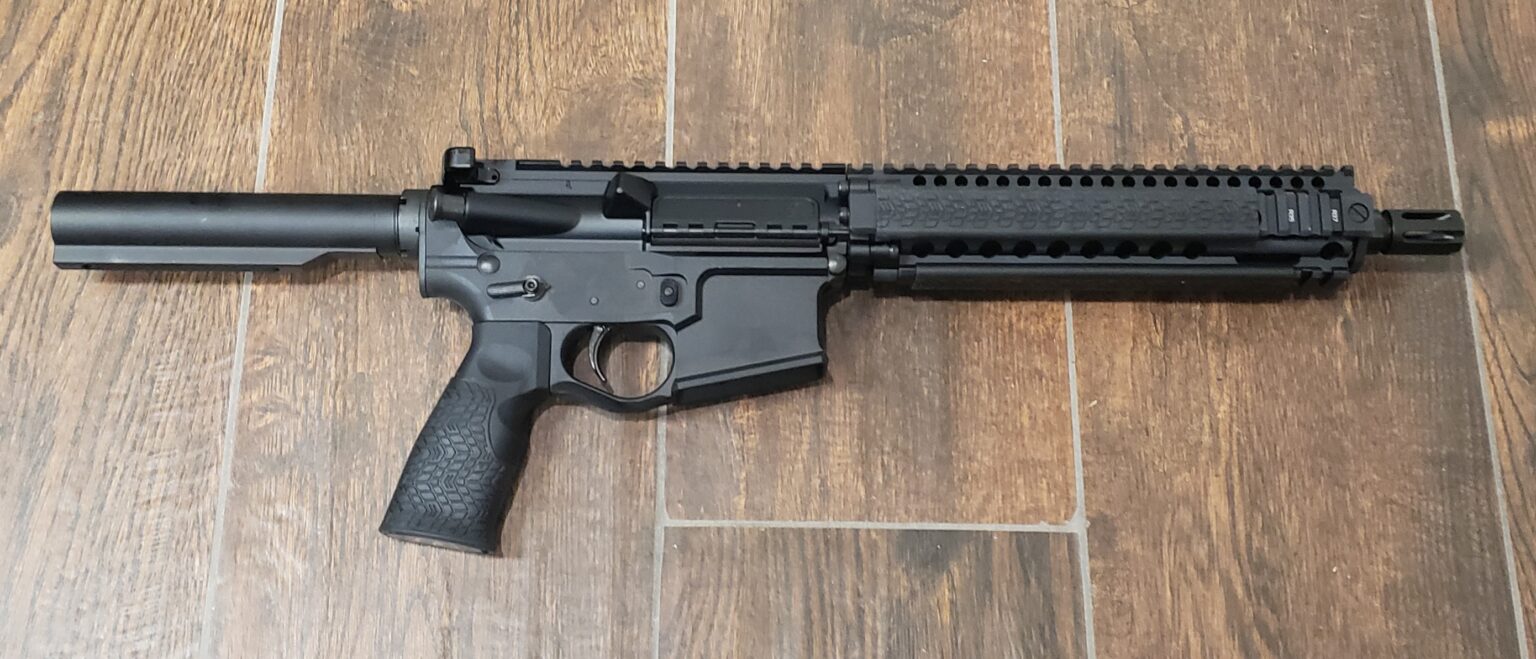
Daniel Defense Rankin Industries MK18 RIII Pistol
$1,999.00
We’re an authorized Daniel Defense dealer in Roanoke, TX. Check our current Daniel Defense inventory for availability, or email [email protected]. We also stock DD MK18 uppers : along with the full range of Daniel Defense upper receiver groups . When available for customers who want to drop a new upper on an existing lower.
Order online and we ship it to your FFL dealer.
If you’re still deciding between pistol and SBR, complete rifle vs. upper, or whether the MK18 is the right platform for you at all, see the MK18 clone build guide for the parts-and-cost side of it.
Lance Rankin has owned Western Sport since 2017. Lance is a gunsmith specializing in AR-15 and AR-10 platforms.

Lance Rankin is the owner and Chief Gunsmith of Western Sport, a family-run Type 07 FFL and Class 3/SOT dealer in Roanoke, Texas, serving shooters since 2007. Born and raised in Texas with over 50 years of experience handling firearms, Lance purchased Western Sport in 2017 and turned his lifelong passion into his profession. He specializes in AR-15 and AR-10 platform rifles, manufactures Western Sport’s own Rankin Industries parts and rifles, and runs the shop’s in-house Cerakote coating operation. When he’s not behind the counter or the workbench, you’ll find him on his ranch deep into the night, hunting coyotes with an AR-15 and thermal optics. Lance holds an MBA and personally shoots and tests the products Western Sport sells.


